
Gozney Dome Review: The Best-Built Home Pizza Oven Also Has the Most Confusing Lineup
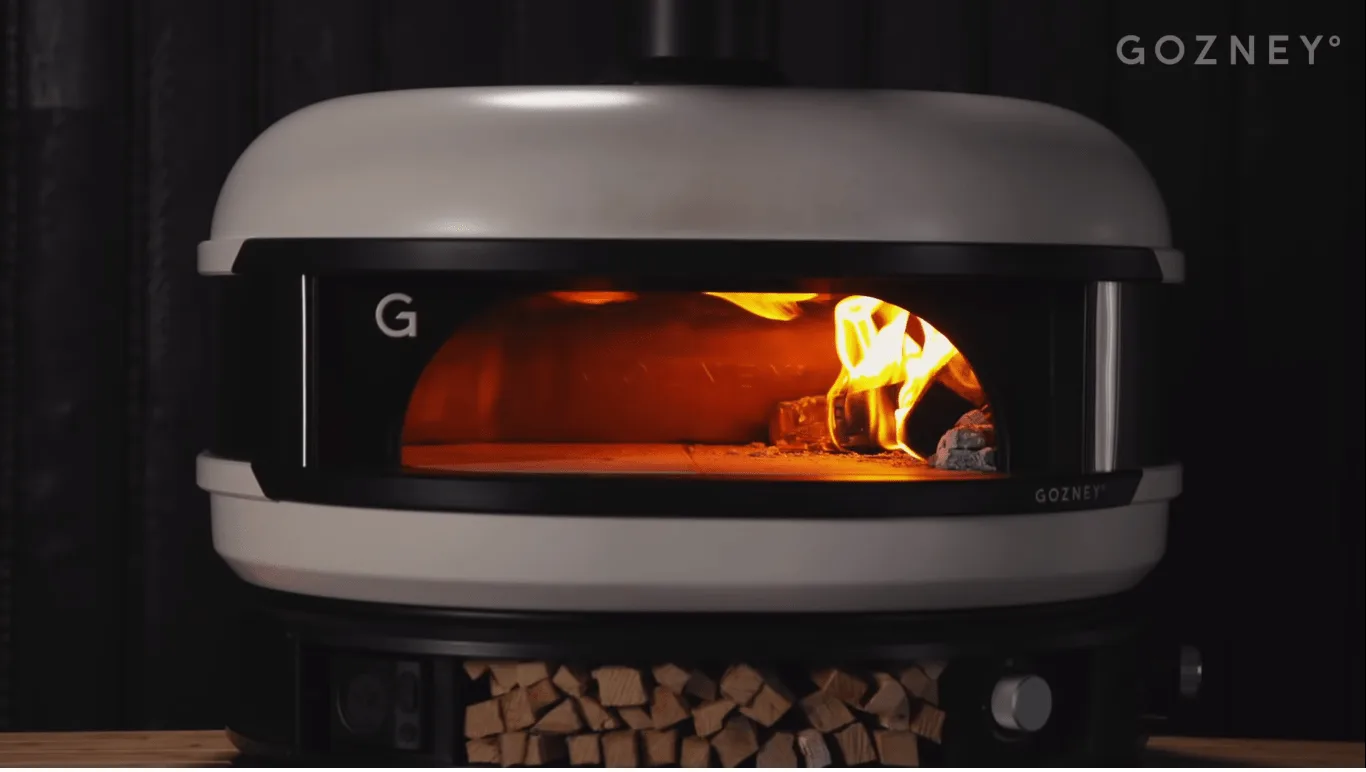
How it scores
What I liked
- True Neapolitan bakes on gas alone - roughly 70 seconds at a 900F stone, no wood required
- Cast, insulated dome and thick cordierite stone built for a permanent outdoor kitchen, not a fold-away toy
- Gen 2's side-mounted burner frees up real cooking floor compared to the old rear-corner design
- Integrated display shows stone AND air temperature at once, so you stop guessing when to launch
- Wood, gas, and charcoal in one oven, plus a natural gas conversion option no direct rival offers
- Twin meat probes and an optional steam injector turn this into a genuine three-in-one outdoor cooker
- Gen 2 arrives fully assembled, cutting a real chunk of time off first-night setup
- Long-term owners report no meaningful wear after a year or more of regular use
What could be better
- The lineup is genuinely confusing - the Dome S1, the discontinued Gen 1, the Gen 2, and the XL are four different products at four different prices
- At about 136 lbs, the Gen 2 needs two people to set up safely
- Heat-up runs 35 to 55-plus minutes depending on weather, longer than the spec sheet suggests
- Gozney has discontinued Gen 1 accessories, so clearance buyers face a real sourcing headache
- Essential add-ons (stand, peels, cover) add roughly $400 on top of the sticker price
- Charcoal cooking needs the Neapolitan arch accessory and about three hours of patience
The Dome on a Cold Night - What the Spec Sheet Doesn't Tell You
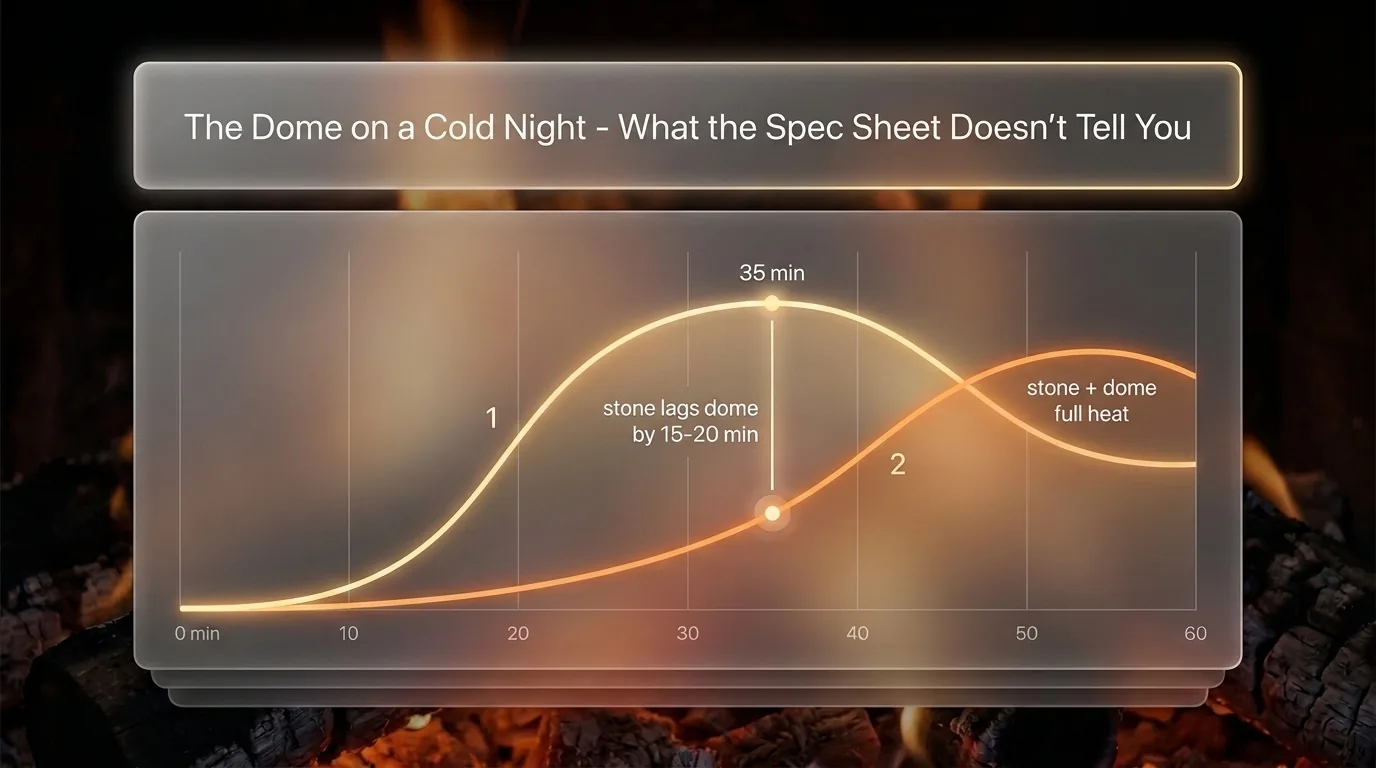
Picture a cold, windy evening. The dome thermometer is climbing toward 900F, slower than the box promised. A New York-style dough sits on the peel, and the stone reads only 675F. That gap between the two numbers is the whole story of owning this oven.
Gozney lists a maximum of about 950F (500C) and states 50 to 55 minutes for the stone and dome to fully saturate. Real-world testing from a press-sample Gen 2 got a usable New York-style bake in around 35 minutes on a cold, windy day - but that is not full saturation, and wind or cold weather stretches every one of these numbers.
Here's the part that trips up almost every first-time owner: dome temperature and stone temperature are not the same reading, and the stone always lags behind by 15 to 20 minutes. Launching a pizza because the dome says 900F, while the stone is still at 650F, is the single most common mistake on night one.
This review gives you the honest heat-up math, a clean walk through a genuinely confusing product lineup, and my straight opinion, as a working pizza chef, on whether the Dome earns its price.
Which Gozney Dome Are You Actually Buying? The Lineup Decoder
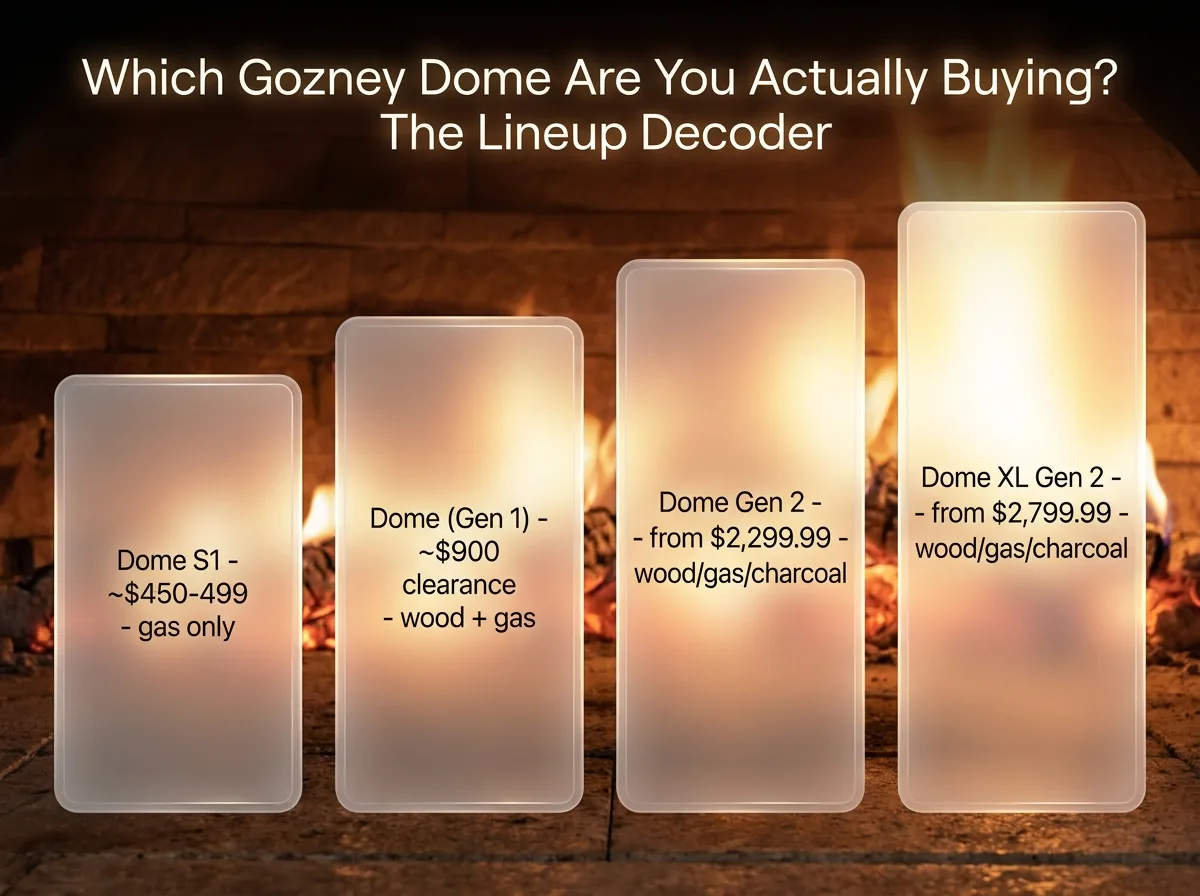
"Gozney Dome" now covers at least four meaningfully different ovens, and buying the wrong one is a $400 to $1,800 mistake. No single spec sheet puts all four side by side, which is exactly how people end up ordering the wrong box.
The Dome S1 is propane gas ONLY - it is not dual-fuel, and it cannot be converted to wood. It clears at big-box retailers for roughly $450 to $499. This is the lineup's most dangerous mix-up: buyers who want wood-fire capability and grab an S1 because it says "Dome" will be disappointed.
The original dual-fuel Dome (wood plus gas, with a natural gas conversion option) is now discontinued by Gozney and sells on clearance for around $900. Its real working pizza size is closer to 14 to 15 inches, not the marketed 16, because the burner sits directly on the cooking floor. Gozney has also discontinued the accessories for this generation, so a stand or mantel replacement is a real sourcing problem, not a hypothetical one.
The Dome Gen 2, from $2,299.99, moves the burner to the side of the cooking floor. That single change is the actual reason to upgrade - not extra heat. It ships fully assembled, at about 136 lbs, with a digital display showing both stone and air temperature plus twin meat probes.
The Dome XL (Gen 2), from $2,799.99, has an 18.5-inch door for true 18-inch pizzas and can run two or three pies at once. It is built for people who regularly cook for six or more guests.
If you're eyeing a sub-$500 "Dome" at a home improvement store, that's the S1. If wood fire matters to you, you need the dual-fuel Dome or the Gen 2 - full stop.
Build Quality - Why This Isn't Another Stainless Box
This is not a portable appliance dressed up to look permanent - it is a permanent piece. The cast, insulated dome and cordierite stone floor are built for an outdoor kitchen, and the Bone and Off-Black colorways look at home there.
The stone holds heat impressively well between back-to-back bakes, which matters if you're feeding a party rather than one pizza at a time. That heat retention is also why the shell runs hot - the front edge reaches temperatures that will cause a serious burn on contact, and the back and top run even hotter. This is not a deck centerpiece you can leave unsupervised around kids.
On the official stand, the wide base makes the oven hard to tip, which owners with toddlers describe as reassuring, even though the cooking surface itself stays a genuine hazard. The stand also rolls easily on concrete and manages on hard grass.
At about 136 lbs, the Gen 2 is a two-person setup job. Attempting to move or place it solo risks a back injury and can crack the stone if the oven lands unevenly. Long-term owners consistently report no meaningful degradation after a year or more of regular use, and the build genuinely looks built to outlast cheaper ovens by years.
Gas, Wood, or Charcoal - The Dual-Fuel Reality
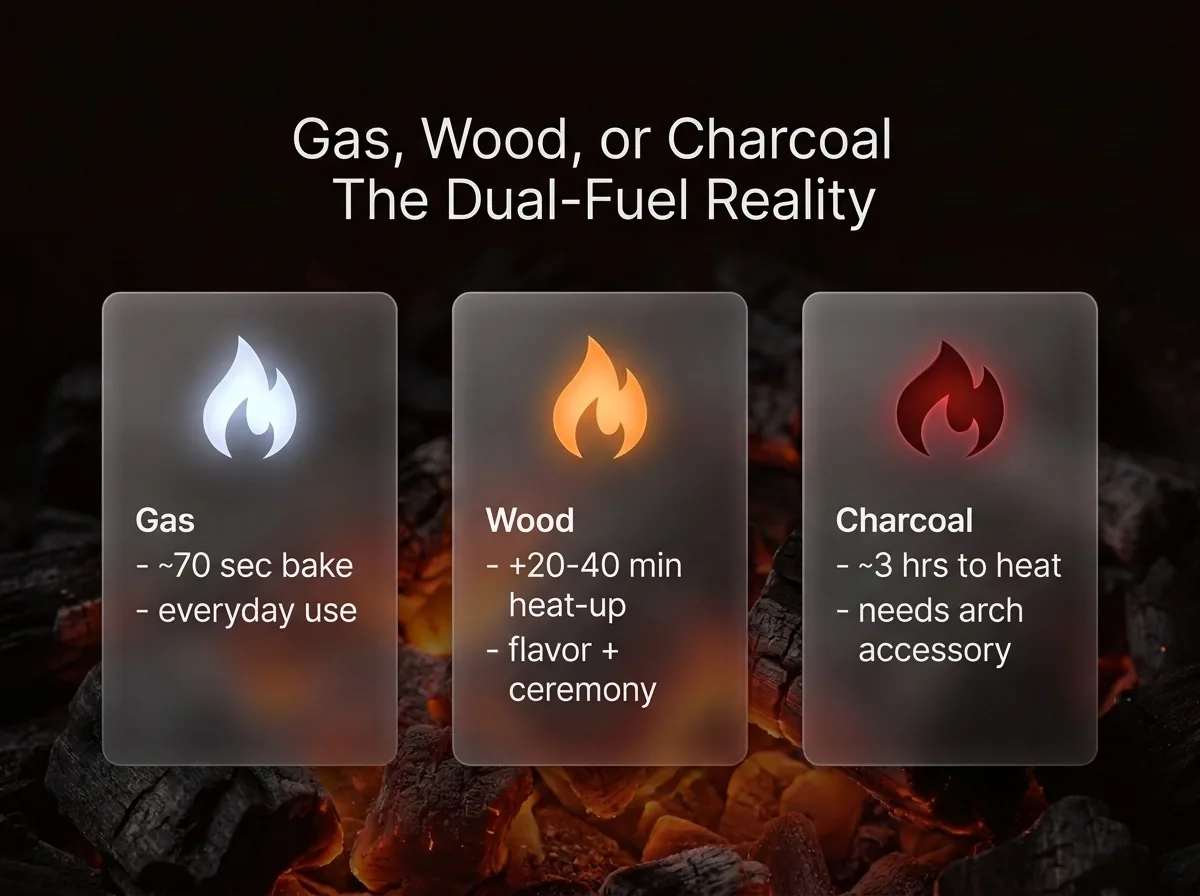
Let me settle this one directly: gas alone gets you real Neapolitan pizza. At a stone temperature around 900F, you can hit roughly 70-second bakes with a proper spotted rim, leoparded base, and a soft but cooked center - the actual professional standard, not a compromise. Wood adds flavor complexity and ceremony, not technical correctness.
Gas also gives you control: a workable range from around 350F up to 950F, clean and repeatable. For weekly cooking, gas should be your default mode. A natural gas conversion kit is available for outdoor kitchens with an existing line - a real advantage over gas-only rivals like the Karu 16, which has no such option, a detail worth weighing alongside our deeper look at the whole Ooni lineup.
"Dual-fuel" means sequencing, not running two fuels at once - swapping the puck takes about five minutes. My advice: learn the oven on gas first, then bring in wood or charcoal once you can read the stone by eye.
Wood adds 20 to 40 minutes of extra heat-up management, needs dry hardwood, and leaves ash to clear. On the original Dome, the floor-mounted burner also crowds your loading space. Save wood for weekend cooking, not a Tuesday-night pizza.
Binchotan charcoal is the specialist's fuel. One press-sample test of the Gen 2 found it took roughly three hours to reach usable cooking temperature, and it needed the optional Neapolitan arch accessory to trap heat effectively - skip the arch, and charcoal will frustrate you every time.
The Floor Space Problem - Cooking Surface and Capacity
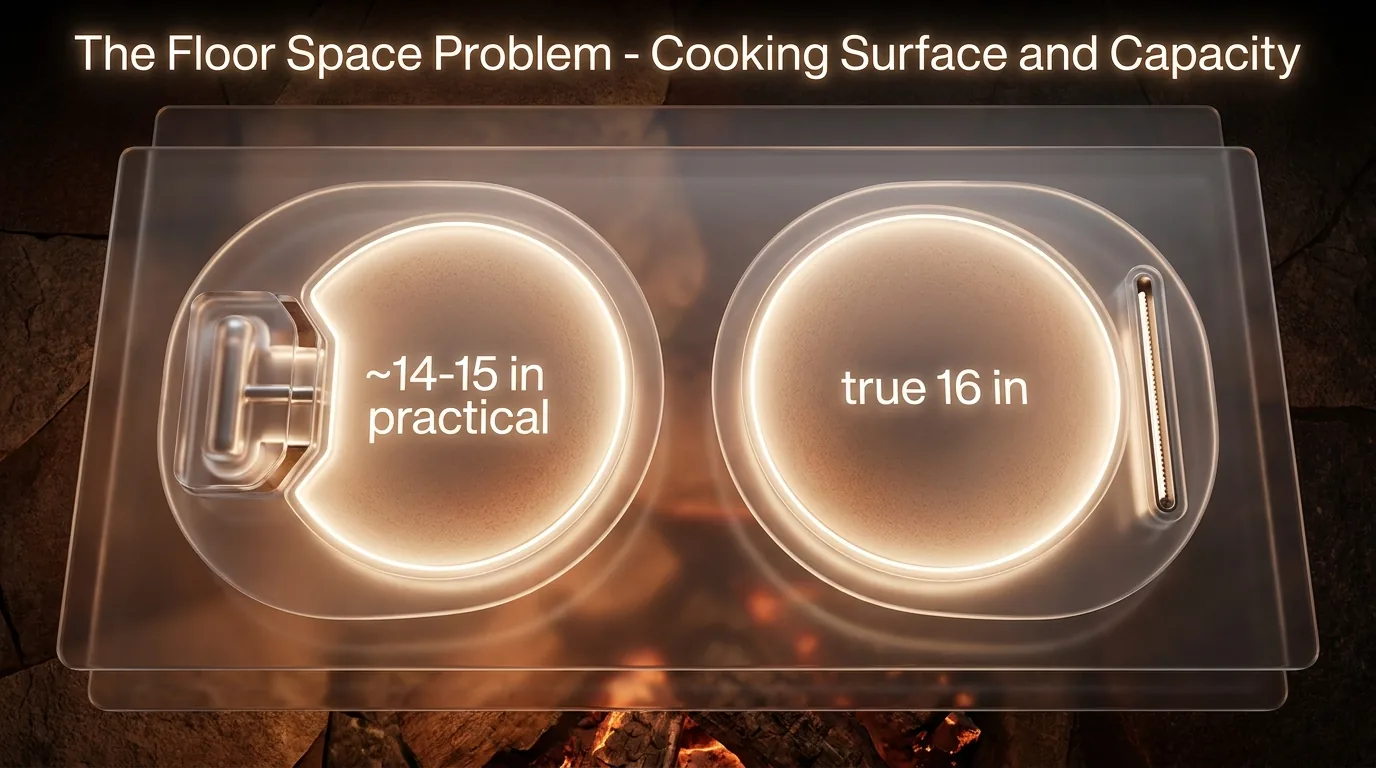
Here's a checkable, physical fact rather than an opinion: on the original Dome, the L-shaped burner sits directly on the cooking floor. That eats real usable stone, leaves less room to slide a pie into a cooler zone, and makes the oven less forgiving. Practical pizza size lands around 14 to 15 inches, not the marketed 16.
The Gen 2 fixes this by moving the burner to the side. The measured gain in usable cooking area is about 16%, though the brand's own launch claim cites 40% larger overall - the difference is total chamber size versus the stone space you actually cook on. Either way, the Gen 2's 16.5-inch door delivers a genuine 16-inch pizza, and the XL's 18.5-inch door gets you to true 18-inch pies with room to cook two or three at once.
Quick reference: original Dome, roughly 14-15 inches practical; Gen 2, a true 16 inches or two 10-inch pies side by side; Gen 2 XL, 18 inches or three pies at once.
Accessories - What You Actually Need to Buy
The digital display is the single biggest quality-of-life jump on the Gen 2 - seeing stone and air temperature at the same time replaces guesswork with a real number. Twin meat probes let you run a roast or bread bake alongside monitoring, and an optional steam injector helps bakery-style bread crusts.
Four accessories are genuinely essential: the official stand (about $199-249, needed for stability and tank storage), a large placement peel (about $79-99), a turning peel (about $49-79, non-negotiable for fast Neapolitan bakes), and a cover (about $49-79, since an uncovered stone absorbs moisture and can crack on the next heat-up). Budget roughly $375-495 on top of the oven.
The Neapolitan arch is essential only if you plan to run charcoal. The Wood-Fire Control Kit and steam injector are genuinely nice-to-have, not required.
If you're buying a clearance original Dome, remember Gozney has discontinued its accessory line for that generation - factor in the difficulty of sourcing a replacement stand new.
Performance - A Chef's Verdict on Neapolitan, NY-Style, and Beyond
By the professional standard I judge every oven against - cornicione height and texture, leoparding on the base, a soft but cooked center - gas alone at a 900F stone meets it. Launch, kill the flame around the 35-second mark, rotate the pie by hand, then reignite for the final burst. On the original Dome's uneven rear-corner burner this technique is non-negotiable; the Gen 2's side burner is more forgiving but the method still improves your bake.
New York-style is a different discipline. Dial the stone back to roughly 625-675F and let the pie bake longer, four to six minutes, for proper bottom crisping. The Gen 2's dual display makes holding that lower target far easier than the original's removable probe.
This oven earns its footprint on more than pizza. Owners cook bread, naan, roasted vegetables, chicken, and steak at high heat in 10-15 minutes. If you'll only fire it up for pizza once a month, a smaller, cheaper oven makes more sense; if you'll use it three or four different ways a week, the Dome starts to justify its size.
Setup, First Fire, and Real Cost Over Time
The Gen 2 arrives fully assembled - remove the shipping bumpers, extend the flue, charge the thermometer, connect gas. Budget about 90 minutes from box-open to first launch, including dough prep and the longer first-heat cycle a cold, shipped stone needs.
Cordierite stone is self-cleaning at high heat - run it hot and residue carbonizes off. Never use soap or water on it; thermal shock from cold water on a hot stone is the most common cause of cracking, and it isn't covered under warranty.
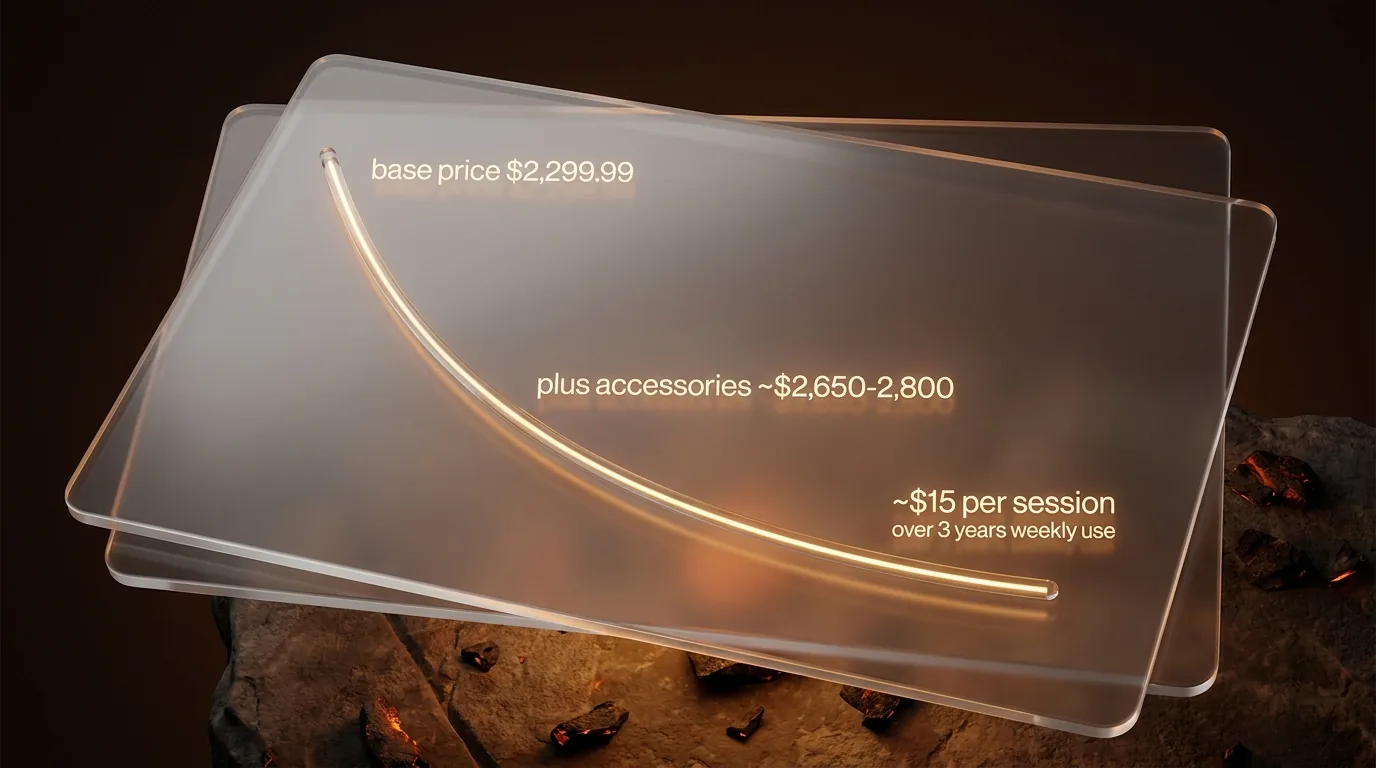
On cost: a Gen 2 setup with the four essential accessories runs about $2,650-2,800 before fuel. Propane cost is close to negligible - a 20-lb tank reportedly lasts around ten pizza nights of six to eight pies each, or roughly $2.50-3.00 in propane per session. Spread over three years of weekly use, the Gen 2's base price works out to around $15 per cooking session - about the price of two restaurant pizzas.
The clearance original Dome, all-in with accessories, lands around $1,226-1,306 - roughly $1,400 less than a Gen 2 setup. What you give up: usable floor space, discontinued accessories, and the integrated thermometer. If you value the platform at any price, that gap is worth it; if you want the platform performing at its best, pay for the Gen 2.
Who Should Buy the Dome - and Who Should Skip It
This oven is for a serious home cook building a permanent outdoor kitchen who will use it two or more times a week across pizza, bread, and roasting. If natural gas access matters, the Dome and its conversion kit have no real equal in this category.
Skip it if you cook one or two pizzas a month - the heat-up time and cost aren't justified, and a cheaper gas-only oven gets you 90% of the result. Skip it if you have limited outdoor space; at 136 lbs on a stand, this is a fixture, not something you tuck away. And don't buy a Dome S1 expecting wood-fire flexibility - it can't be upgraded later.
Gozney Dome vs the Competition
Against the Ooni Karu 16: the Karu wins on price (roughly $1,500 less) and weight (about 62 lbs versus 136). The Dome wins on cooking floor, the natural gas option, and the integrated dual thermometer. Choose the Karu if you need to take the oven with you; choose the Dome if you're building a permanent setup and cooking often.
Against Gozney's own Arc XL, at around $599: the Arc XL uses the same side-burner design principle, is single-person portable, and delivers a true 16-inch pizza, but it's gas-only with no twin probes or steam injector. It's a genuinely excellent step-down, not a consolation prize, if the Dome's price feels like too much.
Against the Roccbox: that's a smaller, portable propane oven built for a completely different job. If you're deciding between the two, you're really choosing portability over power - and that comparison is well covered in our own Bertello vs Ooni breakdown if portable, gas-first ovens are more your speed.
How it compares
| Gozney Dome | Ooni Karu 16 | Gozney Arc XL | |
|---|---|---|---|
| Starting price | $2,299.99+ | ~$799-999 | ~$599 |
| Fuel type | Wood / gas / charcoal | Wood / gas | Gas only |
| Natural gas option | Yes (conversion kit) | No | No |
| Max pizza size | 16" (XL: 18") | 16" | 16" |
| Weight | ~136 lbs | ~62 lbs | ~37 lbs |
| Portability | Semi-permanent, stand-mounted | Portable, one-person | Portable, one-person |
| Digital thermometer | Integrated dual stone + air | Separate probe | Front dial zones |
| Twin meat probes | Yes | No | No |
| Arrives assembled | Yes | No | No |
Also worth considering
Gozney Arc XL
The best value entry into the same platform. It borrows the Dome Gen 2's side-burner design and true 16-inch door at about $599, single-person portable, but it's gas-only with none of the Dome's twin probes or steam injector. If you want the Gozney build without the Dome's price and bulk, this is a genuinely smart step down, not a consolation prize.
Ooni Karu 16
The Dome's most legitimate competitor on paper. It hits the same 950F ceiling, runs wood or gas, and delivers a true 16-inch pizza at roughly $1,500 less and under half the weight. It has no natural gas option and no integrated dual thermometer, so you trade some convenience for the savings and portability.
Gozney Roccbox
A compact, highly portable propane oven with genuine Neapolitan chops at a fraction of the Dome's footprint and price. It isn't a competitor for cooking floor or fuel versatility - it's the right pick for a balcony or a cook who needs an oven that fits in a trunk.
Certifications & safety
- CE marked (EU)
- No public ETL/UL number found
- 5-year warranty (brand claim)
Frequently asked questions
Is the Gozney Dome worth the money?
For a weekly cook running multiple cooking styles, yes - spread over three years, the Gen 2's base price works out to roughly $15 per session, about the cost of two restaurant pizzas.
What's the difference between the Gozney Dome and the Dome S1?
The Dome S1 is propane gas ONLY and cannot be converted to wood; the dual-fuel Dome and Gen 2 support wood, gas, and (on Gen 2) charcoal.
How long does the Gozney Dome take to heat up?
Gozney states 50-55 minutes for full stone and dome saturation, though a usable New York-style bake has been reached in about 35 minutes on a cold, windy day - weather always shifts the number.
Can I still get accessories for the original Gozney Dome?
This is the real catch with buying a clearance or used original Dome: Gozney has discontinued the first-generation Dome's accessories, so the original mantel, door, and matching stand are now hard to source new - owners report having to hunt small retailers for stock. The Dome Gen 2 and Dome XL use their own, current accessory ecosystem (and a redesigned stand that fits both), so Gen-2 parts are readily available but are not cross-compatible with the first-gen oven. If you buy the original Dome to save money, budget for the fact that add-ons may only turn up secondhand.
Can you cook Neapolitan pizza in the Gozney Dome with gas?
Yes - gas alone at a roughly 900F stone temperature produces true Neapolitan pizza in about 70 seconds, meeting the professional standard for crust and char.
Is the Gozney Dome better than the Ooni Karu 16?
It depends on your priorities: the Dome wins on cooking floor, natural gas compatibility, and its integrated thermometer, while the Karu 16 wins on price and portability at less than half the weight.
Does the Gozney Dome work with natural gas?
Yes, a natural gas conversion kit is available directly from the brand, a real advantage over the S1 and the Ooni Karu 16, which offer no natural gas option.
How heavy is the Gozney Dome, and can one person move it?
The Gen 2 weighs around 136 lbs, and initial setup or repositioning genuinely requires two people to avoid injury or damaging the stone.
Do I need the Gozney Stand, or can I put the Dome on a table?
The official stand is effectively required unless you have an outdoor kitchen countertop rated for 136-plus lbs at the correct 36-38 inch launch height.
Gozney Dome
★ 4/5 · ~$2,299. Original dual-fuel Dome now ~$900 clearance; gas-only Dome S1 ~$450-499
Reader comments
Tried this oven, tool, or recipe? Share how it went — real experiences help other home pizza makers.