
Ooni Koda 12 Review: A 500C Gas Oven for $299-349 - With One Real Catch
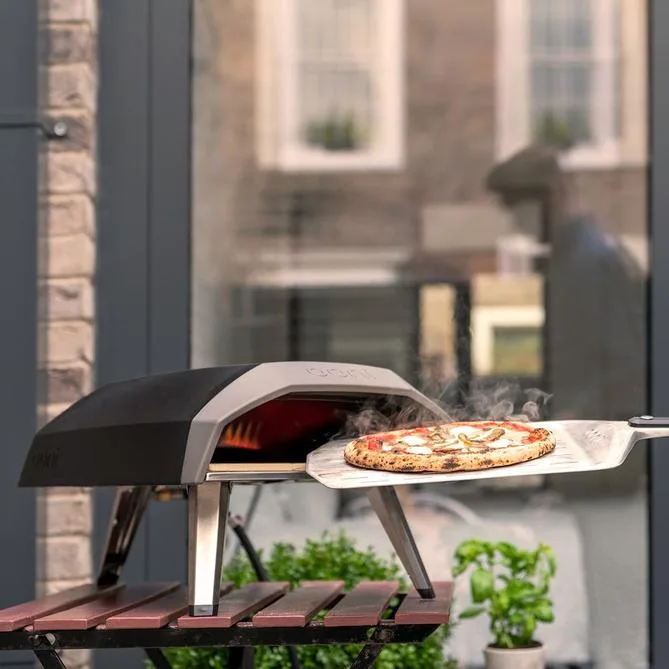
How it scores
What I liked
- Real stone temps of 400-450C in about 15-20 minutes, roughly double a home oven's ceiling
- Cooks a proper Neapolitan pie in 60-90 seconds once the stone is hot
- Genuinely one-hand portable at 9.2kg with fold-flat legs
- Near-zero setup - legs out, stone in, gas on, lit in under five minutes
- Fuel-efficient at roughly 0.28kg of propane per hour of use
- Cheapest real entry point into gas Neapolitan pizza on the market
- Adjustable flame gives beginners real-time control a wood oven can't offer
- Most owners who make it past the first year report 3-5 years of solid use
What could be better
- Single rear burner creates a real front-to-back heat gradient that a meaningful share of owners find genuinely frustrating, not just a beginner's learning curve
- 12-inch chamber is tight - comfortable working size is closer to 10-11 inches
- A documented QC tail exists: early thermocouple or gas-valve failures, a few melted-knob and igniter-sparking-while-gassing reports
- Customer support is form-only - no phone line, no live chat
- Thin carbon steel shell rusts fast if left uncovered outdoors
The Verdict - And the Heat Gradient Nobody Advertises
I stood over the Koda 12 with an infrared thermometer and watched the stone climb past 430C in about fifteen minutes - roughly the time a home oven takes to limp up to 200C. I stretched a 65% hydration dough (a wetter, softer dough than most home bakers use), dusted the peel with semolina, launched, dropped the flame to medium-low the second the pizza hit the stone, turned it three times, and pulled a leopard-spotted pie in about 75 seconds.
That's the real promise, and at roughly $299-349 the Koda 12 delivers it cheaper than anything else in serious gas pizza ovens. But I nearly burned that same pie. The single rear burner runs hotter at the back of the stone than the front, and if you don't turn fast, the crust chars before the base finishes cooking. That trade-off is the honest story of this oven, and you should know it before you buy.
Design and Build - What You Actually Get in the Box
The Koda 12 is a powder-coated steel shell with fold-out legs, an open front, and a single L-shaped burner tucked in the back. It looks minimal because it is minimal - that's the whole design idea, not a shortcoming.
Setup is genuinely under five minutes: unfold the legs, slide in the 10mm cordierite stone (a ceramic-like slab that stores and radiates heat), connect a propane hose, test the connection with soapy water for leaks, and press the ignition. No curing, no fire-tending, no smoke to manage.
The shell itself is thin steel, which keeps weight down to 9.2kg (about 20lb) but also means it rusts if left uncovered. A cover is closer to a required accessory than an optional one. The stone is thinner than what the newer Koda 2 uses, which means after two or three pizzas back to back it needs a few minutes to recover heat before the next one goes in.
Heat Performance - The Spec Sheet vs the Stone
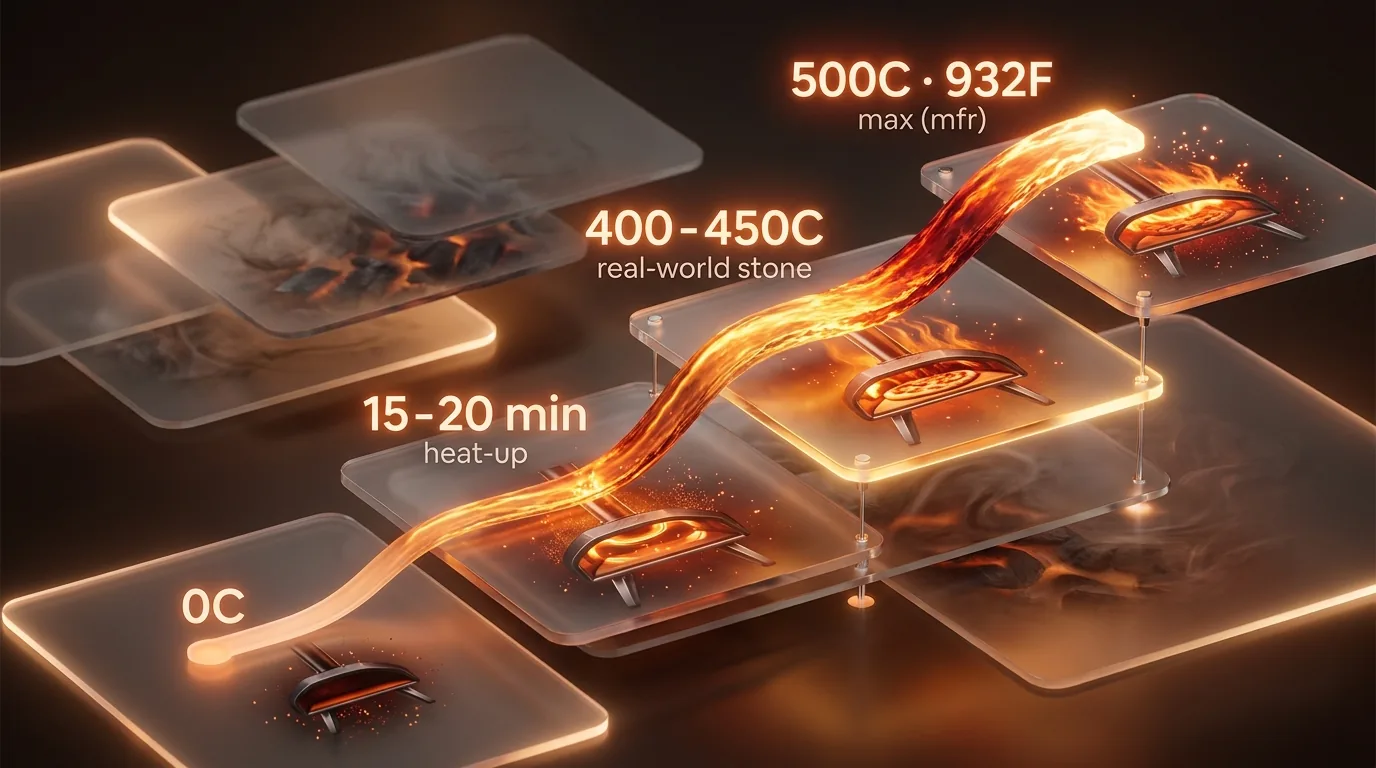
Ooni's published spec is a 500C (932F) maximum. In real use, owners consistently report the stone surface running 400-450C after a 15-20 minute preheat - independent testing has clocked it around 450C at the 15-minute mark. Both numbers are true: 500C is the ceiling, 430C is the practical launch-ready temperature.
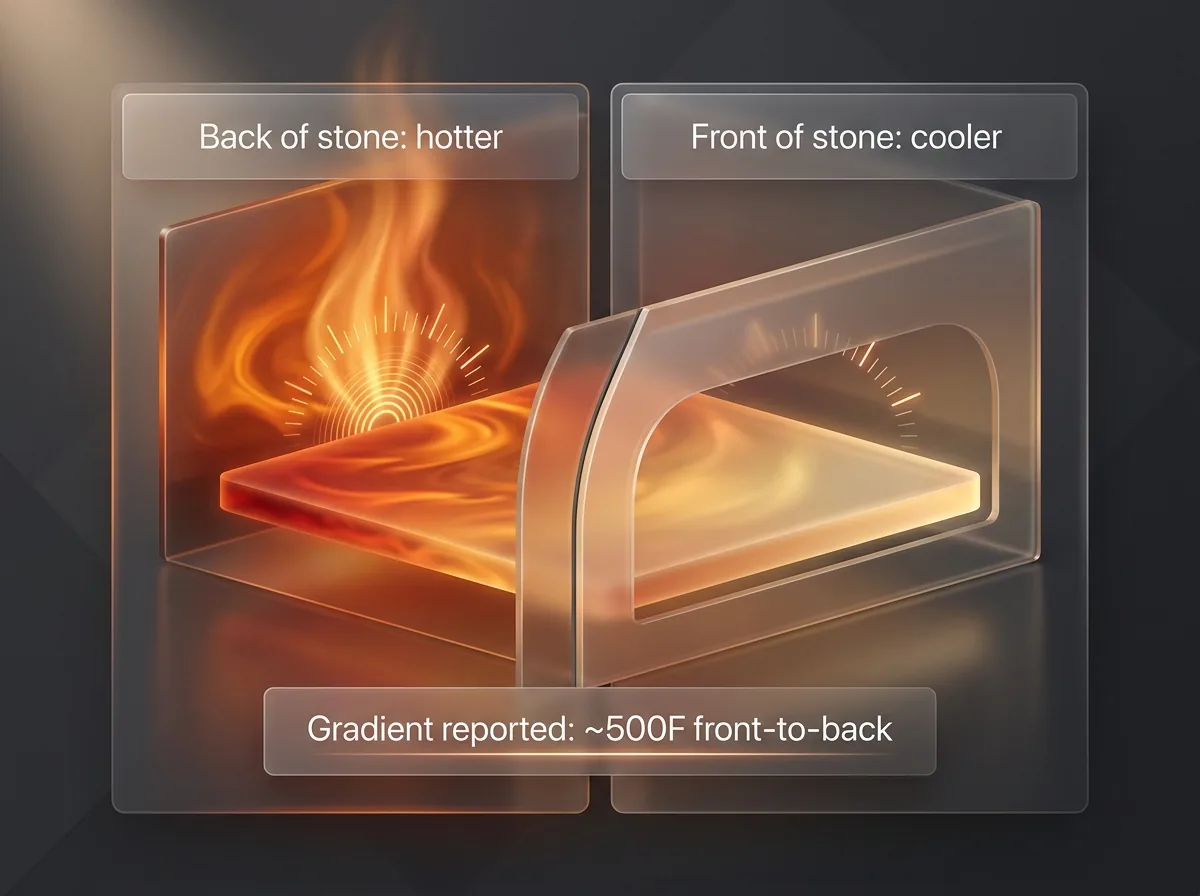
The catch is evenness. Multiple owners, including experienced pizza makers, report a gap of roughly 500F between the hottest and coolest points on the stone - front to back. That's the design reality of a single rear burner, and it's the root cause of almost every burned-crust complaint tied to this oven.
On fuel, the Koda 12 sips propane at roughly 0.28kg per hour, so a standard 20lb tank covers dozens of cooking sessions before you need a refill.
Gas and Fuel - Propane, Natural Gas, and Regional Fittings
The Koda 12 ships ready for propane in most markets. A natural gas version, or an adapter kit, is available separately - don't assume the two are interchangeable without confirming your unit's configuration first, since mixing them up is a real ownership headache people run into.
A 1lb camping canister works for short sessions; a 20lb tank with a standard regulator is the better setup for regular use. UK and EU buyers running on Patio Gas fittings should double-check their regulator connection before their first light - the fitting standards differ from US propane setups.
Always test the gas connection with soapy water before lighting. There are enough reports of the igniter sparking while gas is already flowing to treat this as a genuine safety step, not an optional habit.
How to Get a Great Bake - Launch, Turn, Pull
Wait for the stone to hit 430C on an infrared thermometer before you launch - not just a 15-minute timer. On a cold day the stone can still read 350C at 15 minutes, and a pale, undercooked base is the result.
Stretch your dough to 10-11 inches, not the full 12 the box promises - the chamber is tighter than the advertised size suggests. Dust the peel with semolina (coarse ground wheat), not flour; flour scorches on a 430C stone and leaves a bitter aftertaste.
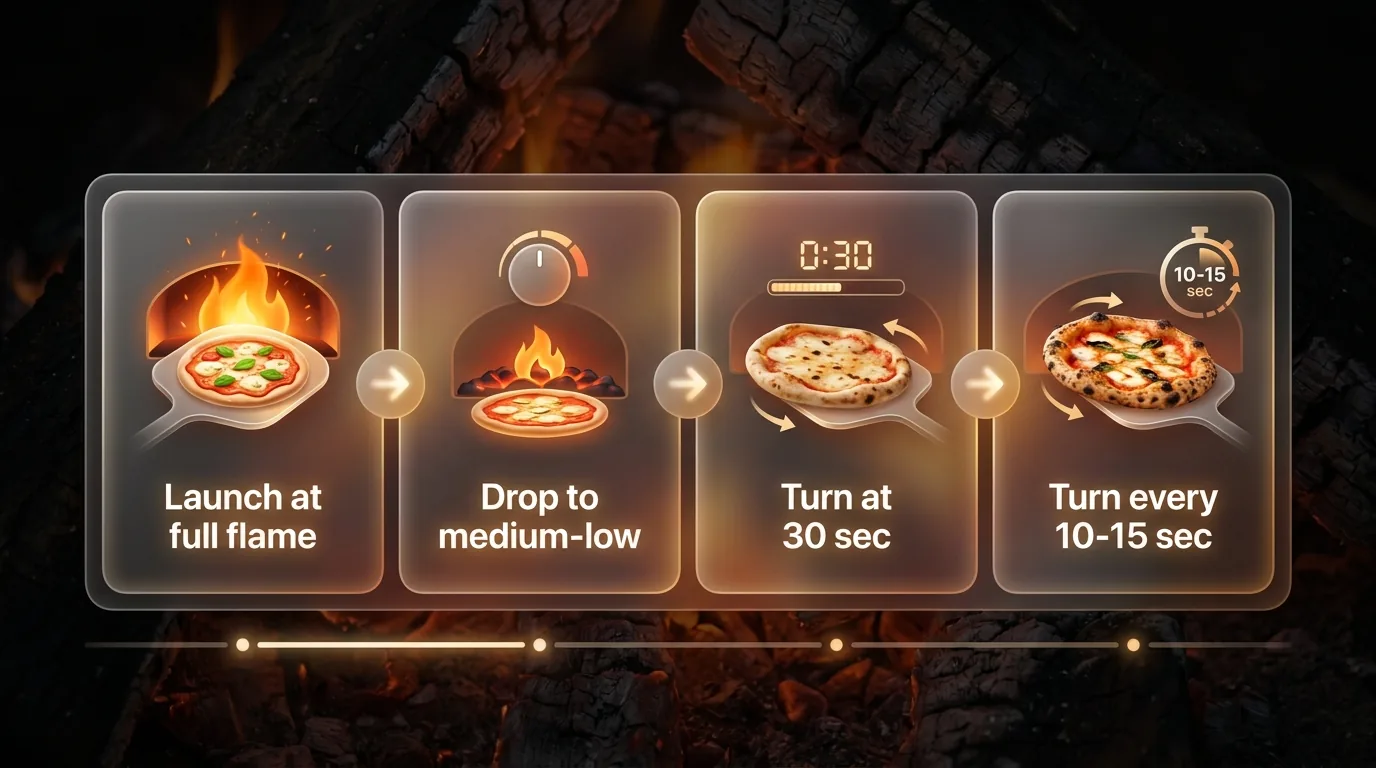
Launch at full flame, then immediately drop it to medium-low. The stone already holds enough heat to finish the base; a flame left at full blast will char the rim before the bottom is done. Turn 180 degrees at 30 seconds, then every 10-15 seconds after that, watching for even char around the whole rim rather than a dark patch concentrated at the back. Pull at 60-90 seconds total.
Do You Really Need Wood for Real Flavor?
A proper Neapolitan pizza cooks in 60-90 seconds at 430C or higher, and there simply isn't enough time at that speed for smoke to meaningfully flavor the dough. The char and flavor come from the Maillard reaction on the crust, good ingredients, and a well-fermented dough - not the fuel source.
I've made pizza in wood-fired ovens in Naples and in a gas oven on a cold suburban patio. At 90 seconds, the crust flavor difference is marginal. The setup time difference - 40 minutes of fire management versus 15 minutes of turning a dial - is not.
The Honest Catch - Uneven Heat and the QC Tail
Most owners are genuinely happy with the Koda 12 - fast, hot, real Neapolitan pizza from a box you can carry with one hand. That's the majority experience, and it's real.
But the uneven-heat complaint is the single most common frustration in the owner record, and it's not simply beginner error. A meaningful share of owners, including people with prior pizza-oven experience, describe the same front-to-back scorch pattern even after they'd learned to turn.
There's also a QC tail worth naming plainly: a pattern of early thermocouple or gas-valve failures within the first few months, a handful of melted-knob reports, and igniter-sparks-while-gassing complaints. Customer support runs through an online form only - no phone, no chat - and while refunds and replacements do get resolved, it takes friction to get there. Buy from an authorized retailer with a clear return window, and register the oven the day it arrives.
Koda 12 vs Koda 2 vs Koda 16 - The Real Decision
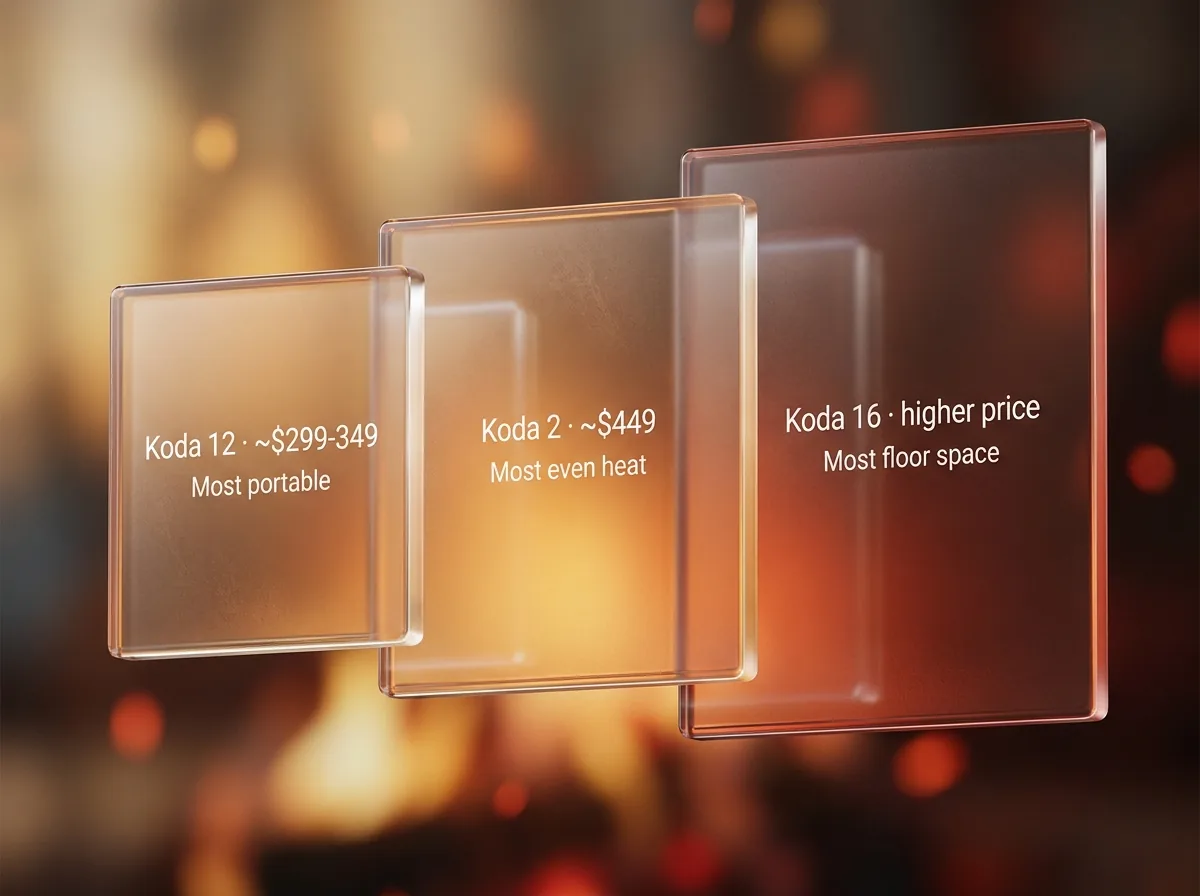
The Koda 2 (about $449) fixes the Koda 12's main complaint with a tapered flame and baffles that spread heat more evenly, plus a thicker 15mm stone. It also heats up slower, about 20-30 minutes versus the Koda 12's 15-20. Independent testing found the two ovens produce almost identical finished pizza - the Koda 2 is just more forgiving getting there.
The Koda 16 trades portability for floor space: an L-shaped burner and a larger stone give you more room to slide a pizza away from the hot spot, which directly reduces the burn-on-one-side problem. At 18.2kg it's a two-person, fixed-patio oven, not a carry-anywhere one.
If the $150 gap to the Koda 2 matters and you're learning, buy the Koda 12 and use Ooni's upgrade program later. For the full lineup breakdown, see our guide to every Ooni oven worth considering. If you're also weighing a completely different brand, the wood-vs-gas fork in the road is covered in our Bertello vs Ooni comparison.
Real Cost of Ownership
Budget for more than the oven itself: a turning peel (about $30), an infrared thermometer (about $15-25), and a weather cover (about $25-35) are close to non-negotiable. First-session setup, including a propane tank, lands around $390-480 all in.
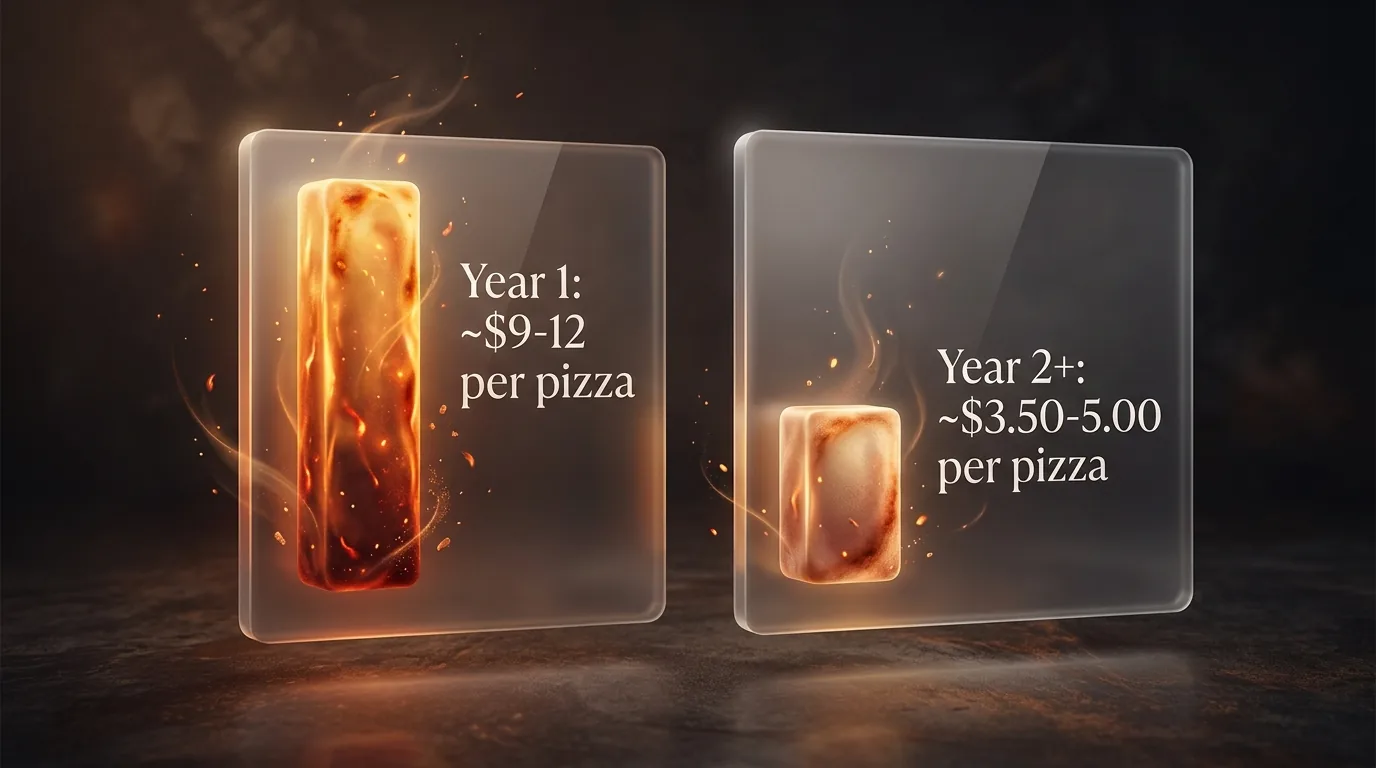
Running cost is low - about $1.50-2.00 of propane per 90-minute cooking session at 0.28kg per hour. Amortized over a year of regular use, cost per pizza lands around $9-12 in year one including the oven, and drops to roughly $3.50-5.00 per pizza in year two once the hardware is paid off. That undercuts most restaurant Neapolitan pizza by a wide margin once you're past the first few months.
Safety Basics You Can't Skip
The Koda 12 is outdoor-only. The open front isn't a design flourish, it's ventilation - propane combustion produces carbon monoxide, and it needs to escape, not accumulate. Don't use it in a garage, on a covered porch, or anywhere without real airflow.
Check Ooni's stated clearance distances from walls and combustible surfaces before you set it up, and place it on a stable, non-flammable surface, not directly on a wood deck. The stone hits 430C or hotter - keep kids and pets well clear. And if it doesn't light on the first try, don't keep mashing the ignition; each attempt releases more gas. Let it clear, then retry.
How it compares
| Ooni Koda 12 | Ooni Koda 2 | Ooni Koda 16 | |
|---|---|---|---|
| Max pizza size | 12in (working 10-11in) | 14in | 16in |
| Stone thickness | 10mm cordierite | 15mm cordierite | 15mm cordierite |
| Burner design | Single rear L-shape | Tapered flame + baffles | Wider L-shape |
| Heat evenness | Moderate, real hot spots | Better | Better |
| Heat-up time | ~15-20 min | ~20-30 min | ~20-25 min |
| Weight | 9.2kg / 20lb | Heavier | 18.2kg / 40lb |
| Price (2026) | ~$299-349 | ~$449 | Higher |
| Best for | Budget, portability, learning | Step-up buyers | Groups, fixed patio |
Also worth considering
Ooni Ooni Koda 16
The honest step-up from the Koda 12 - the wider L-shaped burner covers more of the cooking floor, which directly eases the front-to-back scorch problem. The 15mm stone holds heat better across consecutive bakes. At 18.2kg it's a two-person, fixed-patio oven, so you're trading the Koda 12's portability for room to maneuver. Anyone regularly cooking for a group should look here first.
Ooni Ooni Koda 2
The direct successor and the oven that fixes the Koda 12's biggest complaint. A tapered flame and baffles spread heat more evenly, and the 14in capacity and thicker stone give more margin for error. It heats up slower and costs $100-150 more. For a buyer with some prior pizza-oven experience and the budget, it's the smarter buy over the Koda 12.
Gozney Gozney Roccbox
The premium alternative in this size class. A more robust shell and thicker stone give it a reputation for fewer early failures than the Koda 12's QC tail. Priced around $399-499, comparable to or above the Koda 2. If build quality matters more to you than saving $100-150, it's worth the look, but it doesn't beat the Koda 12 on price or weight.
Certifications & safety
- Outdoor-only classification verified
- US gas-appliance listing unverified
Who it's for
The Koda 12 is right for one or two-person households who want the cheapest real entry into gas Neapolitan pizza and value portability for camping, travel, or a small patio. It's also the right first oven for anyone willing to spend two or three sessions learning the turn-and-flame-down technique.
Who should skip it
Skip it if you regularly cook for a group of four or more, if you've already made pizza in an outdoor oven and have the budget to skip straight to more even heat, or if your oven will live permanently on a fixed patio where portability buys you nothing.
Frequently asked questions
Is the Ooni Koda 12 worth it in 2026?
Yes, for the right buyer - at its current discounted price of roughly $299-349, it's the cheapest real path to 500C gas Neapolitan pizza and the best oven to learn the technique on.
Can you use the Ooni Koda 12 indoors?
No. It's built as an outdoor-only oven; the open front is a ventilation requirement, and using it indoors creates a real carbon monoxide risk. Ooni's Volt electric oven is the indoor-safe alternative.
How hot does the Ooni Koda 12 get?
Ooni's published maximum is 500C (932F). In real use, owners consistently report stone temperatures of 400-450C after a 15-20 minute preheat, which is the practical launch temperature.
How long does the Ooni Koda 12 take to cook a pizza?
Once the stone is preheated to around 430C, a Neapolitan pizza cooks in 60-90 seconds with active turning.
Ooni Koda 12 vs Koda 2 - which should I buy?
Buy the Koda 12 if the roughly $150 price gap matters and you're new to gas ovens; buy the Koda 2 if you want more even heat from its tapered flame and a thicker 15mm stone and don't mind a slower 20-30 minute heat-up.
Why does my Koda 12 burn one side of the pizza?
The single rear burner runs hotter at the back of the stone than the front. The fix is dropping the flame to medium-low right after launch and rotating the pizza every 10-15 seconds instead of letting it sit.
What size pizza fits in the Ooni Koda 12?
The advertised maximum is 12 inches, but the comfortable working size is closer to 10-11 inches once you account for turning room inside the chamber.
Does the Ooni Koda 12 run on propane or natural gas?
The standard version runs on propane; a natural gas version or adapter kit exists separately, and the two configurations aren't interchangeable without confirming the correct setup first.
Ooni Koda 12
★ 4.2/5 · ~$399; successor Ooni Koda 2 ~$449
Reader comments
Tried this oven, tool, or recipe? Share how it went — real experiences help other home pizza makers.