
Ooni Volt 2 Review: True 850°F Neapolitan Indoors, But the Stone and Glass Are the Real Story
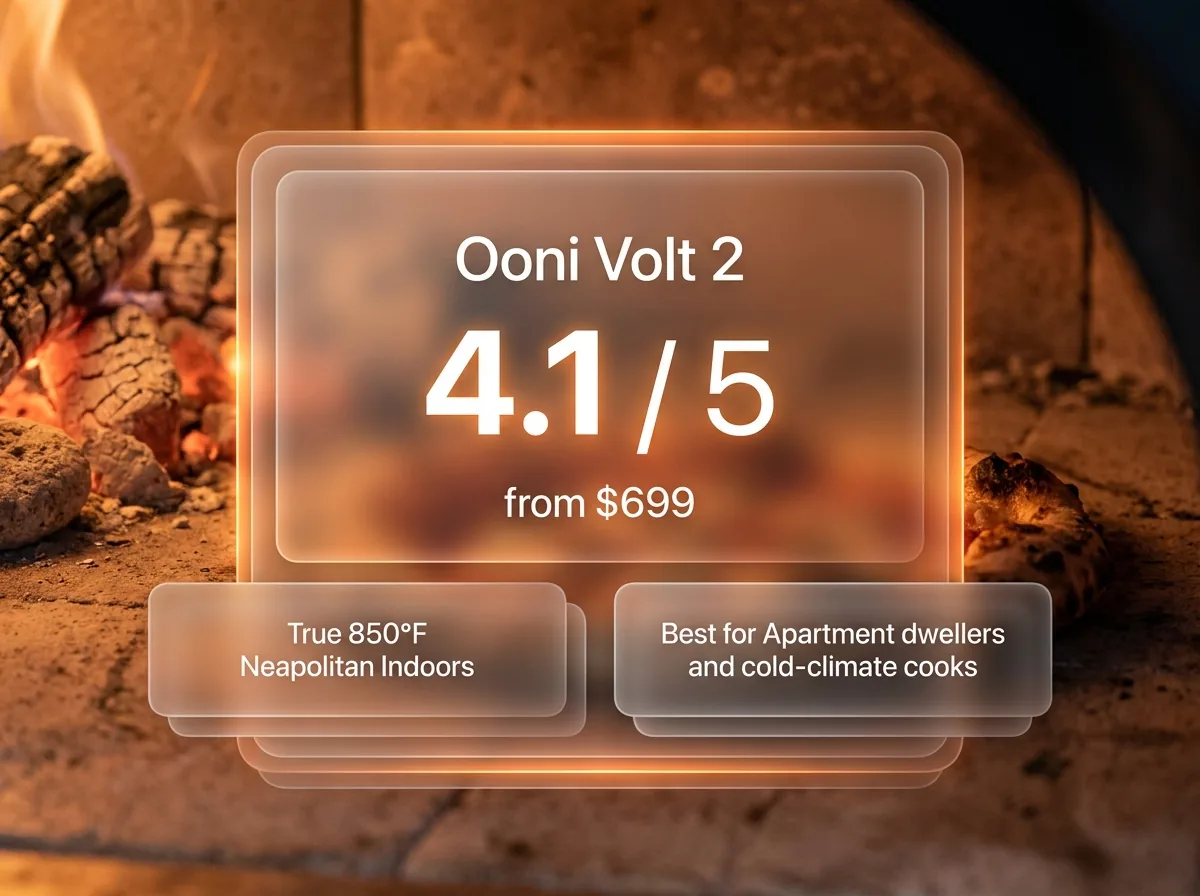
How it scores
What I liked
- Reaches a genuine 850°F and bakes real Neapolitan pizza in about 90 seconds
- Boost Mode delivers authentic leoparding and a properly bloomed cornicione
- Six cooking modes plus two custom presets cover pizza, dough proofing, roasting, and broiling
- Runs on a standard household outlet - no gas, propane, or ventilation hood needed
- A noticeably smaller countertop footprint than the outgoing Volt 12
- Edge-to-edge tempered glass window lets you watch the whole bake without opening the door
- Ooni's customer service is fast and genuinely helpful when a unit goes wrong
- Built-in smoke filtration keeps indoor cooking clean as long as the stone is maintained
What could be better
- Cracked and broken pizza stones are the most common owner complaint, and Ooni sells no standalone replacement
- Some units report the tempered glass window shattering during or after use
- Exterior runs hot enough to burn on contact - a real regression from the cooler-running Volt 12
- Back-to-back throughput tops out around 2-3 pizzas before the stone struggles to recover
- No true manual override of top/bottom heat balance for cooks who like to tinker
- Carries a 3-year warranty on the electric line, not the 5-year term Ooni's gas ovens get
What the Ooni Volt 2 Actually Is
Picture a sleeting February night, your outdoor pizza oven frozen solid under a cover you haven't lifted in months. Now picture pulling a leoparded, airy Neapolitan pizza off your kitchen counter ninety seconds after launch, snow still coming down outside. That's the entire pitch of the Volt 2, and it's a pitch the oven actually delivers on.
The Ooni Volt 2 is a 12-inch electric indoor pizza oven that reaches up to 850°F and bakes a Neapolitan-style pizza in about 90 seconds using Boost Mode. It plugs into a standard household outlet, needs no gas or propane, and sits comfortably on a normal kitchen counter.
At $699 it's $300 cheaper than the Volt 12 it replaces, smaller, and more versatile. But it also carries a genuinely honest complication: a pattern of cracked stones and shattered glass that no glossy unboxing video mentions. Both things are true, and you deserve both before you spend the money.
First Look - Design and What's in the Box
Ooni ships the Volt 2 without Styrofoam, which is a nice touch on a $699 appliance - though some owners have reported dented exteriors from rough handling in transit, which is worth noting on a product that ships in a single box with no outer crate.
Inside you get the oven, a slimline peel built for the shallower indoor chamber, and the interface itself: buttons and presets replacing the Volt 12's dial, paired with the Ooni app for remote monitoring. The edge-to-edge triple-paned glass window is a genuine upgrade - you watch the dough rise, the cheese melt, and the crust leopard without cracking the door and losing heat. It's also the same window that has shattered on a number of units, which I'll get into honestly below.
The footprint is noticeably smaller than the discontinued Volt 12, a real win for apartment kitchens and anyone short on counter space.
Setup, Power, and the Smoke Question
The oven needs a heat-resistant surface with clearance above it - don't tuck it directly under a cabinet. It's not light fairly heavy, so decide where it lives before you commit; sliding it in and out of a cupboard for every bake gets old fast. I keep mine out on the counter full-time, which is the usage pattern that actually makes an indoor electric oven worth the money.
Ooni confirms the Volt 2 runs on a standard household outlet, no dedicated circuit required. What isn't published anywhere I could verify is the exact wattage draw. If you're in an older home with shared kitchen circuits, check what else is on that circuit and avoid running a second high-draw appliance at the same time - cheap peace of mind that no other review mentions.
Indoor smoke is a legitimate worry with any 800-plus-degree oven, and this one handles it well. It has a built-in smoke filtration system, and owners consistently report little to no smoke as long as the stone stays clean. Burnt residue on the stone is the real smoke source, which makes stone care a daily comfort issue, not just a longevity one.
Pizza Intelligence and Boost Mode - How the Heat Really Works
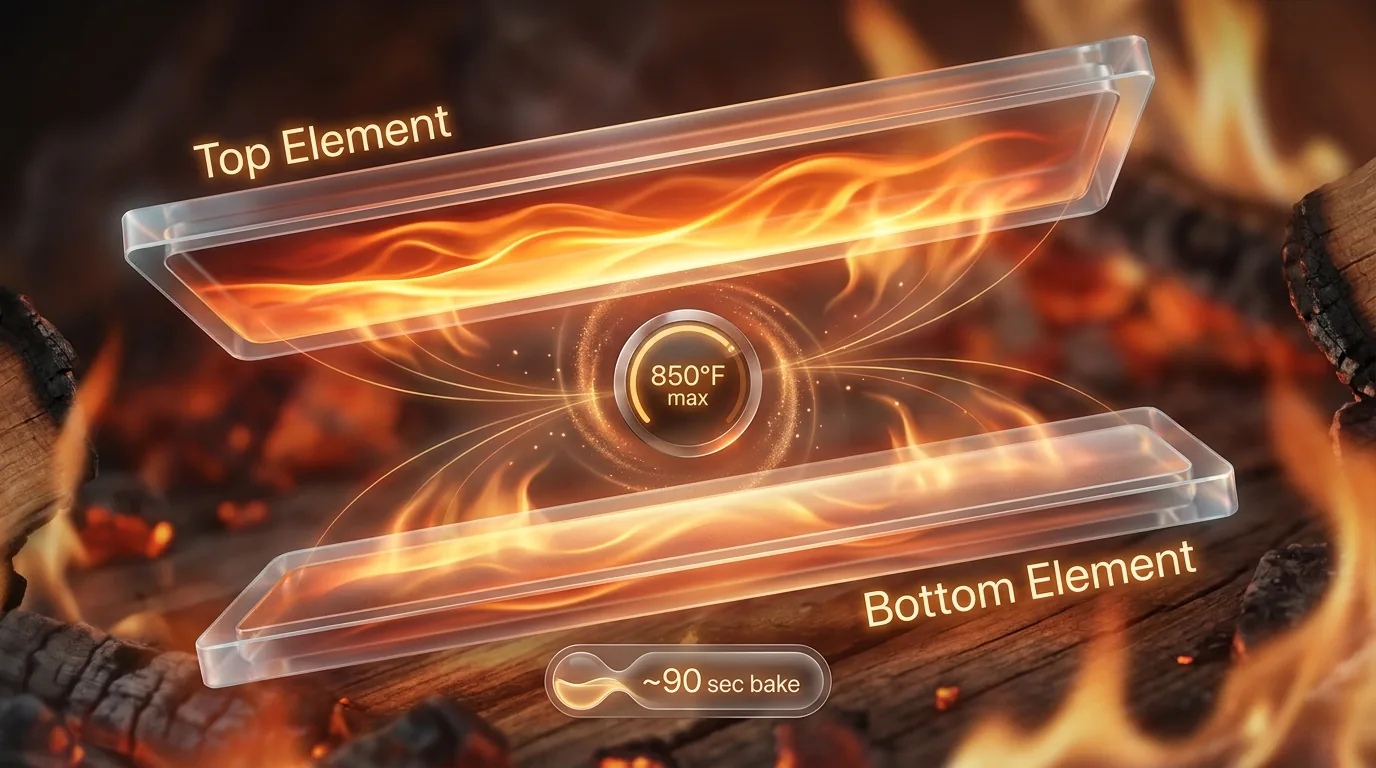
Pizza Intelligence is Ooni's patent-pending adaptive control system. It reads real-time temperature and shifts heat between the top and bottom elements automatically based on the style you've selected. It isn't a simple thermostat holding one number; it's actively rebalancing the bake as it happens.
For most home cooks running the presets, that's a genuine win - it removes the guesswork and gives consistent, repeatable results. The trade-off is real too: there's no true manual override of the top-to-bottom heat ratio. If you're the kind of cook who wants more bottom heat for a long-fermented dough or extra top heat to finish a cornicione (that's the puffy outer crust rim), you'll hit the system's ceiling. As a chef, I find the engineering impressive, but it's built for home cooks, not for pizzaiolos who want to dial every variable themselves.
Boost Mode is what makes the 850°F Neapolitan bake possible. It temporarily supercharges the top element to concentrate heat on the dome of the pizza, producing the dark spotting - leoparding - that defines a real Neapolitan crust. In my experience with this oven, Boost only works well once the stone has fully saturated; engaging it too early is the most common cause of an undercooked top and overcooked bottom.
Baking Performance - Neapolitan, New York, and Beyond
On the Neapolitan preset with Boost engaged, this oven does something a home oven simply cannot: a properly blistered, airy crust with genuine leoparding, in around 90 seconds. It's the best electric-Neapolitan result you can get at home right now. It's honest to say it isn't a replica of a wood-fired pizzeria bake - electric resistance heat is consistent, but it lacks the radiant punch of live fire, and the char reads slightly simpler on the palate. Set your expectations there and this oven over-delivers.
One thing I keep noticing when I cook on it: the back of the chamber runs hotter than the front. The marketing says no turning is needed, and that's largely true on the lower-heat Thin & Crispy preset. On Neapolitan, though, a single 180-degree rotation around the 45-second mark evens out the cornicione char noticeably.
Drop to the Thin & Crispy preset and you get a crisp, golden New York-style pie in roughly 5 to 7 minutes - more forgiving for beginners and genuinely hands-off. The Pan preset handles Detroit-style and focaccia-type bakes at a gentler heat. Beyond pizza, the Oven and Broil modes are real, not checkbox features - owners bake cakes, roast vegetables, and broil steaks in it, and the Dough Proofing mode (down to 70°F) is a legitimate value-add for anyone running a cold ferment. For how it stacks up against other countertop options, see our best electric pizza ovens guide.
The Hosting Reality Nobody Else Mentions
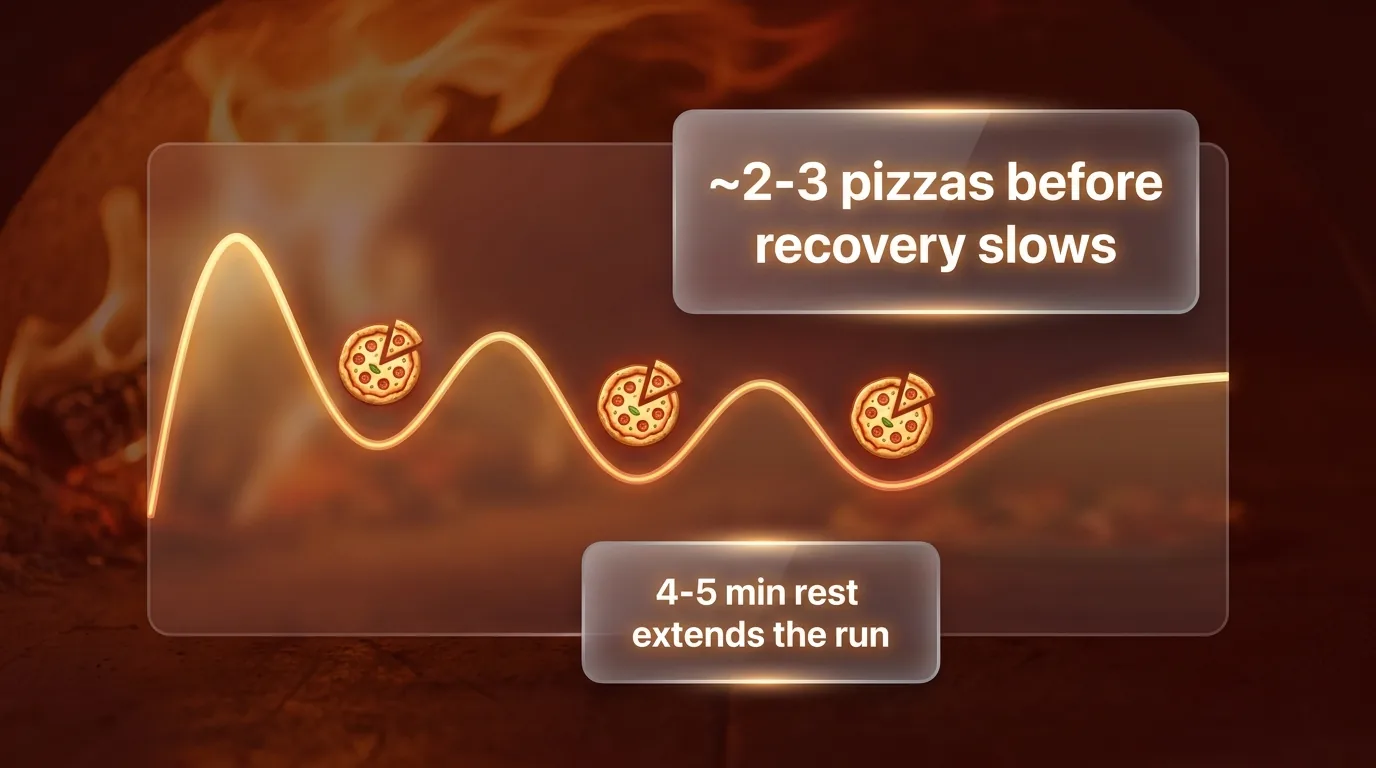
This is the part that matters most if you're planning a real pizza night: back-to-back recovery is a genuine limit. Owners consistently report about 2-3 pizzas before the oven struggles to climb back to 800°F, and bake quality noticeably falls off after the third pie.
The workaround: instead of launching the next pie immediately, run Oven Mode at around 500°F for 4-5 minutes between pizzas two and three. That gives the stone time to re-saturate and can stretch your effective run to 4-5 pizzas before you hit the wall. This is the oven I preheat for a two-person pizza night, not a tool for feeding a table of eight back-to-back - know the difference going in. If you have outdoor space and want live-fire char instead, our best Ooni pizza ovens guide covers the Karu and Koda range.
The Honest Reliability Section - Cracked Stones, Shattered Glass, and a Hot Exterior
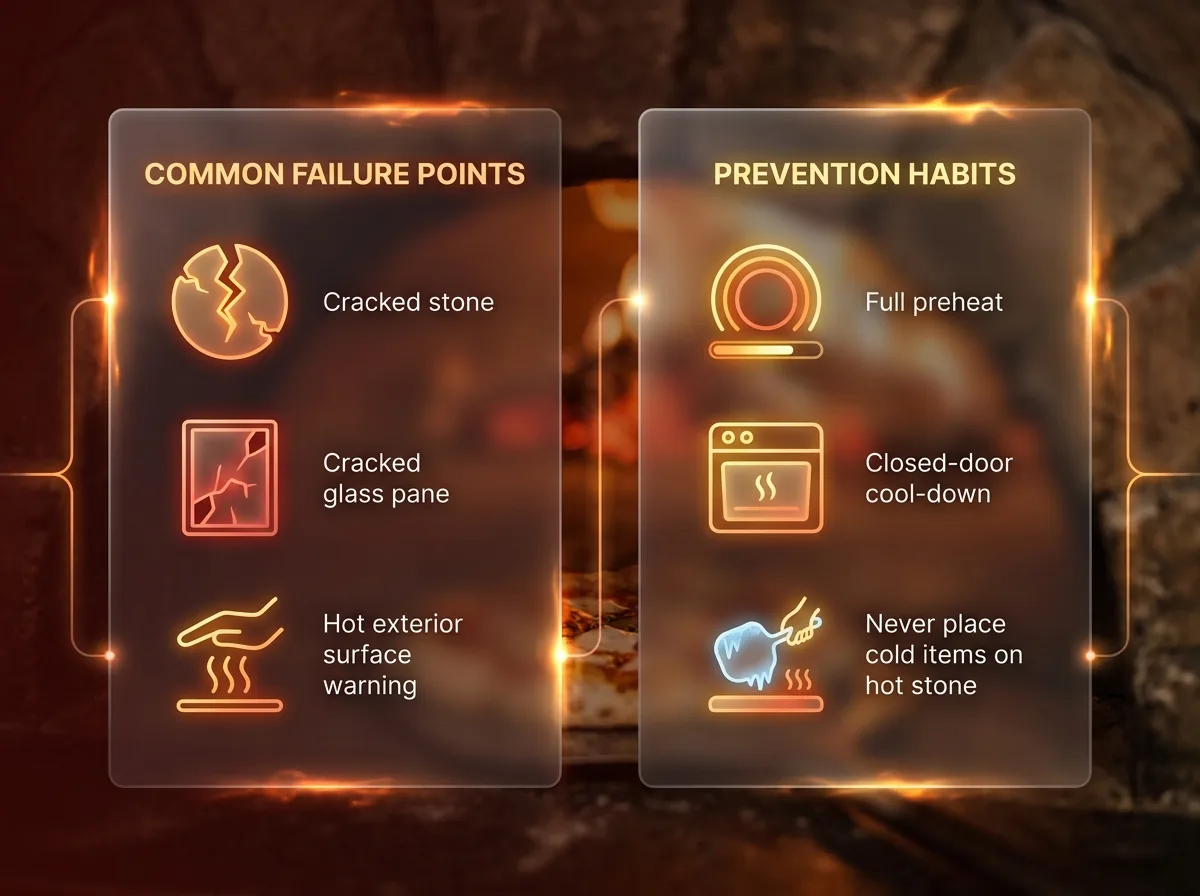
This is the section every other review skips, and it's the reason I can't hand this oven an unqualified rating. The single most repeated complaint in the owner record is the pizza stone cracking or breaking within the first few uses - sometimes on the very first bake despite following the instructions. Ooni doesn't sell a standalone replacement stone for the Volt 2, so a cracked stone means returning the whole oven or sourcing a third-party stone that fits the chamber.
The mechanical cause is almost always thermal shock: launching a cold, wet dough ball onto a stone that hasn't fully reached temperature, or cooling the stone too fast after a bake. Cordierite stone is durable but not indestructible, and a thinner stone has less thermal mass to absorb that shock. Always let the stone cool inside the closed oven, never cut pizza directly on it, and give it the full preheat before your first launch.
More serious: multiple owners report the tempered glass window shattering during or shortly after cooking. This isn't a single anecdote - it shows up repeatedly enough in the owner record that I won't soften it. A shattering glass window on a kitchen counter is a safety event, not a cosmetic defect, and buyers should know about it before purchase.
Add to that a genuine regression from the Volt 12: this oven's exterior gets noticeably hot during use, hot enough that owners describe burning themselves on contact. The Volt 12's cool-touch shell was a standout safety feature, and some Volt 12 owners who upgraded describe the Volt 2 as feeling like a step back specifically because of this. Keep children clear during and after cooking, and don't move the oven until it's had 2-3 hours to cool - the stone stays inside the closed door the whole time.
Ooni Volt 2 vs Volt 12 vs Breville Pizzaiolo
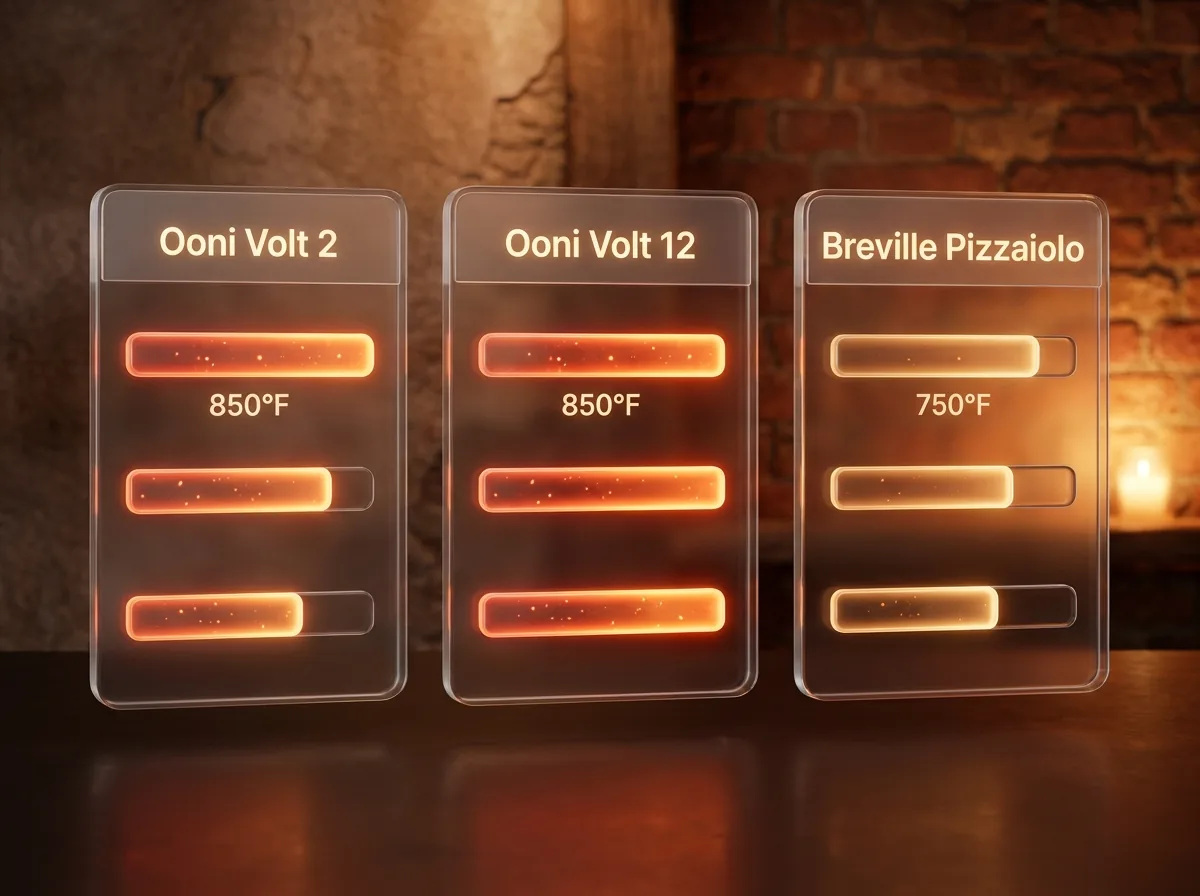
Both Ooni models hit 850°F and bake in about 90 seconds. The Volt 2 is smaller, $300 cheaper at launch, and adds Boost Mode, Dough Proofing, Oven and Broil modes, and app control that the Volt 12 didn't have. The trade is the hotter exterior. If your Volt 12 is running fine, the upgrade case is genuinely thin - for a wider look at how the whole Ooni lineup compares, our best Ooni pizza ovens breakdown is worth a read.
The Breville Smart Oven Pizzaiolo, at $999.95, tops out at 750°F - short of true Neapolitan territory - but gives you independent manual control over the top and bottom elements, which the Volt 2's adaptive system doesn't offer. If you're a tinkerer who wants to dial in exact heat ratios, that $300 premium buys real control. If you want the best preset pizza result at the lower price, the Volt 2 wins the head-to-head on performance, provided the unit you get is a good one.
Getting the Most From It - Preheat, Rotation, and Stone Care
The oven signals ready around 20 minutes at roughly 800°F, but that's not the same as a fully saturated stone. Wait a full 25 minutes before your first launch, and if you own an infrared thermometer, confirm the stone surface has actually caught up - this single habit prevents most of the uneven top-versus-bottom bakes owners blame on the oven.
For dough, 65-68% hydration (that's the ratio of water to flour) hits the sweet spot for Neapolitan on this oven. Go below 62% and the crust dries out before the crust rim blooms; push past 70% and the dough sticks to the peel during launch, which is a common trigger for the panicked launches that crack stones. On cleanup, the stone is removable and can be flipped, and it self-cleans at high heat - never use soap, water, or an abrasive on it while it's hot.
Warranty, Cost, and the Real Value Math
The Volt 2 carries a 3-year warranty - worth stating plainly, because Ooni's gas and multi-fuel line gets 5 years and it's easy to assume the whole brand matches that. What that warranty covers in practice includes the failures above: cracked stones and glass issues. Ooni's customer service is consistently described as fast and genuinely helpful, with owners reporting quick replacement units when something goes wrong. My advice: buy direct from Ooni or from a retailer with an easy, no-argument return policy, and consider a protection plan given the failure pattern on this specific component set.
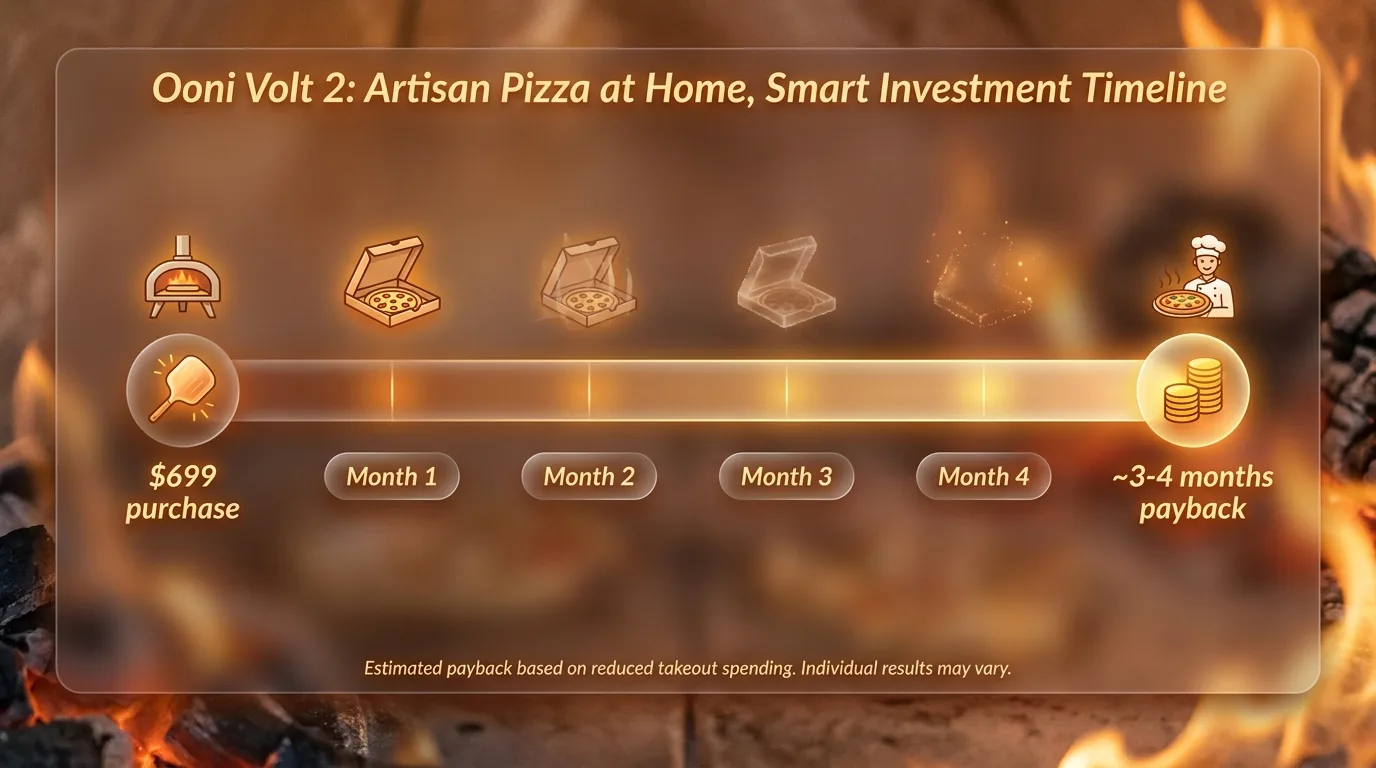
On the money: a typical metro-area delivered Neapolitan pizza runs $18-28 with tip and fees, while a homemade pie costs roughly $3-5 in ingredients. A household ordering twice a week is spending roughly $150-230 a month. At that rate, $699 pays for itself in ingredient savings in about 3-4 months - and that's before counting the quality gap between delivery and a fresh 850°F bake. The math only works if you actually use the oven, though. The real value argument here is behavioral: an oven sitting on your kitchen counter gets used every week; an outdoor oven under a tarp does not. If you're weighing the whole electric category rather than just this one oven, our guide to the best electric pizza ovens is a useful next stop.
Who It's For - and Who Should Skip It
Buy it if you live somewhere outdoor cooking isn't an option for months at a time, you're currently ordering takeout pizza a couple times a week, and you're cooking for one to four people where the 2-3 pizza recovery limit isn't a dealbreaker. The versatility - proofing, broiling, roasting - genuinely earns its keep beyond pizza night.
Skip it if you already own a working Volt 12 and don't mind its smaller window and older controls - the hotter exterior on the Volt 2 is a real trade, not an upgrade in every direction. Skip it too if you're hosting six-plus people regularly (look at a larger outdoor oven instead), if you want full manual heat control (the Breville is the better fit), or if pizza night happens once a month or less, where a cheaper countertop oven makes more financial sense.
How it compares
| Ooni Volt 2 | Ooni Volt 12 (discontinued) | Breville Smart Oven Pizzaiolo | |
|---|---|---|---|
| Price | $699 | ~$999 at launch | $999.95 |
| Max temperature | 850°F | 850°F | 750°F |
| Neapolitan bake time | ~90 seconds | ~90 seconds | Not specified |
| Temperature control | Adaptive, no manual override | Manual dial | Manual deck + top control |
| Boost mode | Yes | No | No |
| Dough proofing mode | Yes, down to 70°F | No | No |
| Exterior during use | Gets hot, burn risk | Cool-touch | Moderate |
| Warranty | 3 years | 3 years | 1 year |
| Stone replacement | Not sold separately | Not sold separately | Available separately |
| Availability | Active | Discontinued | Active |
Also worth considering
Breville Smart Oven Pizzaiolo
The premium manual-control alternative at $999.95. It tops out at 750°F, meaningfully short of true Neapolitan territory, but its independent deck and top heat controls give experienced cooks a granularity the Volt 2's adaptive system doesn't offer. Better suited to tinkerers willing to pay $300 more for control over automation.
Chefman Indoor Electric Pizza Oven
The budget contrast at around $199.99 - roughly a quarter of the Volt 2's price. It's a simpler, lighter-duty countertop oven without the Volt 2's adaptive Pizza Intelligence control, build quality, or versatility, so results and consistency don't match. A reasonable entry point on a tight budget, but not in the same class as the Volt 2.
Ooni Karu 16 Multi-Fuel
The outdoor alternative for anyone with covered outdoor space who wants live-fire flavor and higher throughput. It handles bigger pizzas and back-to-back hosting better than the Volt 2, but it's an outdoor commitment - propane or wood, weather, and setup - that many buyers end up using less than they expect.
Certifications & safety
- 3-year electric-line warranty
- Patent-pending adaptive control
- No independent safety listing confirmed
Frequently asked questions
Is the Ooni Volt 2 good for indoor use only?
Yes - the Volt 2 is built exclusively for indoor use on a standard household outlet and isn't rated for outdoor or covered-outdoor placement.
How long does the Ooni Volt 2 take to heat up?
It signals ready in about 20 minutes at roughly 800°F, but I recommend waiting a full 25 minutes so the stone itself fully saturates before your first launch.
Does the Ooni Volt 2 need a dedicated electrical circuit?
No - it's designed to run on a standard household outlet; just avoid running another high-draw appliance on the same circuit if your kitchen wiring is older.
How many pizzas can the Ooni Volt 2 make in a row?
Owners consistently report about 2-3 pizzas before the oven struggles to recover to 800°F; a 4-5 minute rest in Oven Mode between bakes extends that run.
Does the Ooni Volt 2 pizza stone crack easily?
Cracked stones are the most common owner complaint, often within the first few uses, and Ooni doesn't sell a standalone replacement stone - resolution means a return or a third-party stone.
How hot does the outside of the Ooni Volt 2 get?
Multiple owners report the exterior gets hot enough to burn on contact during use, a real regression from the Volt 12's cool-touch shell.
What is the difference between the Ooni Volt 2 and the Volt 12?
The Volt 2 is about noticeably smaller, $300 cheaper at launch, and adds Boost Mode, dough proofing, oven and broil modes, and app control - but its exterior runs hotter than the Volt 12's cool-touch body.
Is the Ooni Volt 2 worth $699?
For a household ordering takeout pizza two or more times a week, yes - the ingredient-savings payback lands around 3-4 months, provided you buy from a retailer with an easy return policy given the QC risk.
Should I buy the Ooni Volt 2 despite the quality-control issues?
Buy it only where returns and replacements are painless - direct from Ooni or a retailer with an easy return window - and consider a protection plan. The failure mode owners report is a defective unit (cracked stone, occasionally a shattered glass window), not bad pizza; when the unit is sound the results are excellent, and Ooni's customer service is well rated for sending replacements. If you can't stomach the possibility of a return on a $699 purchase, wait for a later production run.
How does the Ooni Volt 2 compare to the Breville Smart Oven Pizzaiolo?
The Volt 2 costs $699 and reaches 850°F with adaptive automatic control; the Breville Pizzaiolo costs about $999.95, tops out around 750°F, and gives you manual deck-and-top heat control that tinkerers prefer. The Volt 2 is hotter, cheaper, and more versatile (proofing, broiling, roasting), while the Breville offers hands-on control and a cooler-running body. Pick the Volt 2 for hotter, hands-off Neapolitan; pick the Breville if manual control matters more than peak temperature.
What pizza styles can you cook in the Ooni Volt 2?
Its 850°F ceiling and Boost mode are built for Neapolitan, and it handles New York-style well at slightly lower temperatures with a longer bake. Pan and thicker styles like Detroit work using the lower-temperature Oven mode rather than Boost, though a true deep Detroit pan is limited by the 12-inch cooking space. Because it also broils and roasts, owners use it well beyond pizza.
Ooni Volt 2
★ 4.1/5 · ~$699
Reader comments
Tried this oven, tool, or recipe? Share how it went — real experiences help other home pizza makers.