
Pizza Dough Mixer Buying Guide| 6 Best Pizza Dough Mixers
Having the right mixer for pizza dough can make a difference. But choosing the best one is not exactly easy. In this guide, I will explain everything you need to know. From what to look for and how to make the most of your investment to get your money’s worth.
However, the market is packed with options. You have everything from budget-friendly stand mixers to pricey spiral mixers that can knead dough.The good news is you do not have to drain your savings to get a better pizza.
The key is focusing on a few essential factors when picking the best pizza dough maker. I will walk you through those points to help you find the perfect match for your pizza dreams.
Our Top Picks:

- Brand: KitchenAid
- Capacity: 5 Quarts
- Material: Stainless steel
- Special Feature: Removable Bowl
- Color: Contour Silver
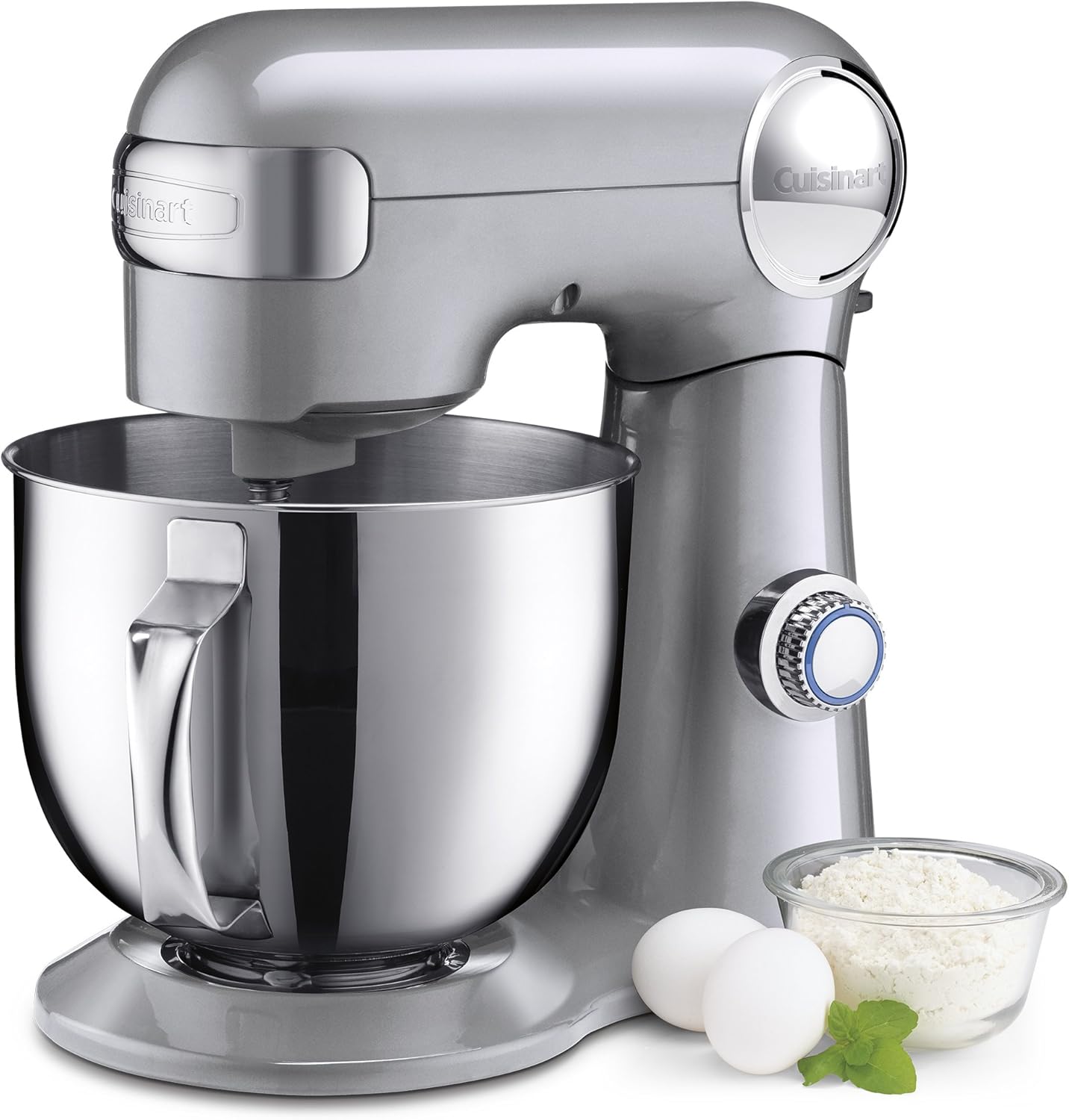
- Brand: Cuisinart
- Capacity: 5.5 Quarts
- Material: Stainless steel
- Special Feature: Manual
- Color: Silver Lining

- Brand: Aucma
- Capacity: 6.5 Quarts
- Material: Stainless steel
- Special Feature: Pure Copper Motor
- Color: Silver
Why Do You Need a Pizza Dough Mixer?
- If you do not enjoy kneading dough by hand, a mixer is the solution. It is perfect for frequent bakers or larger batches.
- A mixer allows you to knead dough for a specific amount of time, helping you achieve consistent results every time.
- A mixer is a good option for those making big batches of dough it’s faster and less tiring than doing it by hand.
- Many mixers can handle various tasks, making them an excellent investment for bakers who need more than just dough preparation.
- Mixers guarantee the dough is evenly kneaded, resulting in a soft, elastic texture that can be harder to get by hand.
Types of Pizza Dough Mixers
We will compare hand kneading to using a mixer because it has much more to it than just “hands vs. machines.”
1. Stand Mixers: For Small to Medium Batches
Stand mixers are best if you bake at home.
They are versatile and usually come with a dough hook, perfect for kneading perfect pizza dough without accidentally overheating it, a common issue with other mixers. (Who wants a hot mess instead of an ideal dough?)
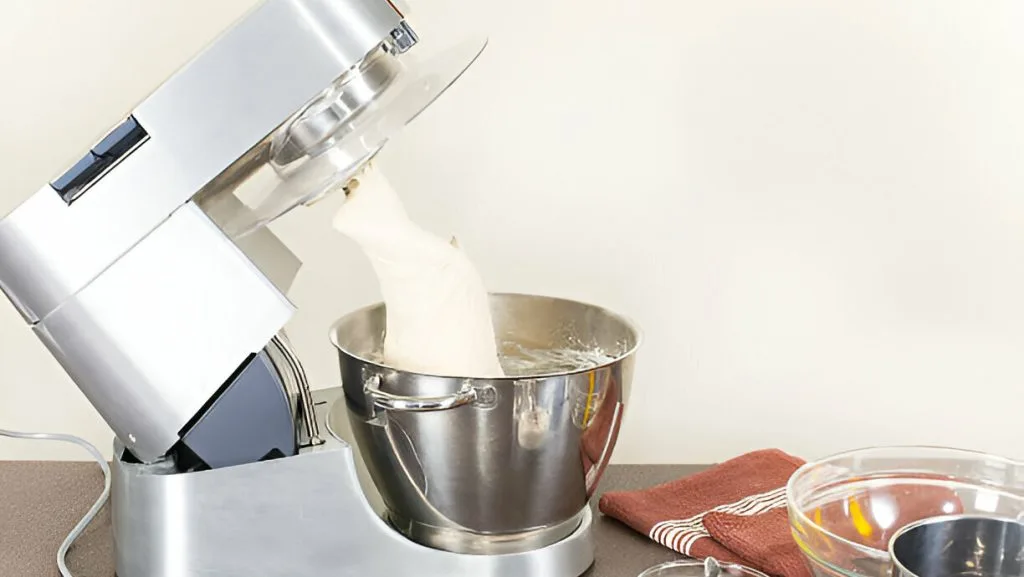
The best thing about a stand mixer is the control it gives you. With adjustable speeds, you can start slowly to mix your ingredients evenly and then gradually build up to that sweet kneading rhythm that develops the gluten just right for a chewy, golden crust.
Do not overload the mixer. Most models cannot handle more than 1.5 kg (about 3.3 lbs) of dough before they start struggling.
Take the KitchenAid Artisan Stand Mixer, arguably the best KitchenAid for pizza dough. It can handle up to 1 kg (2.2 lbs) of dough and knead it in about 8–10 minutes. That said, if your dough is on the drier side (with less than 55% hydration), the hook might have trouble gripping it properly.
2. Hand Mixers: Compact but Limited
Hand mixers with dough hooks are budget-friendly if you bake occasionally or work with softer, high-hydration doughs (like 65% or more water content). They are lightweight, easy to store, and perfect for small batches under 500 grams (about 1 lb).
However, hand mixers often lack the torque needed for firmer pizza dough. Users on Quora and Reddit mention that the motor can overheat if you push it too hard, making it less reliable for long kneading sessions. For occasional use, though, they are hard to beat for their price and convenience.
3. Spiral Mixers: The Professional’s Choice
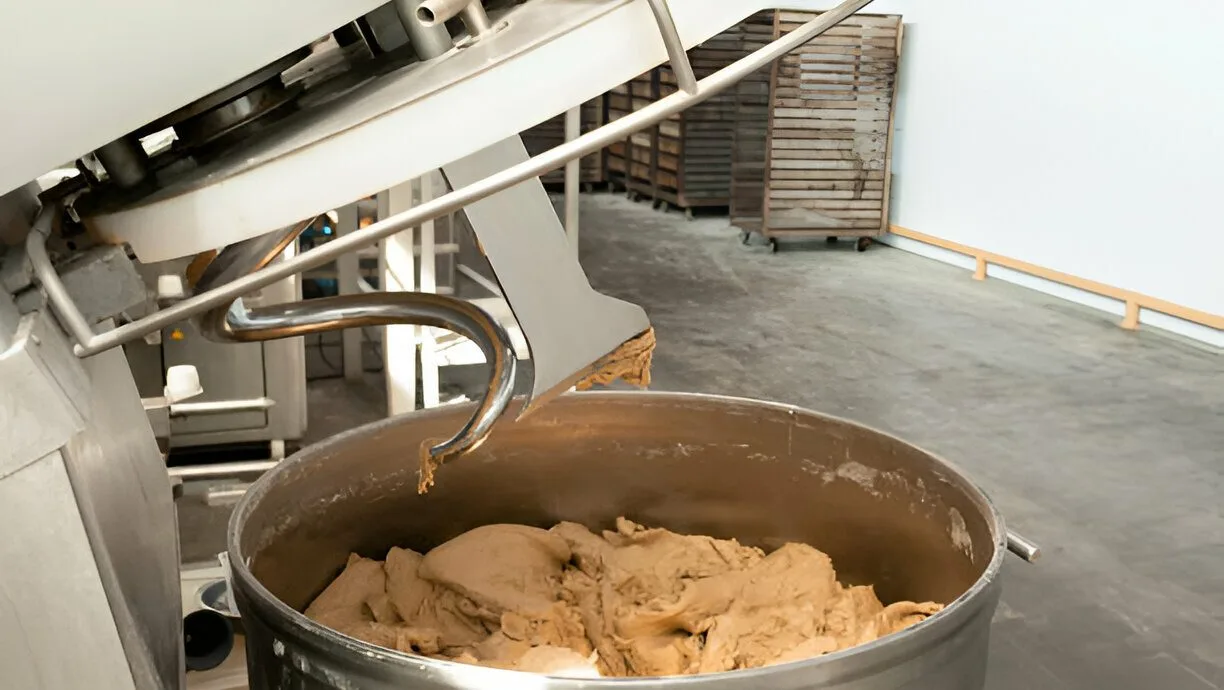
A spiral mixer is your choice if you are serious about pizza making. These machines are tailor-made for dense doughs like Neapolitan pizza dough. Here’s how they work: the bowl turns while a spiral hook kneads, ensuring the dough develops correctly no overworking or overheating.
What makes spiral mixers stand out? Two things: capacity and care. Depending on the model, they can handle big batches up to 20 kg (44 lbs) or more. Also, they are gentler on the dough, which is best for low hydration recipes (50–55%). They are a bit pricey, and their size means you will need some kitchen space.
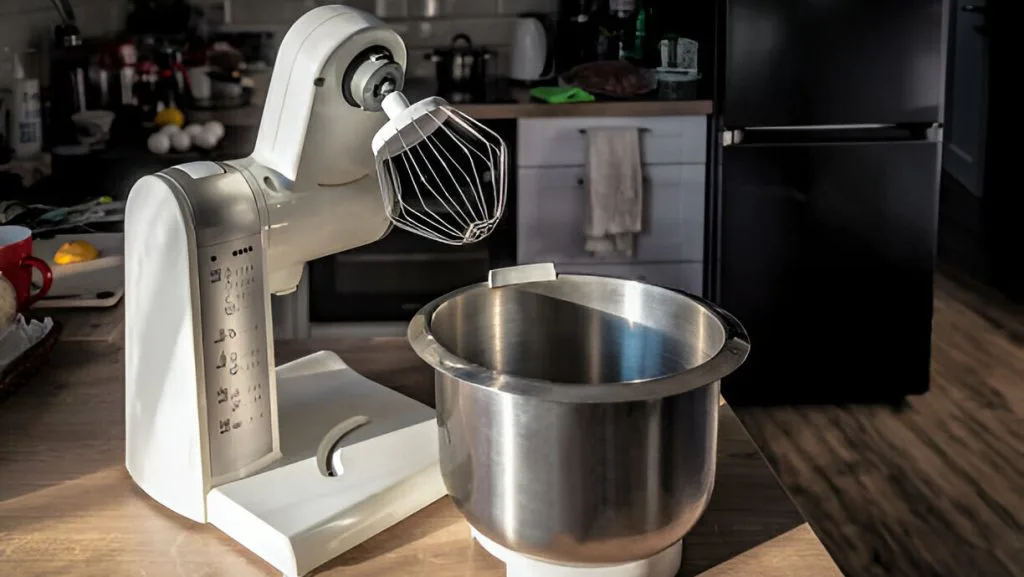
Take the Famag IM-8 Spiral Mixer, for example. It is a favorite among home bakers with enough counter space. It handles 2 to 8 kg (4.4 to 17.6 lbs) of dough, giving silky and elastic results.
Kneading Dough by Hand vs. Mixers: What’s the Difference?
Hand kneading provides maximum control. As gluten forms, you feel the dough change under your hands, letting you adjust as needed. However, it takes time and effort—around 10–15 minutes of consistent kneading for pizza dough.
Using tools like pizza stones and steels can further enhance the final texture. It is also harder for beginners to maintain consistency.
Mixers save time and ensure exact kneading, which is crucial for achieving the smooth, elastic texture pizza dough needs. That said, mixers can heat the dough if used too long, so keeping an eye on the temperature (under 27°C or 80°F) is key.
Key Features to Consider When Choosing a Pizza Dough Mixer
Look for the following features when choosing a pizza dough mixer:
1. Motor Power
Motor power does matter. Trust me, it does. A weak motor will not handle dense pizza dough. Go for the best mixer pizza dough with at least 325 watts for home use. If you are dealing with bigger batches or professional-level baking, look for 500 watts or more.
Check if the motor has a direct-drive transmission. Why? It sends power straight to the attachments, so there’s no wasted energy or unnecessary wear. Brands like KitchenAid Pro Line and Ankarsrum have this feature.
2. Bowl Capacity
This is not just about how much dough your mixer can hold—it is about the type of dough you make. For standard pizza dough, a bowl with 5 to 7 quarts works best for home bakers.
Larger bowls, in the 8 to 10-quart range, are essential if you knead bulk dough for events or a pizzeria. Pay attention to the bowl’s shape. A wide, shallow bowl (e.g., the Bosch Universal Plus) handles small and large batches well.
3. Speed Settings
The range of speed settings is important. For pizza dough, having at least 6-speed options is ideal, and trust me, a slow start feature is best. There will be no flour explosions. Also, it gives the ingredients time to mix evenly.
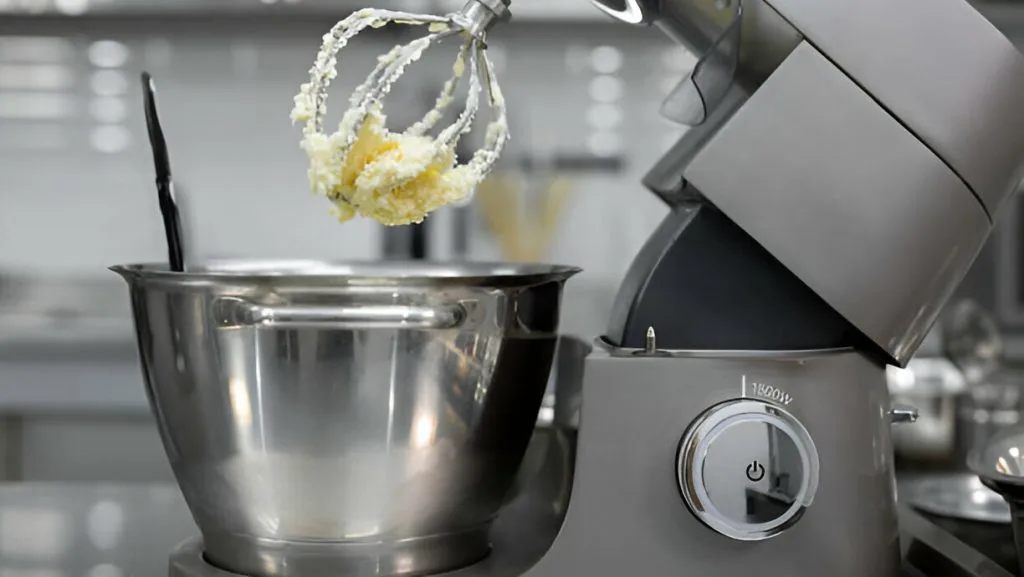
Look for planetary mixing action. This feature means the attachment rotates in multiple directions simultaneously, mimicking the magic of hand-kneading. The result is dough with amazing elasticity, ready for the perfect pizza crust.
4. Durability and Build Quality
Not all mixers are created equal; durability often relies on the materials used. Choose models with all-metal construction instead of plastic.
Plastic gears wear out faster, especially when handling dense dough. Stainless steel bowls are also necessary they resist scratches and dents over time.
5. Ease of Cleaning
Start by checking for user-friendly controls they should make the operation simple. A tilting head is another must have it lets you access the bowl without awkwardly fighting with the machine.
Removable parts make cleaning much easier. Bonus points if those parts are dishwasher safe that is a serious time-saver when it is cleanup time!
How I Test Pizza Dough Mixers
To truly test pizza dough mixers, I skipped the lab and baked in a real home kitchen. Each mixer faced a variety of doughs like 70% hydration Neapolitan and stiff New York style—to consider versatility.
I measured gluten development with the windowpane test, tested stability under 1.5 kg of dough, and used a decibel meter for noise levels (anything above 80 dB got docked points). Cleaning was a big factor, too. Spiral dough hooks, like those on the Bosch Universal Plus, were far easier to clean than traditional C-hooks.
Long term durability was stress-tested by running each mixer for 30 minutes straight premium models like the Ankarsrum Original passed without strain, while budget options struggled.
Best Pizza Dough Maker
The following product passed our testing phase:
Best Stand Mixer For Pizza Dough
Here are the best stand pizza dough mixer:
1. Aucma Stand Mixer – Best For Heavy Use
The Aucma Stand Mixer, with its 6.5-quart capacity and 660W motor, is a universal addition to any kitchen. Its six speed settings and tilt head design are for various mixing tasks. The mixer’s 660W motor handled standard doughs and batters during testing.
However, denser bread doughs need longer mixing times than higher end models. The 6.5-quart stainless steel bowl is right for preparing large batches, accommodating recipes that serve multiple people. The tilt head design eases access when adding ingredients or changing attachments.
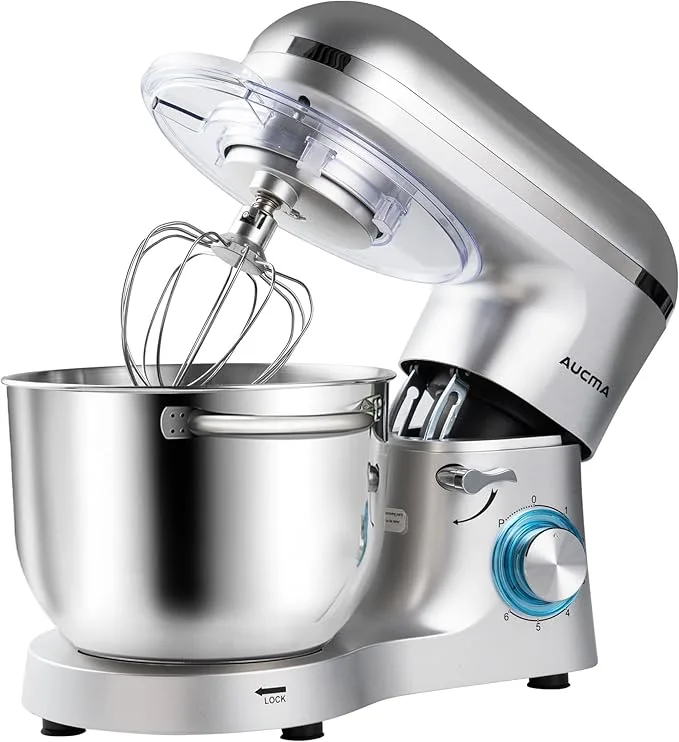
Users have noted that the mixer’s attachments, such as the dough hook and beater, are coated with a shiny finish that may peel over time. A carbon pizza oven review mentioned how proper maintenance of kitchen tools can prevent similar issues.
The mixer’s operation noise is relatively low, measuring ≤76dB, quieter than many comparable models. The Aucma mixer offers a range of features at an affordable price point; some users have said durability concerns under heavy use.
For instance, a user mentioned that the mixer struggled with thick fondant, which may be under powered for professional grade tasks. Therefore, it may be more suitable for home bakers with average usage than those requiring a machine for intensive baking projects.
| Product Details Aucma Stand Mixer |
| Product Dimensions | 15.2″D x 9.4″W x 12.4″H |
| Blade Material | Stainless Steel |
| Weight | 13.8 Pounds |
| Capacity | 6.5 Quarts |
Pros
- A large 6.5-quart capacity
- Six-speed settings
- Relatively quiet operation
- Affordable price point
Cons
- May struggle with very dense doughs or heavy mixtures
What Do We Suggest?
The Aucma Stand Mixer is a good choice for home bakers with moderate mixing needs. However, investing in a higher end mixer may be advisable for more demanding tasks.
2. CUSIMAX TiltHead Dough Mixer – Best For Small Kitchens
The Kitchen in the Box Stand Mixer might be the solution for home bakers with more minor needs. We gave it a real world test, whipping soft cream for desserts and kneading pizza dough. Here’s what we found whether it deserves a spot in your Kitchen.
First, the size. This little mixer is a dream for small kitchens. At less than 7 pounds, it is so lightweight you can store it in tight cabinets or even tuck it into a drawer. The 3.2-quart bowl handles single batches of cake batter and small loaves of bread. But honestly, this is not for big families or anyone tackling bulk recipes.
What sets it apart is the gasket at the attachment joint. Its small but genius detail keeps food slop from sneaking into hard to clean spots. Cleanup is quick and painless, which we always love. The aluminum and stainless-steel attachments held up well for everyday baking tasks.
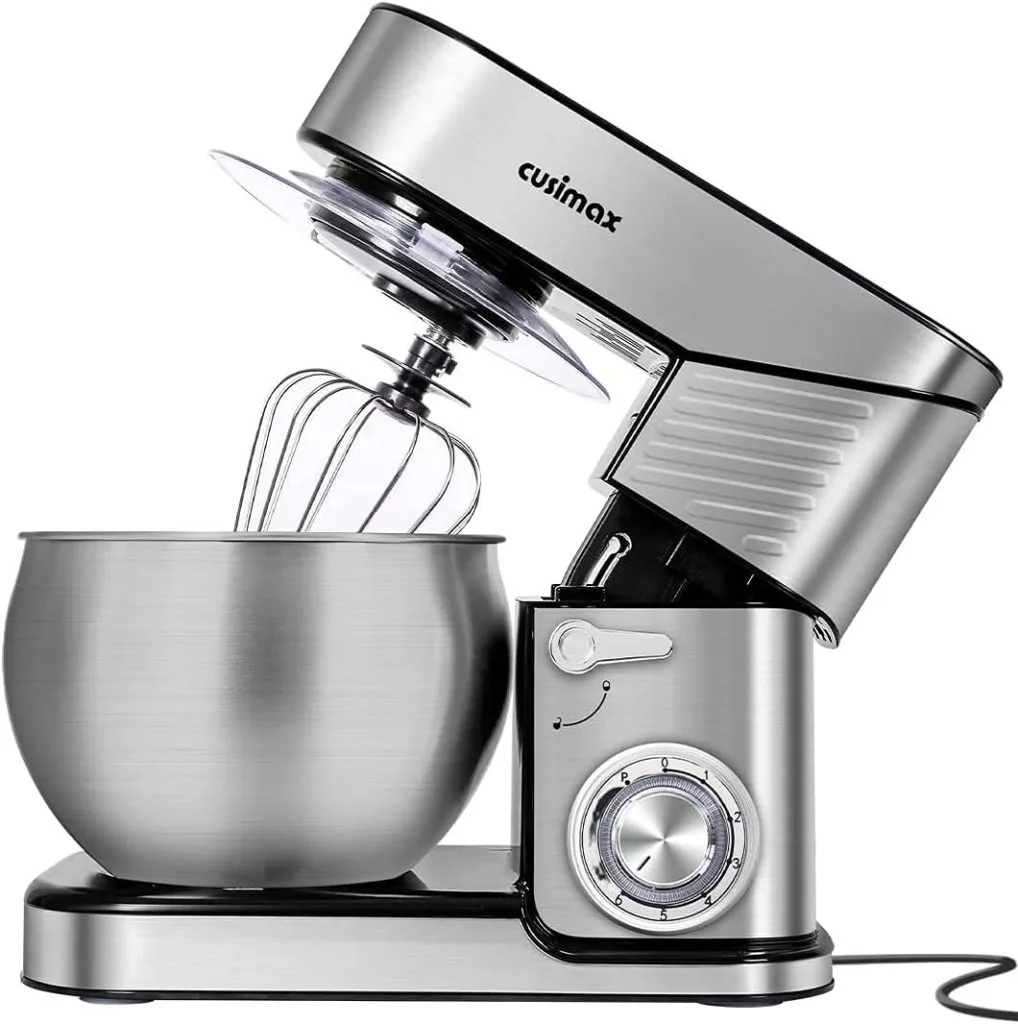
That said, the lightweight design comes with a tradeoff when we mixed heavier doughs, there was noticeable shaking. So, if you make pizza dough for a crowd every week, you might want to look for something sturdier. This mixer ticks the basics for beginners or small households.
It is easy to use, with six speeds. The anti-splash lid is a nice touch, and the suction base keeps it steady most of the time. User reviews back this up. Pamela Crenshaw called it a winner for small batch mixing but did point out the shaking during use.
With its smaller mixing space, you will want to pre measure your ingredients since there is little room to add them while it is running.
So, is it perfect? Not quite. But if you are starting or baking occasionally in a small kitchen, the Kitchen in the Box Stand Mixer is a space saving option and one of the best mixers for pizza dough in its size class.
| Product Details CUSIMAX TiltHead Dough Mixer |
| Product Dimensions | 9.45″D x 14.96″W x 12.2″H |
| Blade Material | Stainless Steel |
| Capacity | 6.5 Quarts |
| Wattage | 500 watts |
Pros
- Compact and lightweight
- Compact & Lightweiht
- Six speeds for mixing
- Durable attachments
- Easy to clean and store
Cons
- Limited space for adding ingredients mid mix
- Small bowl unsuitable for large recipes
Best Commercial Mixer For Pizza Dough
Here are the best Commercial pizza dough mixers:
3. 8.4QT Commercial Stand Mixer 800W – Best For Heavy Tasks
The ZACME 8.4QT Commercial Stand Mixer is best for home bakers and commercial kitchens. With its aluminum die-cast body and a strong 800W motor, this mixer is built to handle almost anything and is made to last. This mixer does the heavy work. During tests, it handled tough doughs like sourdough and pizza easily.
With 11-speed settings, you can batter cream, knead dense bread dough, or anything in between. And unlike weak plastic alternatives, the aluminum body feels solid and reliable. It has a built-in LED light that lights the bowl while mixing.
This is a slight touch but super handy especially when ensuring everything mixes evenly. That said, the LED control display could use a change if you lift the head mid-mix and the machine resets, which can slow things down.
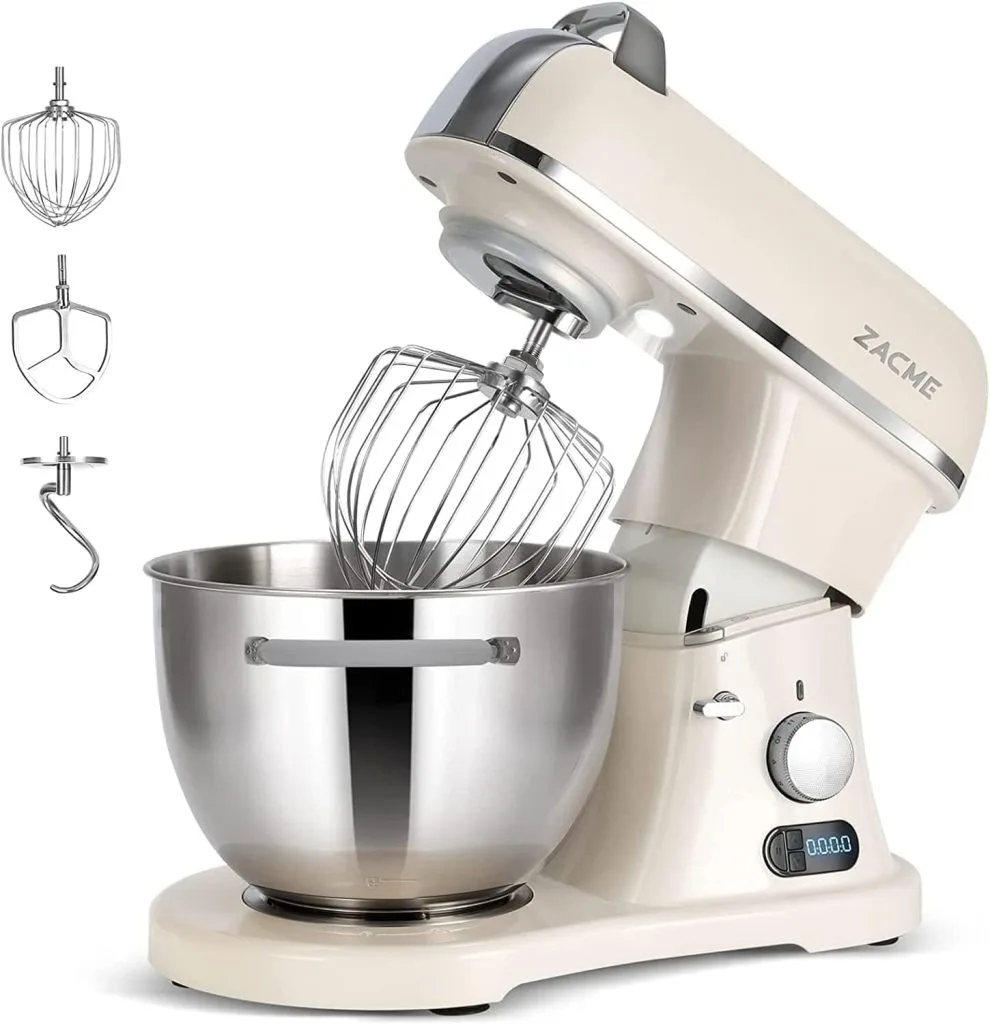
Even with a powerful motor, the ZACME mixer is surprisingly quiet. That is a good option if you are mixing for a while and do not want to wake up the house or distract your coworkers. But no product is perfect. Some users have reported issues like inconsistent motor speeds or banging during use.
This mixer is ideal for serious bakers, small businesses, or anyone who needs a durable, high capacity machine. It is an excellent investment if you are okay with a few minor workarounds. But if seamless operation is your top priority, you should keep looking.
| Product Details 8.4QT Commercial Stand Mixer 800W |
| Product Dimensions | 18.11″D x 12.2″W x 16.3″H |
| Blade Material | Stainless Steel |
| Capacity | 8.4 Quarts |
| Wattage | 800 watts |
Pros
- Large 8.4-quart bowl
- Planetary mixing
- Built-in LED light for visibility during mixing
- Operates quietly even under heavy loads
Cons
- LED control display can interrupt workflow when lifting the head
- Limited customer service options from the manufacturer
What Do We Suggest?
The ZACME 8.4QT Commercial Stand Mixer is a good choice for heavy-duty tasks. However, minor design flaws and quality control concerns suggest it is best suited for users prioritising functionality over perfection.
4. KitchenAid Artisan Series 5 Quart Tilt Head Stand Mixer
The KitchenAid Artisan Series 5 Quart Stand Mixer immediately stands out for its sleek design and solid construction. It is available in multiple colors. Right out of the box, the stainless steel mixing bowl and attachments feel durable, though the whisk’s finish may wear off with use.
We tested this mixer by kneading pizza dough, making sourdough bread, and mixing biscuit dough. The 325-watt motor was robust enough for thick, heavy doughs, and the tilt-head design made adding ingredients easy.
For those with arthritis or joint pain, this mixer significantly reduces strain compared to hand kneading. Using the dough hook attachment, the mixer effortlessly handled pizza dough, creating a smooth, elastic texture in minutes.
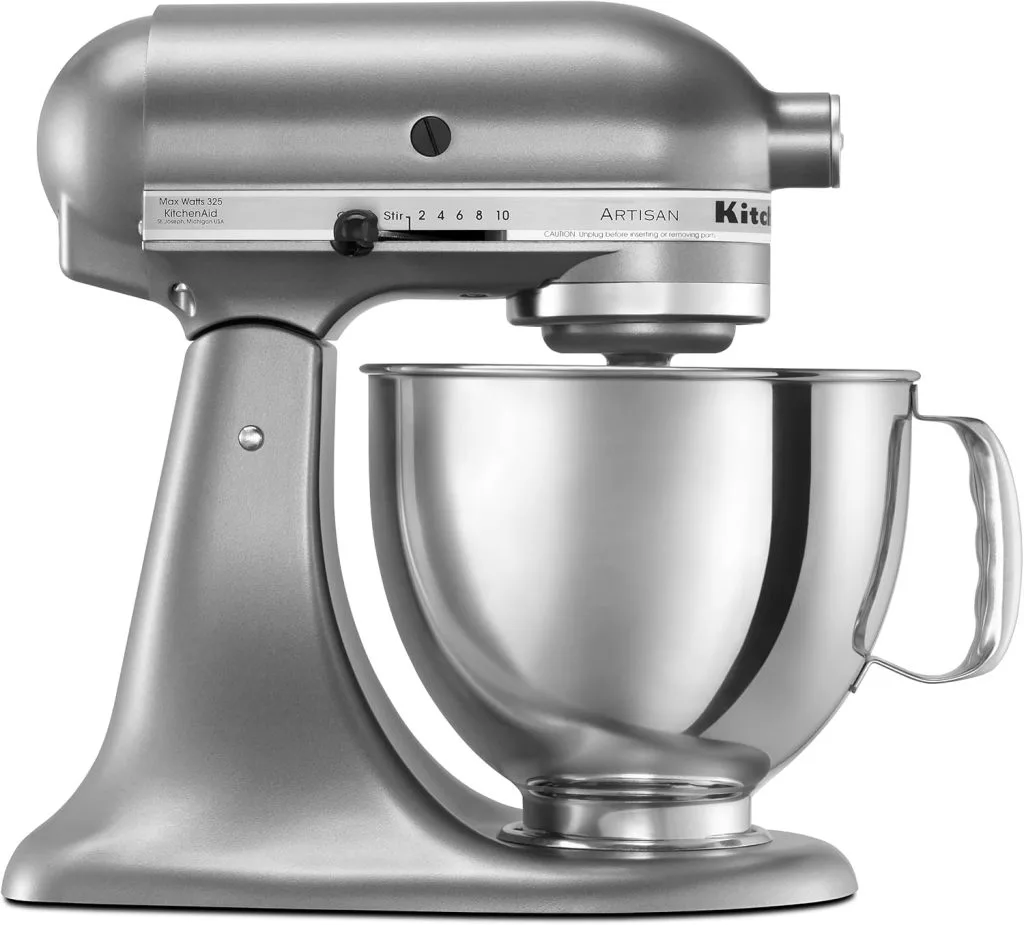
It maintained a consistent mixing speed without overheating. The tilt-head function makes removing the bowl and attachments simple. The stainless steel bowl is easy to clean, but the whisk attachment loses its coating after washing.
Hand-washing the attachments is recommended if you plan to use this mixer regularly. The heavy-duty base keeps the mixer stable, even at high speeds. While it is not the lightest appliance, it fits under most kitchen cabinets for easy storage.
| Product Details KitchenAid Artisan Series |
| Product Dimensions | 14.1″D x 8.7″W x 13.9″H |
| Blade Material | Stainless Steel |
| Capacity | 5 Quarts |
| Wattage | 325 watts |
Pros
- Strong motor
- Easy to use
- Great for arthritis sufferers
Cons
- Heavy appliance – Not ideal for frequent moving
What Do We Suggest?
This model is a fantastic choice for those looking for the best KitchenAid for pizza dough due to its power, ease of use, and durability. However, due to its weight, be mindful of the whisk’s coating wearing off and store it in a fixed location.
Best Home Mixer For Pizza Dough
Here are best pizza dough mixer for home:
5. Cuisinart Stand Mixer
Its 5.5-quart capacity and 500W motor make it perfect for home bakers who want a reliable option without paying a premium. After plenty of research and hands on testing, here is how it performs in the kitchen.
This mixer is good for everyday baking. Its planetary mixing action means ingredients are mixed thoroughly though, fair warning: you might need to rub the bowl occasionally since it does not have a built-in paddle scraper. During testing, the dough was kneaded for over 20 minutes without overheating.
Although a 500-watt motor might not sound as powerful as high-end mixers, it is efficient for medium workloads. It will handle most recipes, but you might push its limits if you tackle dense doughs or mega batches.
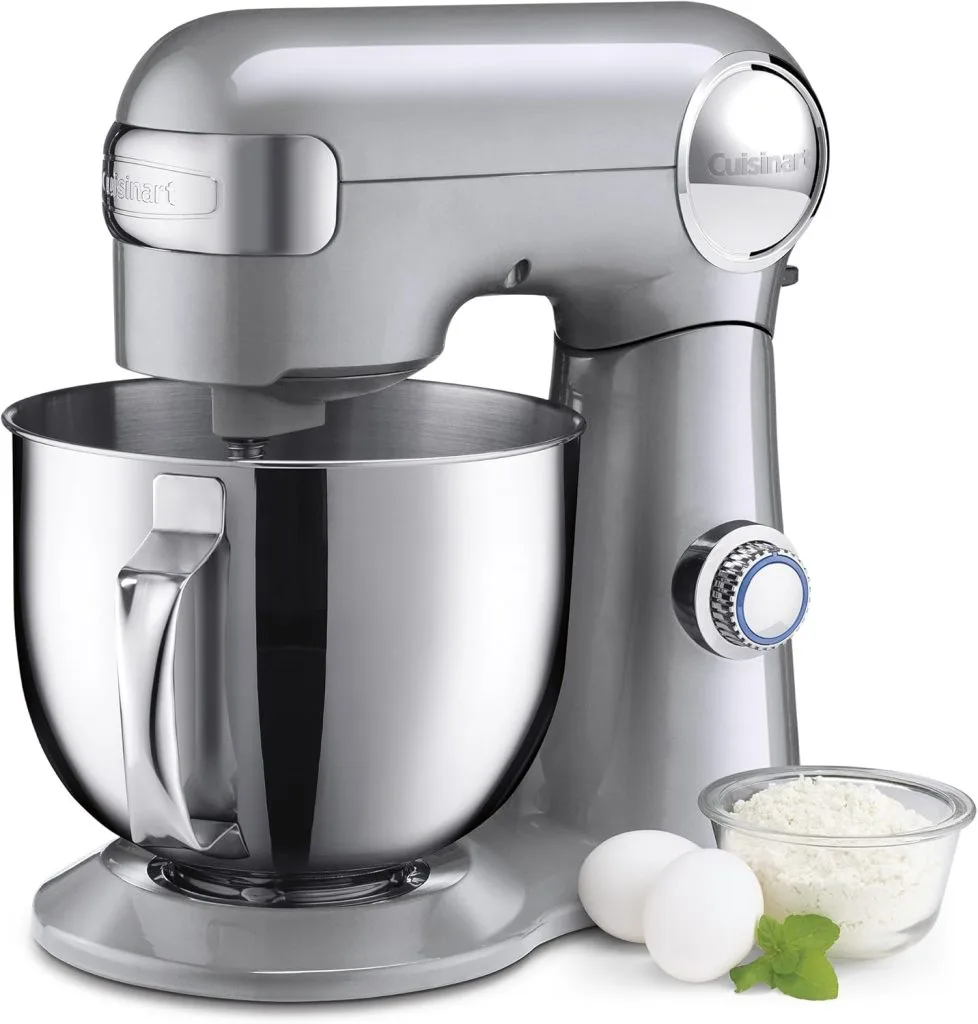
One user pointed out that the mixer stays stable even during tough tasks. The mixer keeps spinning even when the head is lifted, making it super convenient to scrape off excess batter.
Some users found the two-piece design inconvenient since you must remove it to swap attachments. The magnetic cover is a neat design feature, but some users noted that it tends to fall off over time something to keep in mind.
If you are a home baker who wants a reliable, versatile, and affordable mixer that does not compromise style, the Cuisinart Stand Mixer is trustworthy. Professionals or heavy-duty users might find the motor underpowered for nonstop commercial use.
| Product Details Cuisinart Stand Mixer |
| Product Dimensions | 7.87″D x 14.17″W x 14.13″H |
| Blade Material | Stainless Steel |
| Capacity | 5.5 Quarts |
| Item Weight | 17 Pounds |
| Wattage | 500 watts |
Pros
- Sturdy build with all-metal attachments
- Smooth tilt-head mechanism
- Handles medium workloads
- Multiple colour options
Cons
- The motor may struggle with very dense or heavy dough
- Magnetic port cover may not stay secure over time
6. Hamilton Electric Stand Mixer – Budget-Friendly Mixer
The Hamilton Beach Electric Stand Mixer surprised us with its affordable price and solid performance. It’s lightweight and compact, ideal for small kitchens with limited space. The stainless steel mixing bowl and included attachments felt sturdy, though the outer shell is plastic.
We tested this mixer by making pizza dough, cookie batter, and cake mix. The mixing ability was impressive, and the tilt-head design made it easy to add ingredients without making a mess. The mixer handled pizza dough well, though we noticed some vibration due to its lightweight design.
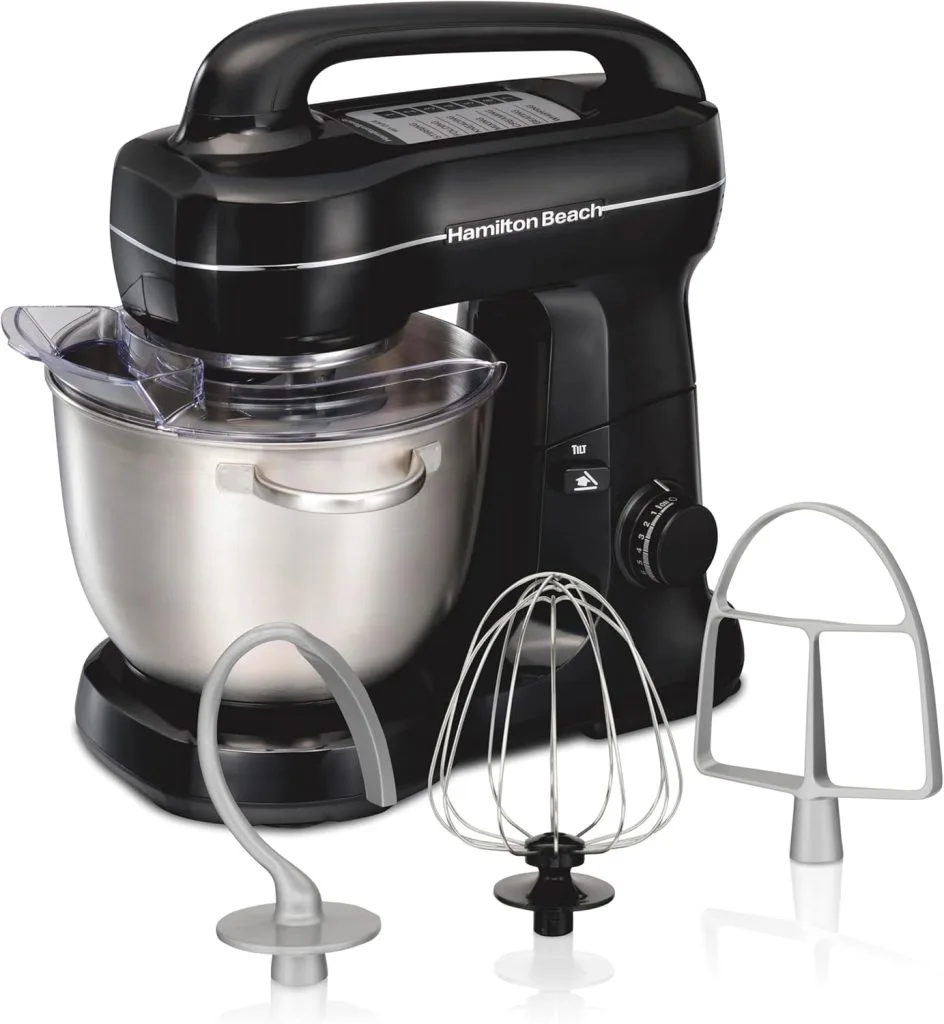
Despite this, the suction cups at the base kept it steady for the most part. When kneading pizza dough, we had to scrape the bottom of the bowl once, as some flour remained unmixed. However, the beaters reached close to the bottom, so this was only a minor issue.
One of the most significant advantages of this mixer is how light and easy it is to store and move. The stainless steel bowl and all parts are easy to clean. The Hamilton Beach Stand Mixer is larger than expected but still compact enough to fit under kitchen cabinets.
| Product Details Hamilton Electric Stand Mixer |
| Product Dimensions | 14.5″D x 10.9″W x 14.4″H |
| Blade Material | Stainless Steel |
| Capacity | 4 Quarts |
| Item Weight | 5.7 Kilograms |
| Wattage | 300 watts |
Pros
- Affordable
- Easy to move and store
- Tilt-head design
- Durable and easy to clean
Cons
- Vibrates slightly when mixing heavier doughs
What Do We Suggest?
We found that the Hamilton Beach Stand Mixer is a fantastic budget-friendly option. It mixes well, is easy to use, and handles pizza dough efficiently despite being lightweight. While premium mixers offer more power and stability, this one performs well for everyday baking at a fraction of the price.
Other Pizza Dough Mixer We Tested
Here are other few pizza dough mixers which we checked but they weren’t upto our test:
1. Mini Angel Electric Stand Mixer – A Compact Choice
The Mini Angel Electric Stand Mixer caught our attention due to its compact design and budget-friendly price. With a 5.5QT capacity, it appeared promising for small kitchens and occasional bakers.
However, during our testing, we noticed a few limitations that kept it from being our top choice. We tested this mixer with whipping cream, kneading pizza dough, and mixing cake batter. While it performed well for light tasks, it struggled slightly with heavier doughs.
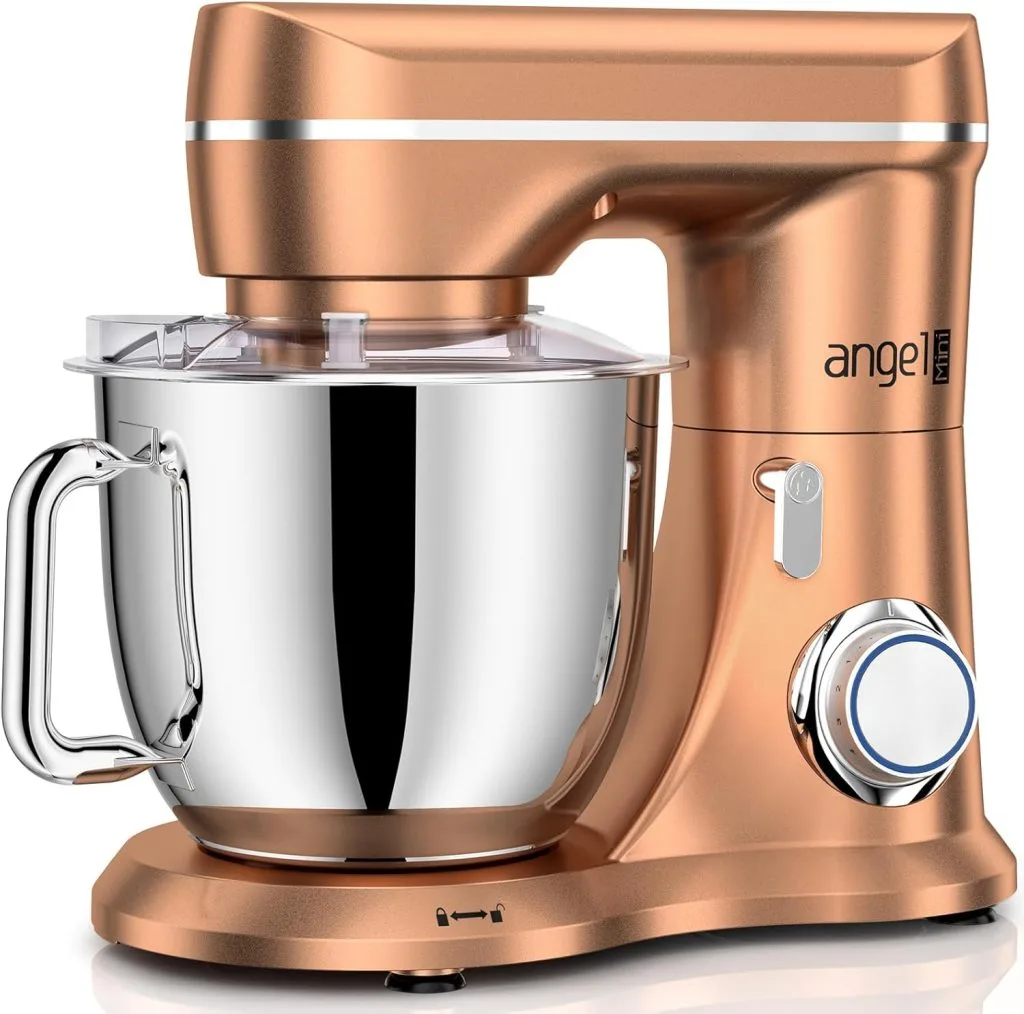
The suction cups at the base helped reduce shaking, but they were not as stable as heavier, premium stand mixers. When kneading pizza and bread dough, we found that the attachments did not always reach the bottom of the bowl, requiring occasional manual scraping.
This could be problematic for those who often make dough-based recipes. Despite its small footprint, it can handle multiple batches, which is impressive for its size. However, the noise level at higher speeds was noticeable, making it less ideal for quiet kitchens.
Why We Did Not Choose It
It does not quite match the power and stability of higher-end mixers. The lack of full bowl coverage and noticeable shaking made it less practical for frequent baking, especially for heavy dough recipes like pizza and bread.
2. Joydeem Electric Dough Maker – Great for Dough
The Joydeem Electric Dough Maker delighted us as a specialized tool for kneading and proofing dough, bridging the gap between standard stands and bulky commercial spiral mixers.
It is designed for serious bread and pizza makers, but a few limitations kept it from being our top choice during testing. We tested this dough maker with high-hydration doughs (65%-75%) and larger batches of up to 2.2kg.
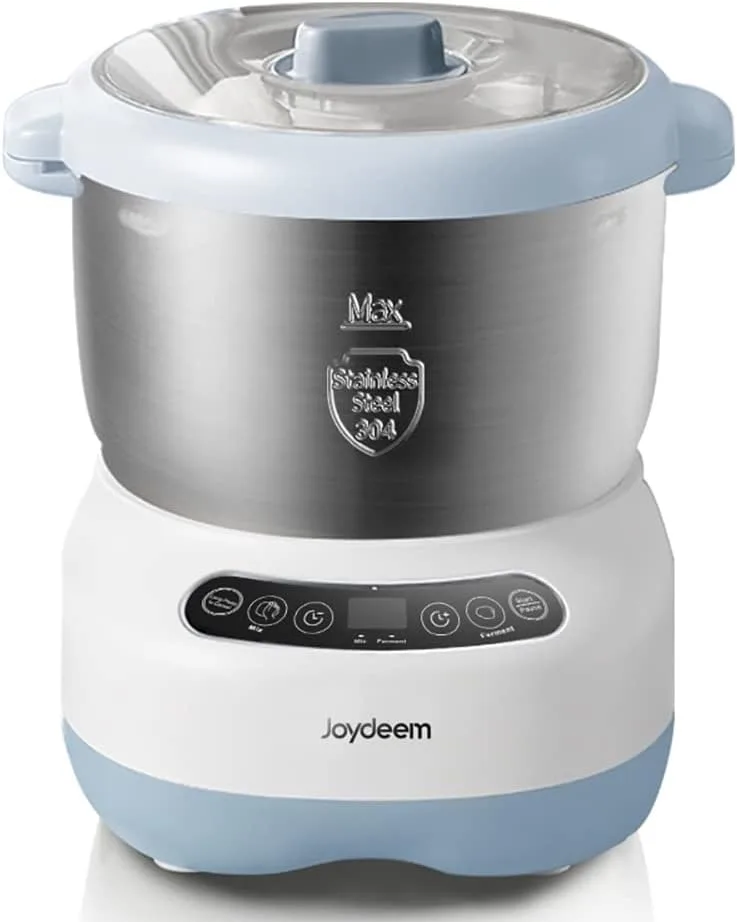
Unlike traditional stand mixers that can be too rough or overheat, the Joydeem uses an intermittent kneading cycle (5 seconds on, then pause) to imitate hand-kneading. This method worked well for developing soft, elastic dough without overworking it.
We found that the proofing function worked best when the room temperature was above 20°C or when warm water was used to kickstart fermentation.
Poorly written instructions made setup and use frustrating, requiring trial and error before getting the best results. It lacks versatility and is unsuitable for general baking tasks like mixing cake batter or whipping cream.
Why We Didn’t Choose It
Its lack of versatility makes it less practical for bakers who need a multi user machine. The unclear instructions were also a drawback, especially for beginners.
Conclusion
Discovering the perfect pizza dough mixer is about aligning the mixer’s capabilities with your baking style, kitchen space, and the types of pizza you want to make.
Each mixer we tested had special strengths and a few issues to offer. The products we picked should fulfill your needs based on your personal preferences. Choose wisely.
Frequently asked questions
How long should I knead pizza dough with a mixer?
You should knead pizza dough in a mixer for about 8–10 minutes. This duration guarantees the gluten develops appropriately, giving the dough the elasticity and texture needed for a great crust.
Can I use any mixer to knead pizza dough?
No, not all mixers are suitable for kneading pizza dough. A mixer with a powerful motor and a dough hook attachment is important to handle dough's dense, heavy consistency without tiring the machine.
What speed should I use when kneading pizza dough?
When kneading pizza dough, use low to medium speeds (1, 2, or 3). Lower speeds help maintain control and prevent overworking the dough, ensuring it remains smooth and elastic.
Reader comments
Tried this oven, tool, or recipe? Share how it went — real experiences help other home pizza makers.