
Gozney Roccbox Review: The Best 12-Inch Neapolitan Oven Has a 40-Minute Catch
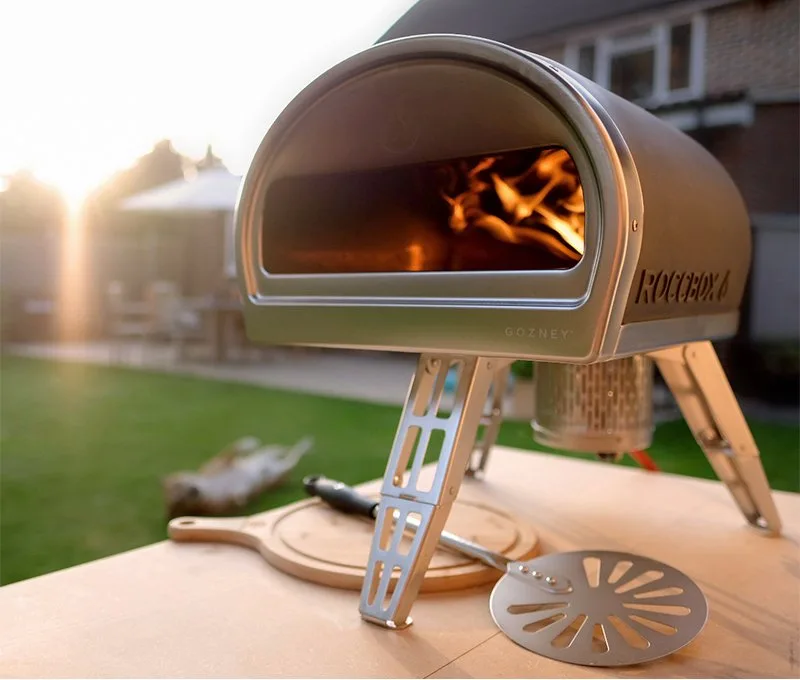
How it scores
What I liked
- Rear 'rolling flame' produces genuine Neapolitan leoparding on the crust edge
- 19mm cordierite stone holds heat far longer than the thinner stones in most competitors
- Safetouch silicone jacket keeps the dome and sides cool to the touch during a bake
- Stainless steel shell resists rust and warping over years of outdoor use
- Reaches roughly 1000F, the highest ceiling in the 12-inch portable class
- Rear-mounted burner is naturally shielded from wind, unlike side- or front-flame designs
- 1-year (5-year registered) warranty is the strongest guarantee in this oven category
- Dual-fuel capability - the wood burner swaps in without tools in about 10 seconds
What could be better
- 12-inch pizza ceiling makes throughput painful for groups of four or more
- At 44 pounds this moves from storage to patio, not patio to campsite
- The stone is riveted in place, so deep cleaning means reaching in rather than pulling it out
- Front cap and burner area stay dangerously hot even with the silicone jacket on
- A proper stone heat-soak takes 40-45 minutes, longer than the manual suggests
- Rear-mounted control dial is awkward to reach mid-bake
The Quick Verdict - What This Oven Actually Does
The Gozney Roccbox is a 12-inch, dual-fuel portable pizza oven priced at about $499 list, often around $399 on sale. It reaches roughly 950 to 1000F and can bake a real Neapolitan pizza in 60 to 90 seconds. That's the headline claim, and it holds up.
The honest catch is timing. The dial hits temperature fast, but the stone underneath needs 40-45 minutes to fully soak through, not the 20-30 minutes the manual implies. And the 12-inch opening means this is an oven built for one to three people at a time, not a backyard party machine. Keep both facts in mind before you buy.
First Fire - Unboxing, Setup, and the Cure Burn
Setup is quick. The gas burner comes pre-installed, the legs unfold and lock in seconds, and a standard propane tank connects in about a minute. Budget 75-90 minutes for your first cook, most of that spent on a mandatory cure burn: run the empty oven on high for 30 minutes before your first pizza to burn off manufacturing residue and season the stone. Don't skip this step.
One small annoyance worth flagging early: the factory feet can scratch a stainless prep table. A set of $10 rubber foot protectors solves it, and it's worth buying them on day one rather than after the first scratch.
Build Quality - What Commercial-Grade Portable Really Means
The 44-pound weight is itself evidence of what's inside this oven. That's not a lightweight shell pretending to be a serious tool; it's a dense, heavy stainless steel body wrapped in a gray or olive silicone jacket Gozney calls Safetouch. The jacket absorbs heat so the dome and sides stay cool enough to touch mid-bake, even while the interior sits above 950F.
Under the hood is a 19mm cordierite stone, noticeably thicker than the roughly 12mm stones reported in competing 12-inch ovens. More stone mass means more stored heat, which means the surface recovers faster between pizzas and holds a steadier bake temperature. The tradeoff: the faceplate is riveted, so you can't pull the stone out for a deep scrub the way you can on some rivals. And the built-in thermometer probe reads the dome's air temperature, not the stone - a distinction that matters more than it sounds like it should (more on that below). A 1-year (5-year registered) warranty backs all of it, the best guarantee in this size class.
The Rolling Flame - Why the Rear Burner Is Built for Neapolitan
Most 12-inch ovens use an L-shaped side burner. The Roccbox mounts its burner at the rear and angles it upward, so the flame rolls forward across the dome ceiling and curls back down, wrapping the pizza in heat from above while the stone handles the base. That geometry is exactly what a 60-90 second Neapolitan bake needs: fast, even top heat paired with a hot floor.
I've stood at a patio table on a windy evening watching that flame lick forward over a 65%-hydration skin, turning the pie a quarter-turn every 20 seconds while a stiff breeze did absolutely nothing to it. That's not luck. The rear placement is shielded by the oven's own body, so wind entering from the front never touches the flame directly - a real advantage over front- or side-mounted burners that can gutter out in a light gust.
The payoff is leoparding: those dark, blistered spots on the crust edge that separate a real Neapolitan pizza from a home-oven imitation. Owner accounts consistently point to the thicker stone and this flame path as the reason the Roccbox out-bakes the Ooni Koda specifically for Neapolitan style, even though the Koda holds its own for other crust styles.
How Hot It Really Gets - and How Long You'll Actually Wait
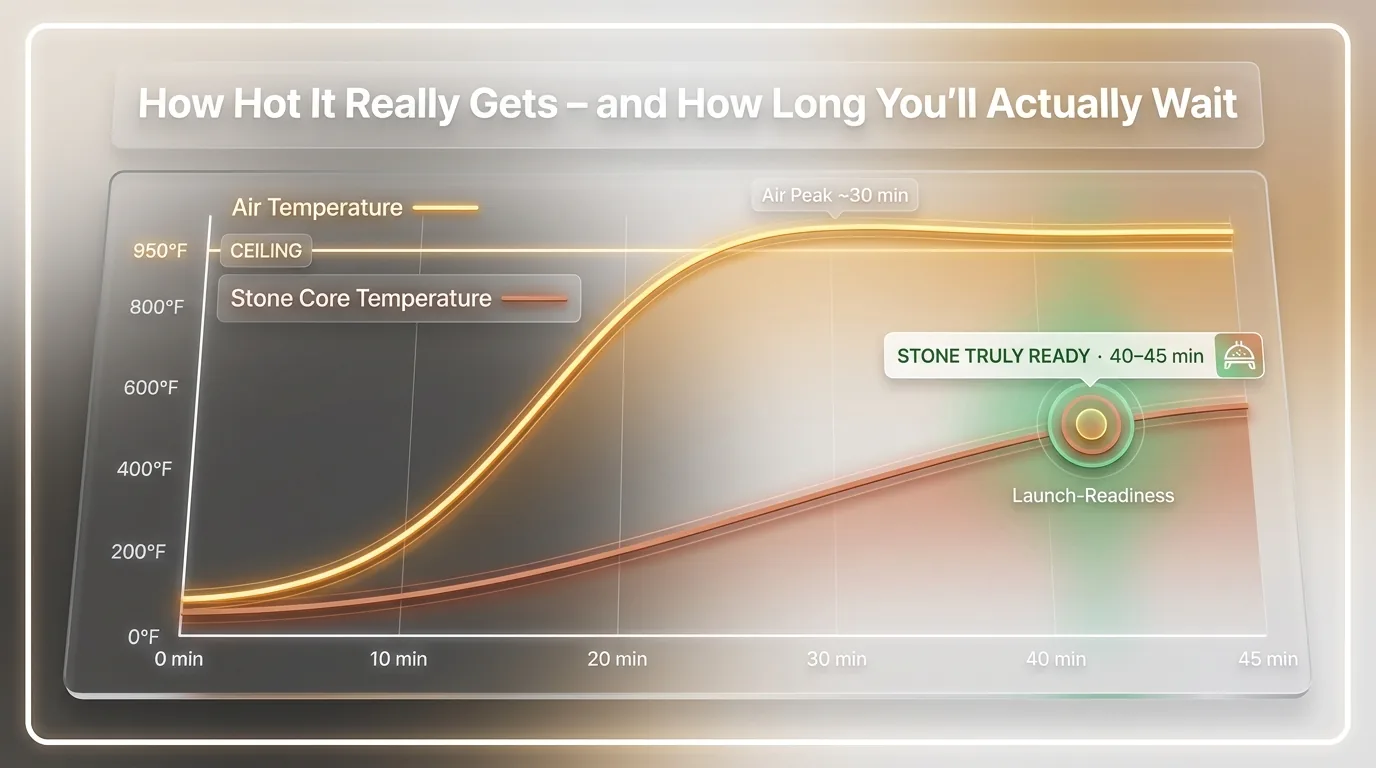
Gozney's own figure is about 950F at maximum; independent measurements have clocked it as high as 1000F. Either number puts this among the hottest ovens in the 12-inch class. But maximum temperature isn't your bake temperature - a real Neapolitan chef never fires at max. My working target is 850F on the stone, checked with an infrared thermometer, with the burner dialed back to roughly half before launch.
Time-to-heat is where the manual oversells. Air temperature climbs fast - about 850F in 29 minutes according to independent tests - but the stone lags well behind the dial reading. Multiple long-term owners land on the same number: budget 40-45 minutes for the stone to actually be ready, not the 20-30 the manual suggests. Fits an 11-inch pizza comfortably on the 12-inch stone, leaving about an inch of clearance on each side so the edge doesn't kiss the flame.
Gas or Wood - What You Actually Get in the Box
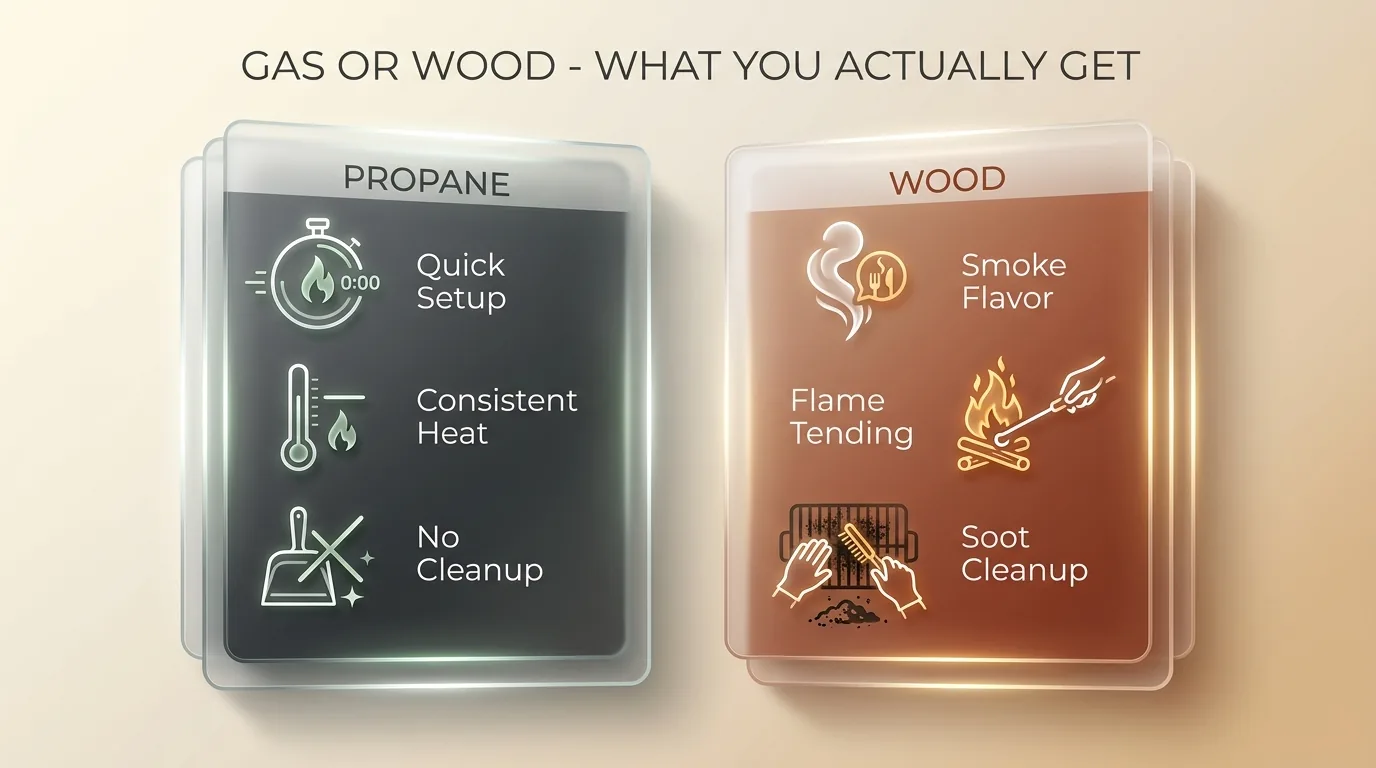
Propane is the standard setup and the right default. It connects to a small 1-pound canister or a full 20-pound tank, delivers consistent heat with zero fuel babysitting during the bake, and is estimated to cost under 50 cents of gas per pizza. A 1-pound canister lasts roughly one cooking session; a 20-pound tank lasts many.
The wood burner is a separate purchase, roughly $50-80, that swaps in for the gas burner in about 10 seconds with no tools. It delivers real smoke flavor that gas simply can't produce, but it demands active management - feeding small pieces every few minutes and accepting wider temperature swings and more soot on the stone. My advice: master gas first, then move to wood once your rotation timing is second nature.
Getting the Best Bake - My Technique for This Oven
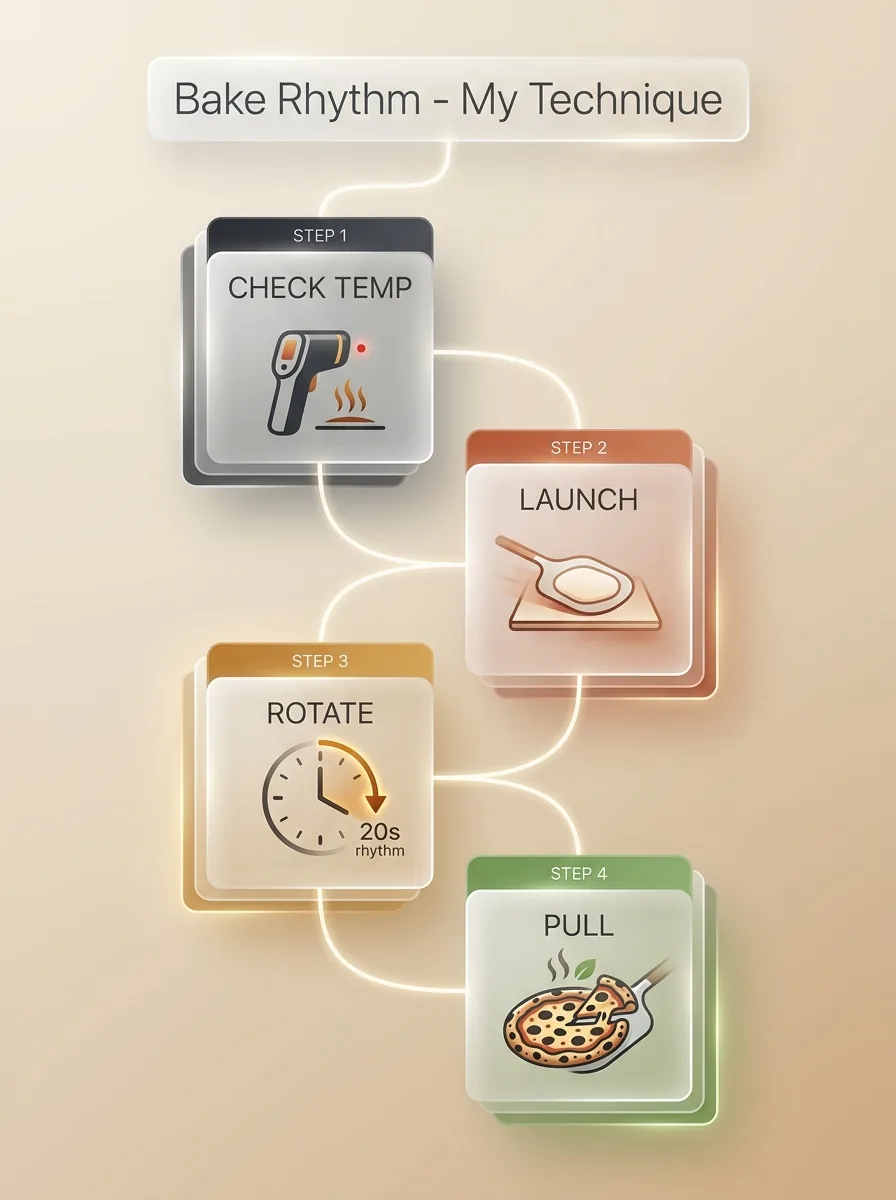
Dough hydration should sit between 60 and 65 percent for this oven's narrow 12-by-3.25-inch opening. Below 60 percent the crust dries out before the leoparding develops; above 65 percent, launching the wet dough through that narrow mouth turns into a mess. Use 00 flour and a 24-72 hour cold ferment; anything rushed tears on the way off the peel.
Once the stone reads 850F on an infrared thermometer, dial the burner to about half and launch. Rotate a quarter-turn every 20 seconds - that cadence matches how the rear flame reaches the pizza, and skipping it leaves one side pale while the other chars. Expect leoparding by the 50-second mark and a done pie by 70-90 seconds.
Between pizzas, push the burner back to full for a minimum of 3-5 minutes before launching the next one. Rushing this recovery window is the single most common reason home cooks end up with a pale, undercooked second pizza.
Where Owners Keep Getting Burned - Troubleshooting the First Bakes
A pale bottom on your first pizza almost always means the stone wasn't heat-soaked long enough - give it another 10 minutes and check with an infrared thermometer, since the built-in gauge only reads air. Dough sticking to the peel at launch usually means hydration crept over 65 percent, or the peel needed more semolina.
Uneven char on one side of the crust means the rotation was too slow; tighten it to every 15-20 seconds. And if pizza two or three comes out pale, the recovery time between bakes was too short - return to full flame and wait the full 3-5 minutes before launching again.
Safety - Beyond the Silicone Jacket
The Safetouch jacket genuinely works: the dome, sides, and rear stay cool enough to touch during a cook, which most competitors in this price range can't claim. But it doesn't cover everything. The front cap, the oven mouth, and the burner assembly are directly exposed to 950F-plus heat and stay dangerous during and well after cooking.
Treat this oven the way you'd treat any open flame around family. Keep a minimum three-foot perimeter while it's lit, never leave it unattended, and remember the hot mouth sits at roughly table height - close to eye level for a small child. The jacket makes this oven far more forgiving than most, but it is not passively safe around unsupervised kids or pets.
Roccbox vs Ooni Koda vs Gozney's Own Arc Lite and Tread
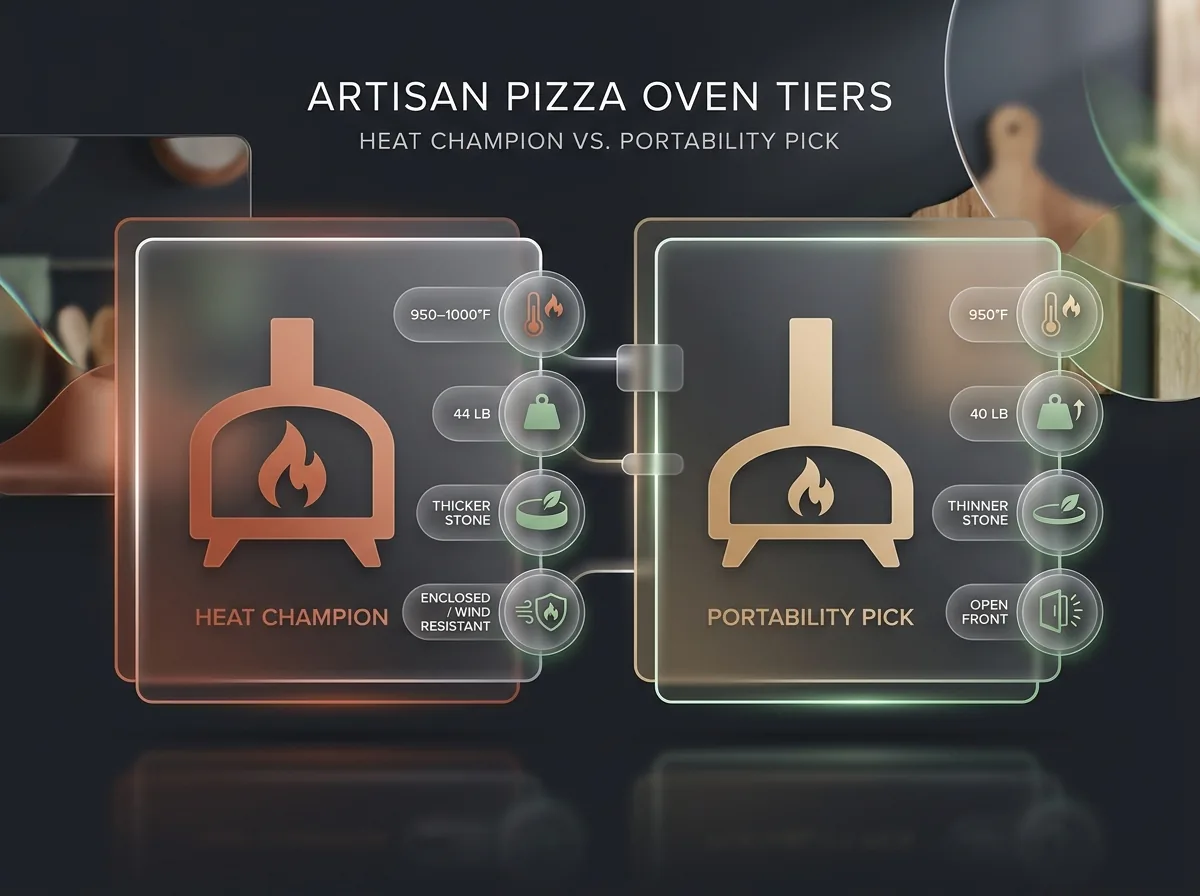
Against the Ooni Koda 12, the Roccbox wins on Neapolitan results thanks to its thicker stone and rolling flame, at a similar price once the Roccbox hits its usual sale point. If you regularly want a bigger New York-style pie or you're feeding four-plus people, the 16-inch Koda's larger stone and flame layout genuinely suit that job better - if you're weighing the two, our [full Ooni ovens buying guide](/best-ooni-pizza-ovens/) breaks the Koda 12 and 16 down side by side.
The more interesting competitor is Gozney's own Arc Lite. It's lighter at 26.4 pounds, has a removable stone, and puts the control knob up front where it's easy to reach - genuine advantages for a beginner in a calm backyard. But its front-facing flame is reported to blow out in light wind, and it tops out around 922F versus the Roccbox's near-1000F ceiling. If you cook in any kind of wind or want the highest Neapolitan ceiling available, the Roccbox is the smarter buy. If you're new to this and your patio is sheltered, the Arc Lite may actually serve you better.
The newer Gozney Tread heats faster - about 23 minutes to 850F versus 29 - and weighs less at 29.7 pounds, with reportedly more even heat distribution. It's a compelling lighter, quicker alternative, though independent long-term data on it is still thin. For proven durability, maximum temperature, and wind resistance, the Roccbox remains the safer bet today.
What You'll Actually Spend Over Time
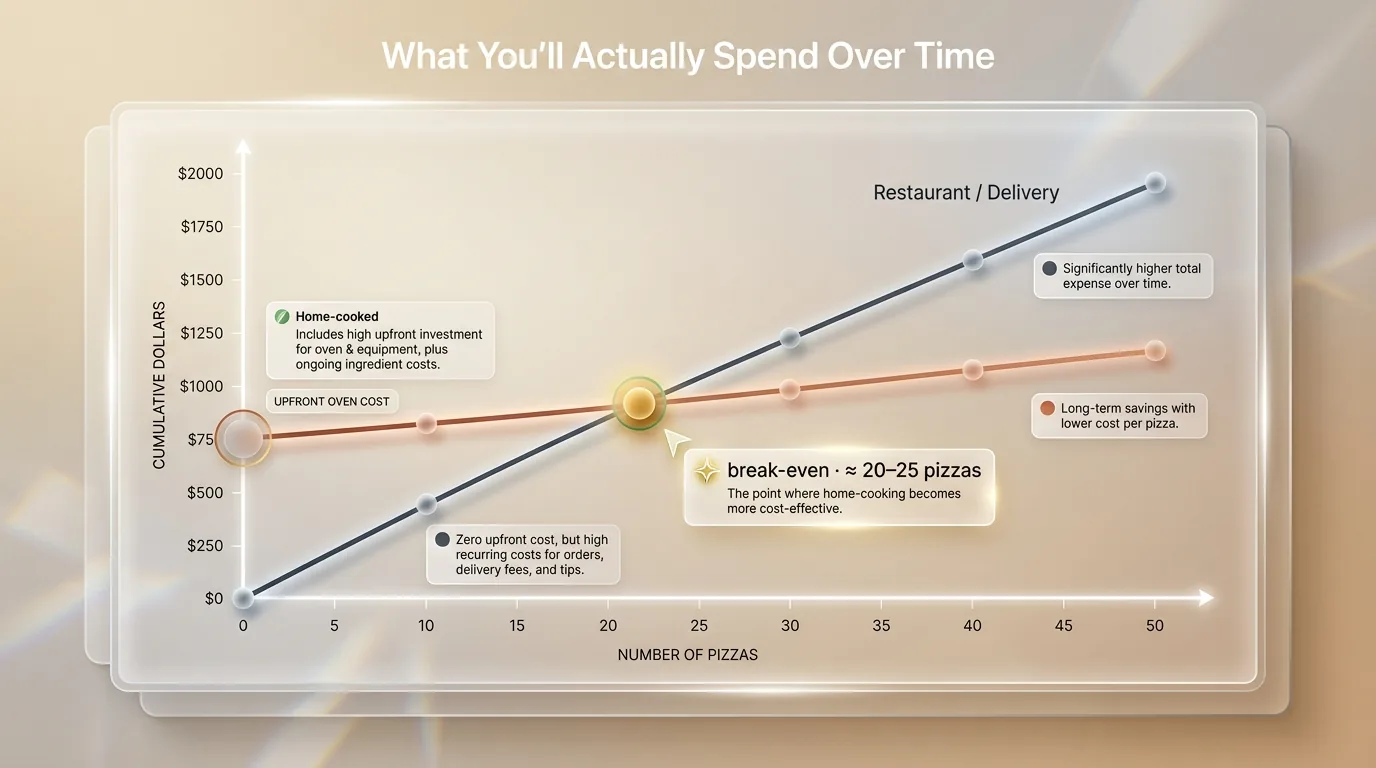
Figure on roughly $460-510 total at the sale price once you add the essentials: an infrared thermometer (about $20, genuinely non-negotiable) and rubber foot protectors (about $10). Add the wood burner and you're looking at $580-610 at list price.
Gas cost per pizza is close to nothing - under 50 cents by most estimates. Compare that to $18-28 for a quality Neapolitan pizza at a restaurant, and the oven pays for itself after roughly 20-25 pizzas, or about six to ten months for a weekly user. If you'll cook fewer than two or three times a month, the math doesn't favor buying; a cheaper oven or an occasional restaurant night is the more honest choice.
Who It's For - and Who Should Skip It
Buy this if you're committed to Neapolitan-style pizza, cook for one to three people at a time, live somewhere with real wind, and want an oven built to outlast you rather than the cheapest option on the shelf. The 1-year (5-year registered) warranty and stainless build back that up.
Skip it if you mostly want New York-style pies, are a total beginner who wants the gentlest learning curve, or regularly cook for five or more - at that point neither this nor any 12-inch oven solves your throughput problem; check our [commercial pizza oven buying guide](/best-commercial-pizza-ovens-buying-guide/) for what actually does.
How it compares
| Gozney Roccbox | Ooni Koda 16 | Gozney Arc Lite | |
|---|---|---|---|
| Price | ~$499 / ~$399 sale | ~$599 / ~$499 sale | ~$349-399 |
| Weight | 44 lb | 26.4 lb | 26.4 lb |
| Max pizza size | 12 in | 16 in | 12 in |
| Max temp | ~950-1000F | ~950F | ~922F |
| Stone thickness | 19mm cordierite | ~12mm (owner-reported) | Removable, thinner |
| Flame geometry | Rear rolling | L-shaped side | Front/side |
| Heat-up to 850F | ~29 min | ~15-20 min | ~36 min |
| Wind resistance | Excellent | Good | Poor |
| Dual fuel | Yes (gas + wood add-on) | No | No |
Also worth considering
Ooni Koda 16
The Koda 16 is the Roccbox's most direct rival for anyone who wants a bigger pie or needs to feed a crowd. Its 16-inch stone gives more launching room and better throughput, though its thinner stone and L-shaped burner produce weaker leoparding than the Roccbox for pure Neapolitan bakes. Durability complaints - broken stones, rusting hardware - come up more often in the Ooni ecosystem than around the Roccbox, which matters for a long-term buy.
Gozney Arc Lite
The Arc Lite is the sleeper competitor to its own sibling. It's lighter, cheaper, has a removable stone, and puts the control knob within easy reach - all real wins for a first-time buyer in a calm backyard. It loses to the Roccbox on wind resistance and maximum temperature, so anyone cooking outdoors in real weather should lean toward the Roccbox instead.
Gozney Tread
Gozney's newest portable oven heats faster and weighs less than the Roccbox, with reportedly more even heat distribution that could suit beginners well. Independent long-term data is still thin, so I'd treat it as a promising alternative to watch rather than a proven substitute for the Roccbox's track record.
Certifications & safety
- Safetouch jacket verified
- 1-year (5-year registered) warranty confirmed
- No gas safety listing confirmed
Frequently asked questions
How hot does the Gozney Roccbox get?
It reaches roughly 950F by the brand's own figure, with independent measurements as high as 1000F, making it one of the hottest ovens in the 12-inch portable class - though I never bake at max, targeting about 850F on the stone instead.
Is the Gozney Roccbox better than the Ooni Koda?
For Neapolitan pizza, yes - the thicker stone and rear rolling flame consistently out-bake the Koda's L-shaped burner; for New York-style pies or feeding a bigger group, the 16-inch Koda's larger stone is the better tool.
Roccbox vs Gozney Arc Lite - which should I buy?
Choose the Roccbox if you cook in any wind or want the higher near-1000F ceiling; choose the Arc Lite if you're a beginner in a sheltered spot who wants a lighter oven with a removable stone and a front-mounted knob.
Is the Roccbox safe to use around kids and pets?
The silicone jacket keeps the dome and sides cool to the touch, but the front opening and burner stay dangerously hot, so I'd keep a three-foot perimeter and never leave it unattended while lit.
How much propane does the Roccbox use?
A 1-pound canister lasts about one 45-minute cooking session, a 20-pound tank lasts many sessions, and running cost works out to under 50 cents of gas per pizza.
Is the Roccbox good for cooking pizza for a group?
It works well for one to four people across a session of three to four pizzas, but the 12-inch, one-at-a-time format gets frustrating for five or more people and a bigger oven is the right call there.
Is the Gozney Roccbox worth the price?
At around $399 on sale it's excellent value for anyone committed to Neapolitan pizza who'll use it two or three times a month or more; casual cooks under that frequency will find the math less favorable.
What's the warranty on the Gozney Roccbox?
It comes with a 1-year warranty as standard, extendable to 5 years if you register the oven with Gozney - among the strongest guarantees in the 12-inch portable pizza oven category.
Gozney Roccbox
★ 4.1/5 · ~$499
Reader comments
Tried this oven, tool, or recipe? Share how it went — real experiences help other home pizza makers.