
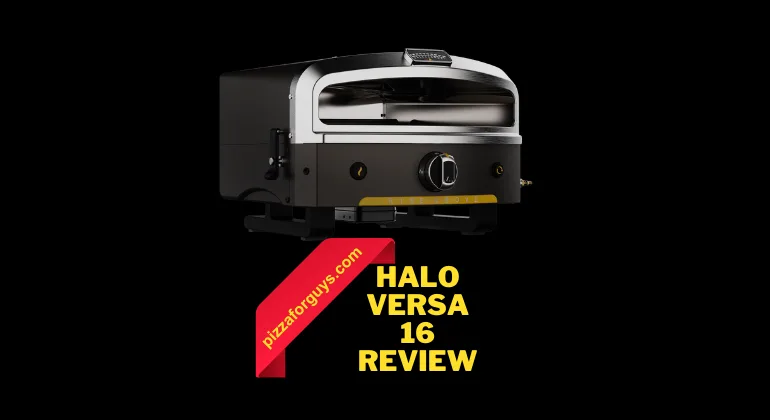
Halo Versa 16 Review: The $499 Rotating-Stone Oven That Fixes the Turn-and-Burn Problem
How it scores
What I liked
- Motorized rotating cordierite stone removes the manual quarter-turn entirely
- Undercuts the Ooni Koda 16 by roughly $100 while adding a feature Ooni doesn't offer
- Dual-burner design (rear flame plus underside infrared) speeds stone recovery between pies
- Hinged clamshell lid gives a full top-down view instead of a tiny peephole
- Genuinely forgiving for beginners - decent results even when the flame isn't dialed in perfectly
- Excels at NY-style, Detroit, pan, and grandma-style bakes
- Warranty support has a real track record of replacing failed motors
- Battery or AC-powered rotation motor works away from an outlet for camping or tailgating
What could be better
- Stone platform screw works loose over time and the motor itself can eventually fail
- Effective usable pizza size runs smaller than the 16-inch stone implies
- No independent top and bottom burner control limits true Neapolitan performance
- Built-in thermometer is unreliable and needs a separate infrared thermometer to trust
- Batteries (2 D-cell plus 1 AA) are required but not included in the box
- Heavier and less travel-friendly than the Ooni Koda 16
The Problem This Oven Was Built to Solve
Picture a single-burner pizza oven with the flame coming from one side only. Every 20 seconds you're forced into a quarter-turn with the peel, because the side nearest the fire chars while the far side stays pale. That's not a skill problem. It's a heat-distribution problem baked into the design.
The Halo Versa 16 answers it differently: instead of you turning the pizza, the stone turns itself. It's a roughly $499 gas outdoor oven built around a motorized rotating cordierite stone (a dense ceramic baking disk) paired with two burners, cooking 16-inch pizzas with a manufacturer-claimed 12-minute preheat and 5-minute bake.
One long-time forum owner who hadn't had consistent luck with pizza before called the rotation a 'game changer' and reported bakes done in five minutes or less. That's a single owner account, not a lab result, but it lines up with what the mechanical design promises: even heat without babysitting.
How Hot It Gets - and What You Actually Get in the Box
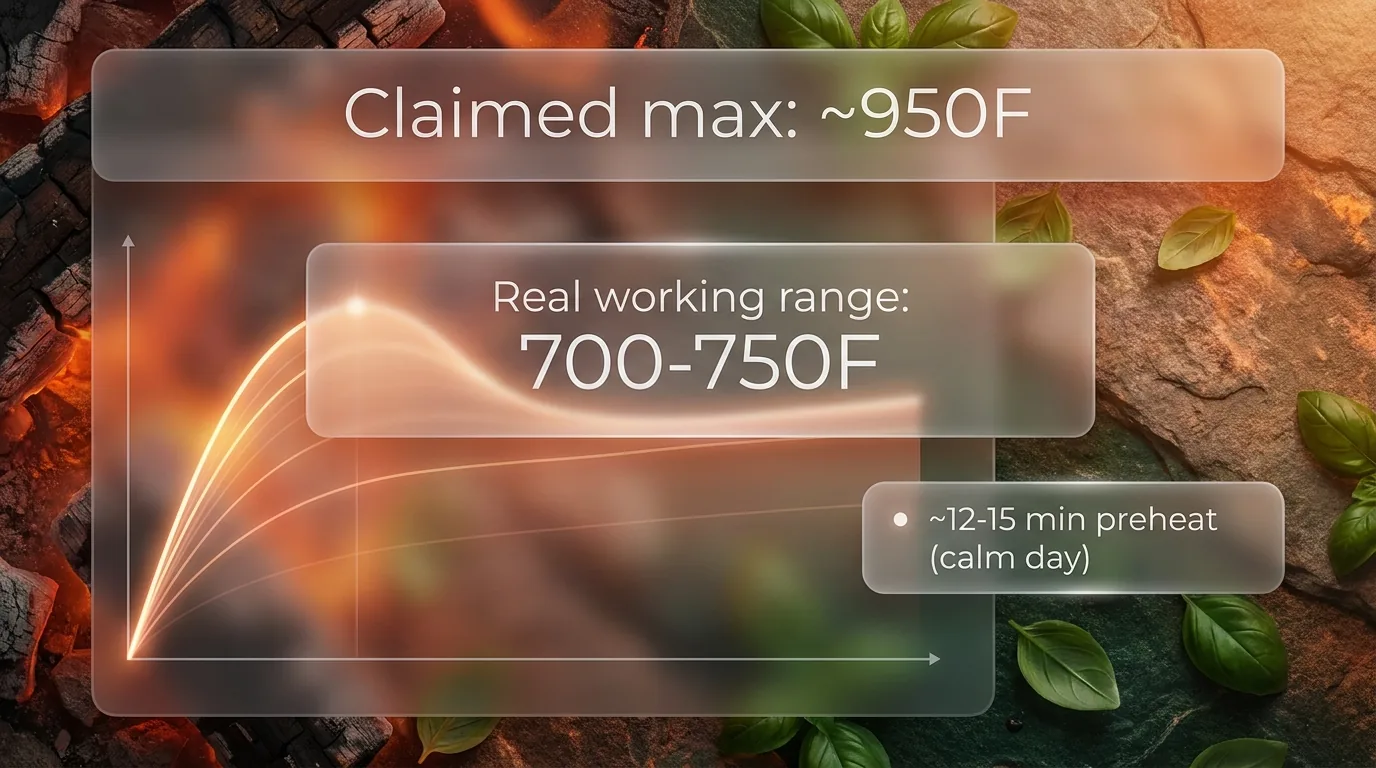
Halo's spec sheet lists a max stone temperature near 950F, a combined 21,100 BTU across both burners, and a roughly 12-minute preheat. Those are manufacturer claims worth stating plainly as such.
Independent, non-sponsored video reviews consistently land the comfortable working stone temp closer to 700-750F, with full-blast spikes toward 850F+ achievable if you wait longer. That gap between claimed max and everyday working temp matters more than the headline number.
In the box: the oven body, legs, the rotator motor assembly, the stone, a clean-out tray, and gas hardware. Not in the box: the 2 D-cell and 1 AA batteries that power the rotation motor, a propane tank, and a pizza peel. Budget for those before your first cook.
I could not confirm a UL, ETL, or CSA safety listing for this oven from any published source, so I'm not going to claim one exists.
Setup and First Light - What to Expect
Assembly takes about 20 minutes: bolt on the legs, seat the rotator motor and hand-tighten its platform screw, drop in the stone, and connect your gas line. None of it requires special tools.
Two things trip up first-time owners. First, the interior ships packed with protective styrofoam that must come out before you ever light the burner. Second, people assume batteries are included; they're not, so test the rotation motor before you fire anything up to confirm it's spinning smoothly.
The Dual-Burner System and the Rotating Stone Explained
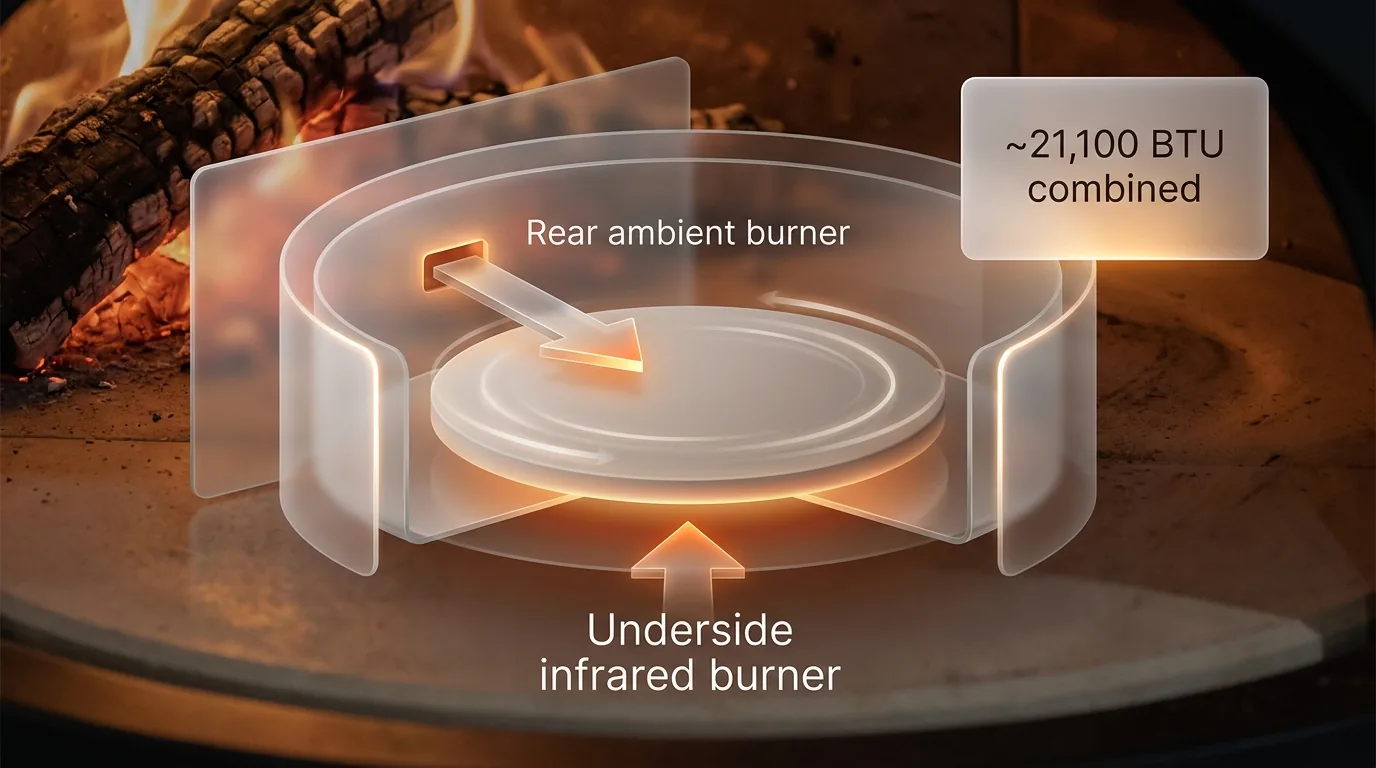
What I keep coming back to is that a rear ambient burner heats the air inside the dome, browning cheese and toppings from above. A patent-pending burner sits underneath the stone and fires infrared heat straight up through the cordierite as it rotates past. Combined, the manufacturer rates the pair at about 21,100 BTU.
As the stone turns, every edge of the crust cycles through the hottest zone near the back burner. That's the whole trick: instead of hoping you turn the pizza at the right moment, the oven does it continuously and automatically.
The honest limitation is that both burners share a single front dial. You cannot crank bottom heat while backing off the top, or vice versa. Serious pizza makers cite this as the clearest gap versus higher-end ovens. Also worth knowing: the built-in thermometer reads unreliably across nearly every independent review I found, so budget for a cheap infrared thermometer gun.
Which Pizza Styles This Oven Actually Nails
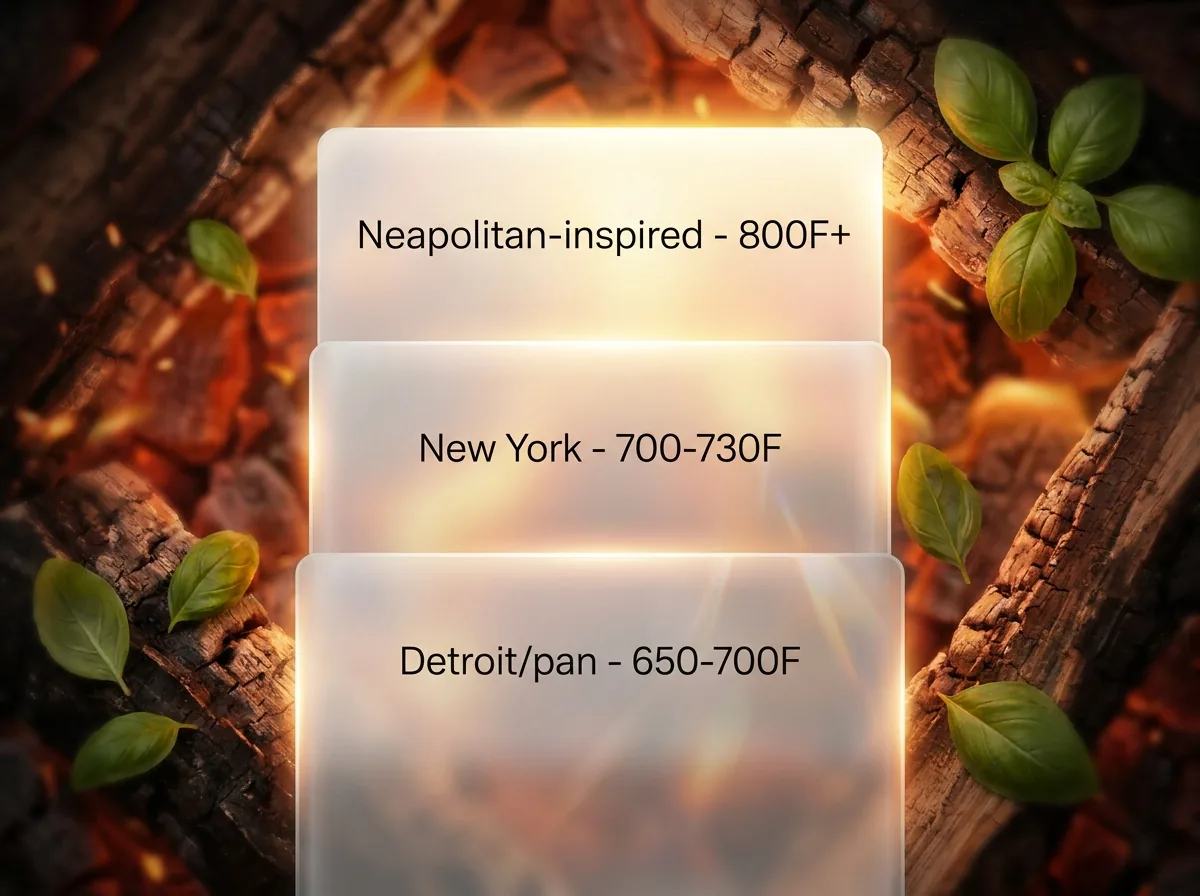
New York-style dough - around 58-62% hydration, cold-fermented a day or two, stretched to 14-16 inches - wants 4-6 minutes at 650-750F stone temp. That's exactly this oven's comfort zone, and the rotation delivers a crisp undercarriage with even cheese melt. A pizza screen for the first few minutes, pulled for the final 60-90 seconds directly on the stone, makes this nearly foolproof.
Detroit and pan styles benefit even more from the rotating floor. The longer 7-10 minute bake at 650-700F would scorch corners in a stationary oven; here the stone keeps moving heat evenly under the pan.
Grandma-style, thick and focaccia-like, thrives on the oven's moderate top heat - it needs even browning, not blistering char, which plays right into what this burner setup does best.
True Neapolitan is the honest exception. At full blast you can coax the stone toward 800F+ and get a 3-4 minute bake with decent leopard spotting, but that's Neapolitan-inspired, not the 90-second, 900F+ result a Koda or Roccbox delivers. If competition-style char is your only goal, this isn't the right tool.
Halo Versa 16 vs Ooni Koda 16 and Karu 16
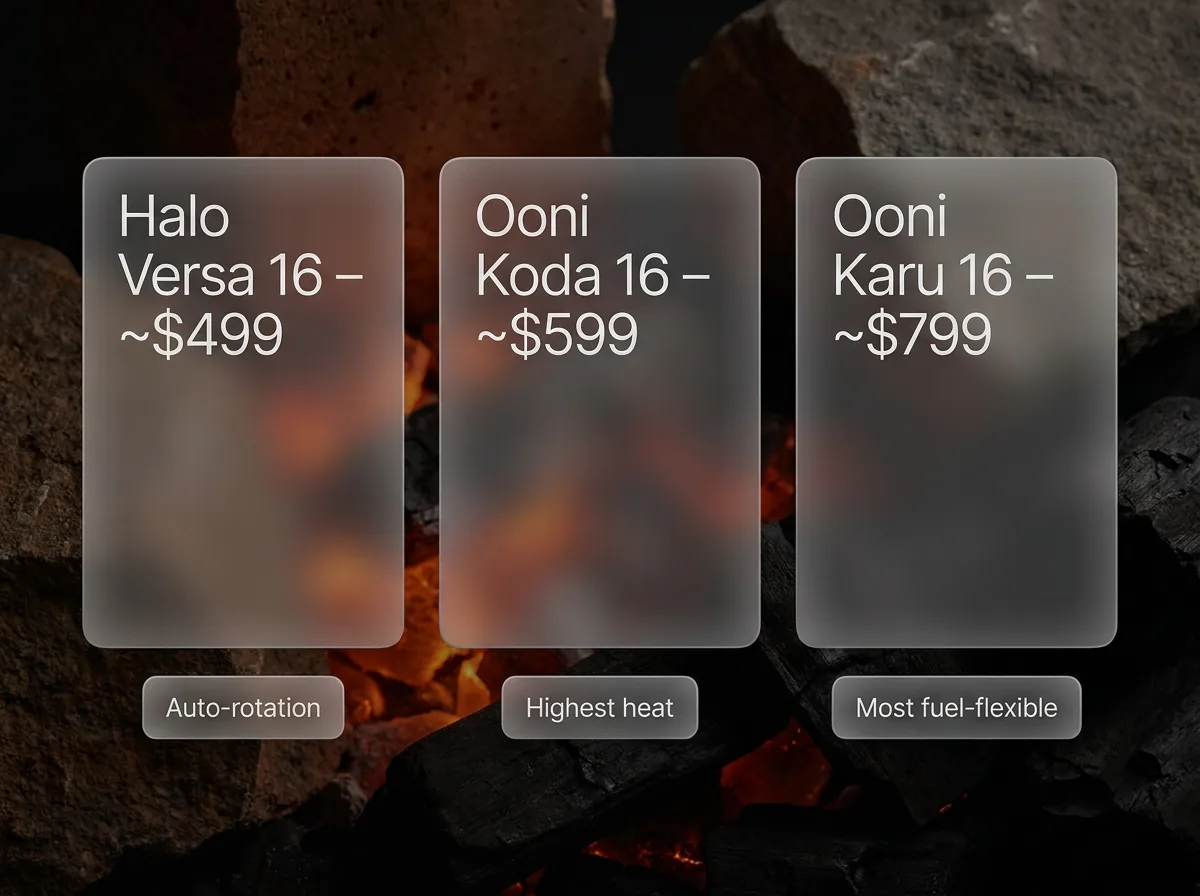
At about $499, the Versa 16 beats the Koda 16's roughly $599 price while adding automatic rotation the Koda simply doesn't have. The Koda still wins on raw peak heat and true Neapolitan speed, and it's noticeably lighter to carry around. The Karu 16, at roughly $799, trades price for wood and charcoal flexibility that neither gas-only oven offers.
If you want hands-free consistency and you mostly make NY, Detroit, or thicker-crust pies, the Versa 16's price-to-feature math is hard to beat. If 90-second Neapolitan char is the whole point, the Koda 16 remains the better tool, and it's worth reading our full breakdown of the best Ooni pizza ovens before you decide between the two families.
The Honest Trade-Off - Rotation Maintenance and Reliability
The rotating stone is both the best feature here and the part most likely to need attention. Owners consistently report the screw that fastens the stone platform to the motor shaft works loose over time, causing the stone to stall or spin erratically. It's a five-minute fix with a screwdriver, but it's recurring, not a one-time assembly step.
At least one confirmed owner report describes a motor failing outright after extended use, which is the mechanical reality of any moving part exposed to heat and vibration. The redeeming detail: that same owner says Halo replaced the part without a fight. That's a meaningfully different story than the warranty run-around some brands in this price tier have earned, a gap we cover directly in our Bertello vs Ooni comparison. Register your Versa 16 the day it arrives.
Fuel Choices, Portability, and What It Costs to Run
The Versa 16 runs on a 1-pound propane canister, a 20-pound tank, or a natural gas line with the right adapter. For anything beyond two or three pizzas, go with the 20-pound tank; a 1-pound canister runs marginal for a real dinner party.
It's patio-primary, not backpack-primary. At roughly 24 by 22 by 15 inches it's car-trunk portable but heavier than an Ooni Koda 16. The battery-powered rotation motor is a genuine perk here though - no outlet needed at a tailgate or campsite.
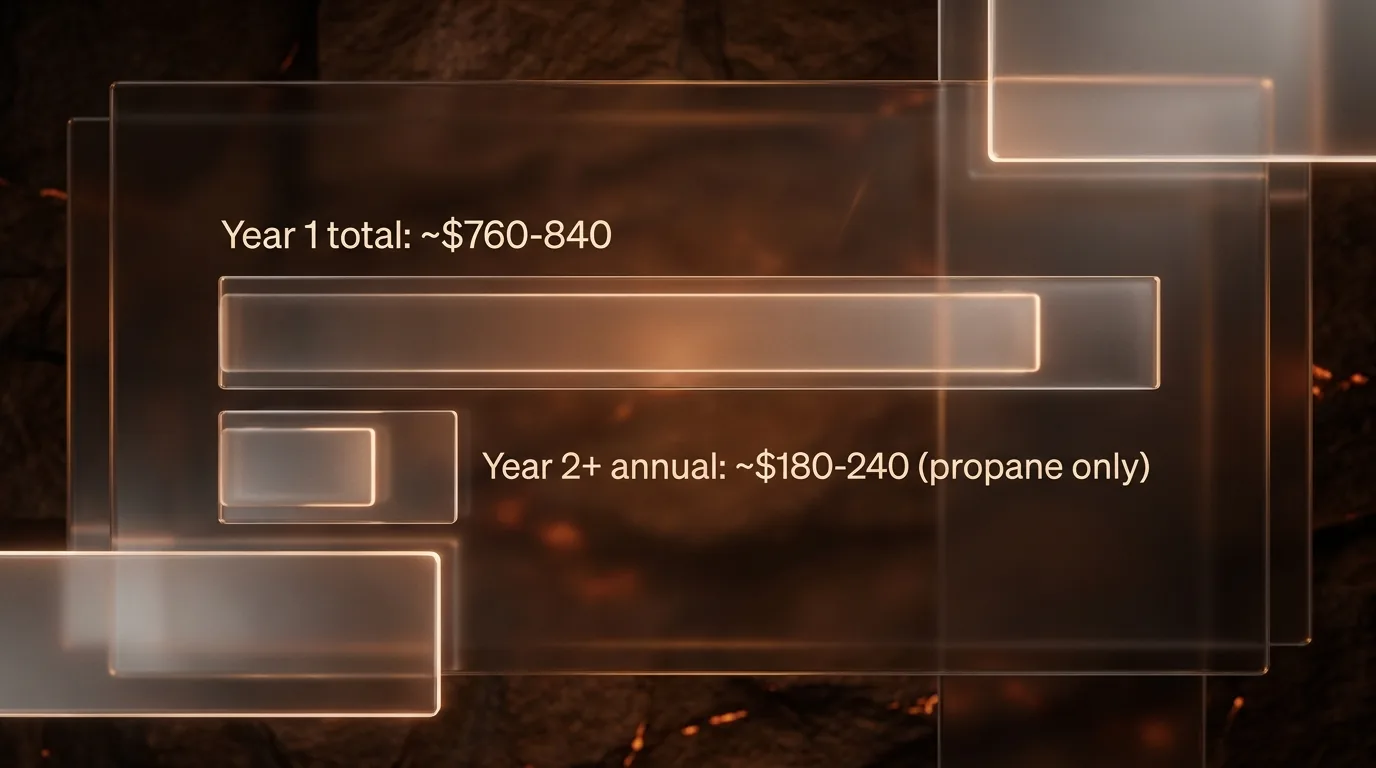
All-in, a realistic first-year cost lands around $760-840 once you add batteries, an infrared thermometer, a peel, and a propane tank. After that, annual propane runs roughly $180-240 for weekly pizza nights - still cheaper than ordering delivery twice a month for a family of four.
Getting the Best Bake - Chef's Workflow
Preheat at least 12-15 minutes, longer in wind or cold, and check the stone with an actual thermometer, not the built-in gauge. Target 650-700F for Detroit and pan, 700-730F for NY, 800F+ if you're chasing a Neapolitan-inspired char.
Before you launch the pizza, stop the rotation motor for a few seconds. A moving stone during launch is the single most common cause of an off-center or folded pie. Restart the motor the moment the pizza is down.
Between pies, keep the motor running and the lid closed, and give the stone two to three extra minutes to re-saturate before the next launch - the underside burner needs that time to catch back up. The oven's wide 18-inch opening also handles flatbreads, calzones, and a cast-iron pan of vegetables, though the 3.25-inch clearance rules out anything tall.
Who Should Buy It - and Who Should Skip It
This oven earns its keep for anyone who's burned a pie doing the manual-turn dance and wants NY, Detroit, or thicker-crust results without babysitting the flame. The price-to-feature math against the Koda 16 is genuinely favorable, and Halo's support record backs up the purchase.
It's the wrong pick if a 90-second Neapolitan leopard-char is non-negotiable, if you need true backpack portability, or if you're not willing to check one screw before each cook session.
How it compares
| Halo Versa 16 | Ooni Koda 16 | Ooni Karu 16 | |
|---|---|---|---|
| Price | ~$499 | ~$599 | ~$799 |
| Stone rotation | Motorized, automatic | None, manual turn | None, manual turn |
| Burner system | Dual (rear + underside infrared) | Single rear burner | Multi-fuel burner |
| Fuel options | Propane or natural gas | Propane or natural gas | Wood, charcoal, or propane adapter |
| Max temp (mfr claim) | ~950F | ~950F | ~950F |
| Typical working stone temp | 700-750F | 850-950F | 850-950F |
| Best pizza style | NY, Detroit, pan, grandma | Neapolitan, NY | Neapolitan, NY, wood-fired |
| Preheat time (mfr claim) | ~12 min | ~20 min | ~15 min (gas) |
Also worth considering
Ooni Koda 16
This is the gold standard for cooks chasing true 90-second Neapolitan char, and it reaches a higher working temperature than the Versa 16 can comfortably hold. It's lighter to carry and has a longer track record in the market. It loses on price and on ease for NY or pan styles, where you're stuck doing the manual turn.
Gozney Roccbox
The closest gas (wood attachment optional) rival at a similar price, with a premium build and blistering Neapolitan temps in a compact package. It's limited to about 12-inch pizzas though, so it's a poor fit if feeding a family with one bake is the goal. Better Neapolitan machine, worse crowd-feeder.
Ooni Karu 16
The most fuel-flexible option here, running wood, charcoal, or propane with an adapter. At roughly $300 more than the Versa 16, that premium buys genuine wood-fired flavor and a learning curve to match. For buyers who just want consistent gas bakes without tending a fire, the extra cost is hard to justify.
Certifications & safety
- No UL/ETL/CSA listing confirmed
- Warranty replacement owner-confirmed
Frequently asked questions
Is the Halo Versa 16 worth buying?
At roughly $499 it undercuts the Ooni Koda 16 by about $100 while adding a motorized rotating stone the Koda doesn't have, making it a strong pick for anyone chasing consistent NY, Detroit, or pan-style bakes rather than 90-second Neapolitan.
How hot does the Halo Versa 16 get?
The manufacturer claims a max of about 950F, but independent video reviews consistently put the everyday comfortable working stone temp closer to 700-750F.
Does the Halo Versa 16 stone really rotate by itself?
Yes - a battery-powered motor (2 D-cell plus 1 AA batteries, not included) turns the cordierite stone continuously under the flame so you never manually turn the pizza.
Can the Halo Versa 16 make Neapolitan pizza?
It can produce a Neapolitan-inspired pie with a 3-4 minute bake at 800F+, but it's not built for a true 90-second competition-grade Neapolitan char, largely because both burners share one dial with no independent control.
What fuel does the Halo Versa 16 use?
It runs on a 1-pound propane canister, a 20-pound propane tank, or natural gas with an adapter, though the tank and adapter are sold separately.
Halo Versa 16 vs Ooni Koda 16 - which is better?
The Versa 16 costs about $100 less and adds hands-free rotation, while the Koda 16 reaches a higher working temperature better suited to true Neapolitan bakes and is noticeably lighter to carry.
Does the Halo Versa 16 need batteries?
Yes, the rotation motor needs 2 D-cell batteries and 1 AA battery that are not included in the box, though it can also run on AC power near an outlet.
What size pizza can the Halo Versa 16 actually fit?
The stone measures 16 inches, but rotation clearance eats into usable floor space, so a comfortably stretched 14-15 inch pizza is the more realistic working size.
Halo Versa 16
★ 4.1/5 · ~$499
Reader comments
Tried this oven, tool, or recipe? Share how it went — real experiences help other home pizza makers.