
The Ooni Koda 16 Still Bakes a 90-Second Neapolitan at 950°F - But the 20-Minute Preheat Claim Is Fiction
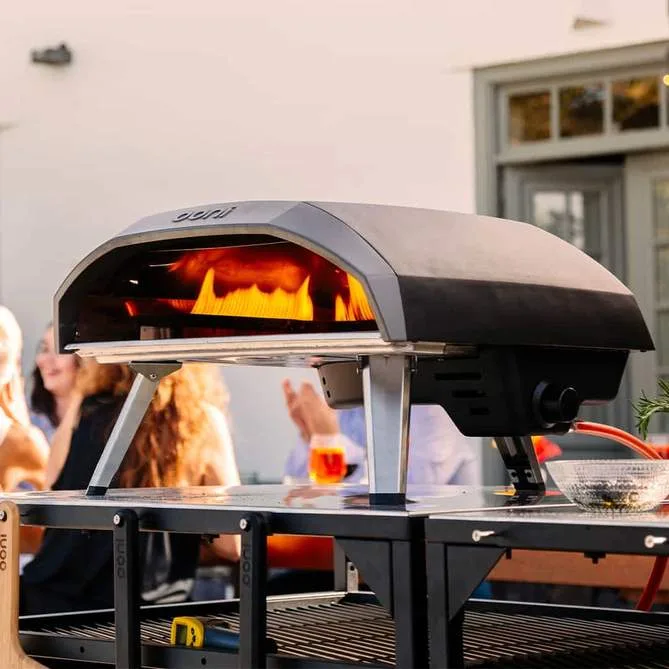
How it scores
What I liked
- Reaches a genuine 950°F (500°C) for real Neapolitan results
- 16-inch cordierite stone is the largest at this price point
- L-shaped burner covers roughly two-thirds of the stone arc, cutting down on turning
- Usable ultra-low flame zone unlocks naan, flatbread, and low-heat cooking
- Works on propane out of the box and converts to natural gas
- Three-plus years of owner reports show the shell holds up structurally
- Cost-per-pizza math beats delivery within about a year of regular use
What could be better
- Real preheat for a launch-ready stone is 30-45 minutes, not the marketed 20
- Stone heat retention forces a 2-3 minute recovery pause between pies at party volume
- Front-left stone zone runs cooler, so rotation technique isn't optional
- Carbon steel shell rusts cosmetically without a cover
- Flame Safety Device can trip repeatedly in windy conditions
- 1st Generation status means the same-priced Ooni Koda 2 has newer burner tech
Quick Verdict and Spec Snapshot
The Ooni Koda 16 reaches 950°F (500°C), bakes a Neapolitan pizza in 60 to 90 seconds once the stone is properly heated, and at its current sale price of about $469 to $499 it's a strong buy for anyone who cooks for a crowd. Its one real weakness is how fast the stone cools between pies - I'll walk through that below. If you rarely stretch dough past 12 inches or you're cooking for one or two people, the newer Ooni Koda 2 is probably the smarter spend for the same money.
Stone: 16-inch cordierite, 15mm thick. Fuel: propane standard, natural-gas convertible. Weight: 40.1 lb (18.2 kg). Safety: Flame Safety Device with auto gas cut-off. Generation: labeled 1st Generation on ooni.com, with the Koda 2 now the brand's current recommendation.
The Opening Cook - Why the First 90 Seconds Tells You Everything
Picture firing this oven on a patio with an infrared thermometer in hand. After a full 30-minute preheat, the stone center reads north of 900°F. Cut the flame, wait for the reading to settle to about 760°F, launch a 68%-hydration Caputo 00 dough, reflame to low, and turn it 180 degrees at 30 seconds, then 90 degrees at 60. Ninety seconds later you're pulling a leoparded Neapolitan pizza with proper char and an open, airy crumb.
The second pizza tells a different story. That same stone, now sitting closer to 680°F after the cut-flame-and-launch cycle, needs a few minutes to climb back. That single gap - one pizza brilliant, the next one waiting on recovered heat - is the honest center of this whole review.
Design and Build - The Burner That Changes Everything
The shell is powder-coated carbon steel - functional, not premium. Owner reports at the three-year mark show cosmetic discoloration and light surface rust without a cover, but no structural failure. Buy the cover; it's cheap insurance.
The defining feature is an L-shaped gas pipe burner rated at 29,000 BTU. Instead of blasting from one point at the rear like the smaller Koda 12, it wraps flame around roughly two-thirds of the stone's arc. That wider sweep means more of the dome and stone deliver top heat at once, cutting down how much you need to turn the pizza - though it doesn't eliminate turning. The front-left zone, farthest from the burner, still runs measurably cooler; independent testing from outlets like Pala Pizza confirms it. My rotation habit - 180 degrees at 30 seconds, 90 degrees at 60 - handles it every time.
The side-mounted control dial has a usable zone below its marked minimum. That's the key to the ultra-low cooking I'll get to shortly. Setup out of the box takes 10 to 15 minutes, no tools required for standard propane use.
Preheat Reality - What the Marketing Doesn't Tell You
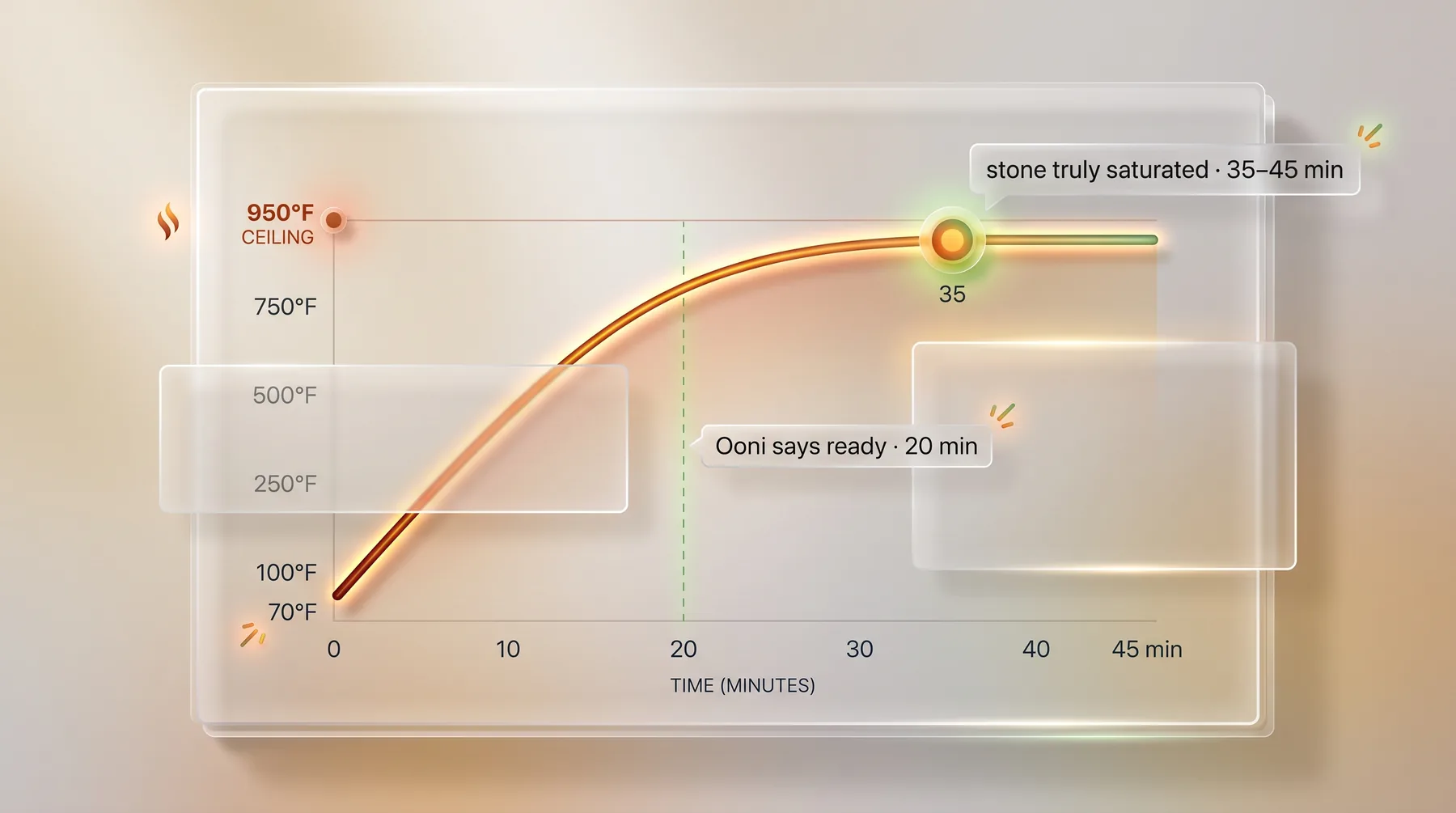
The brand markets it as 950°F in about 20 minutes. That number is real for an air-temperature reading off the surface layer, but it isn't the same as a stone that's heated all the way through its 15mm depth. Owners consistently report needing 30 to 45 minutes for a stone that holds heat through an actual bake, and independent testing lands around 40 minutes for that fully saturated result.
Here's the distinction that matters: a 900°F surface reading at 20 minutes cools the instant room-temperature dough lands on it. A longer preheat builds thermal mass through the full thickness of the stone, and that mass is what actually carries the bake. Set a timer for 35 minutes minimum, and check the stone center with an IR thermometer before you launch anything - the dial tells you nothing about what's happening at the stone.
My Temperature Playbook - Dialing In Every Style
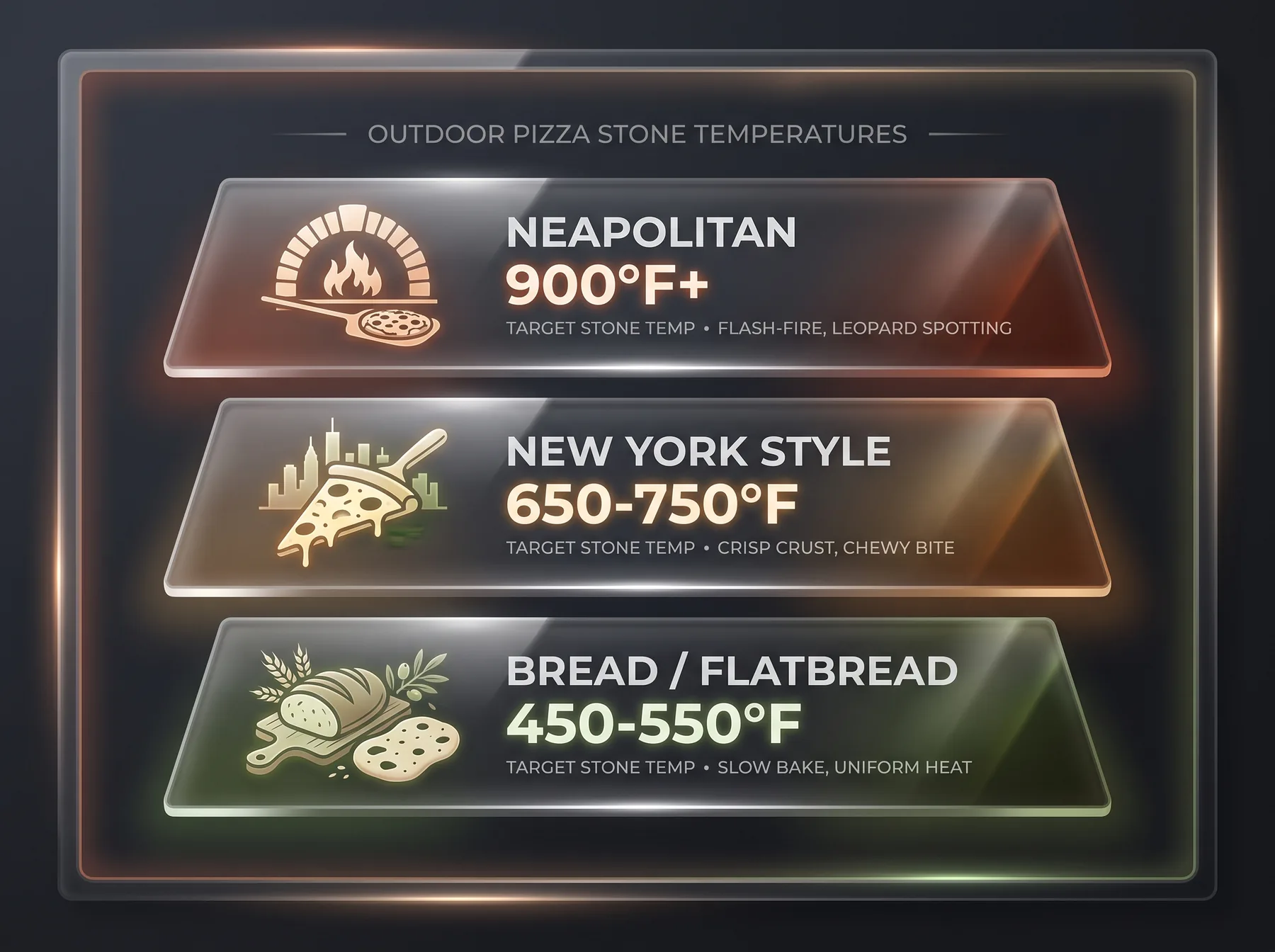
Most reviews give you a ceiling number and stop there. A ceiling temperature doesn't tell you when to launch dough - it tells you when to wait.
For Neapolitan: preheat past 900°F, cut the flame, let the stone center settle to roughly 760°F, then launch and reflame to low. That 760°F launch matters because dough hitting a 900°F stone chars the bottom before the top has a chance to catch up; the cooler stone absorbs moisture more slowly so both sides finish together. For NY-style: aim for a 650-750°F stone and kill the burner for the first two to four minutes of the bake before turning it back on, since the thicker crust needs less immediate char. Bread flour doughs char faster than 00 flour, so drop to about 550°F. Naan and flatbread want 450-500°F with the flame pushed into that ultra-low zone below the dial's marked minimum.
My dough baseline is 68% hydration Caputo 00, cold fermented 24 to 48 hours. Higher hydration buys forgiveness against stone temperature swings; if your bottoms keep burning, check whether you're running dough below 60% hydration first.
Heat Retention - The Oven's One Real Limit
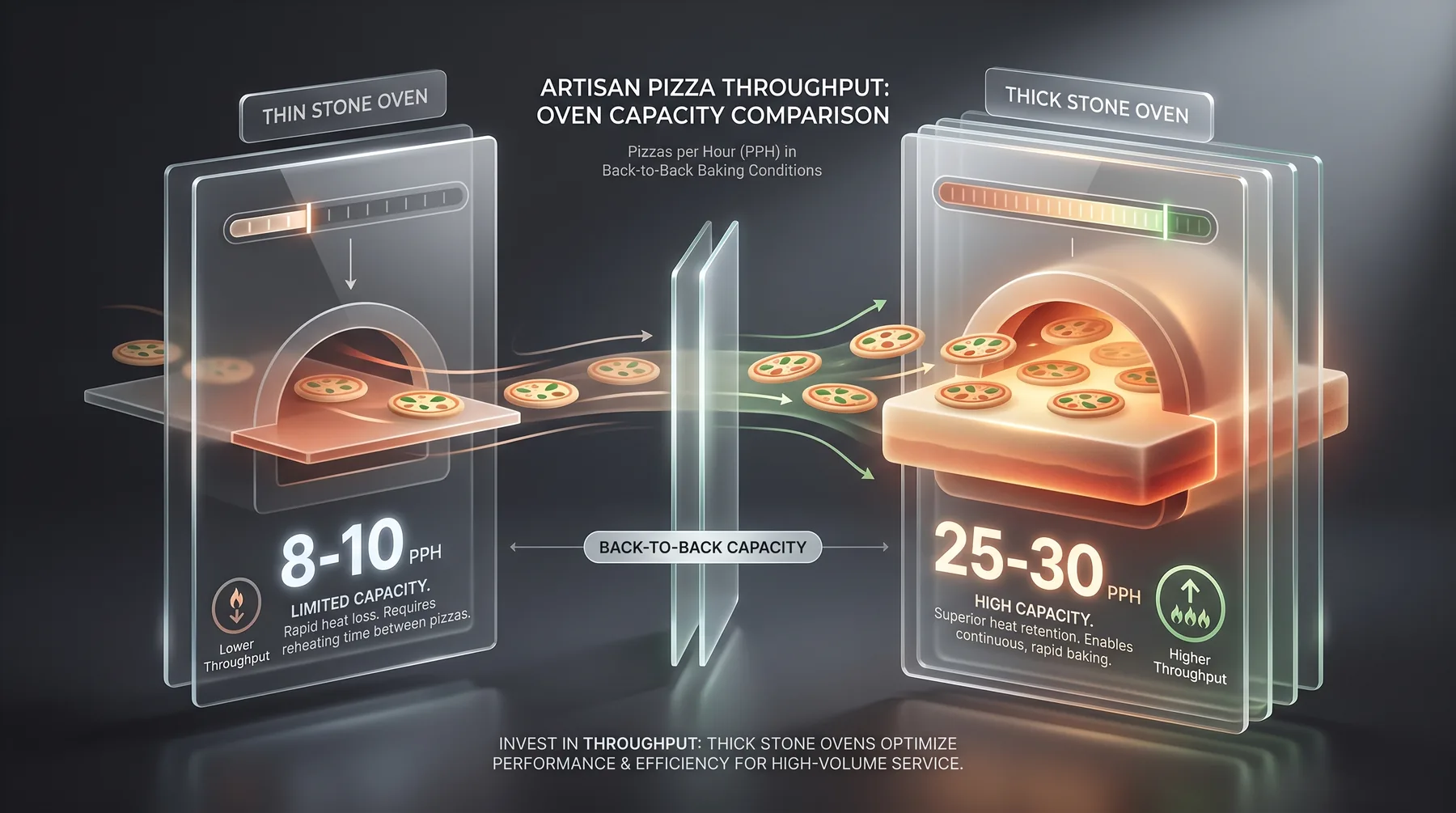
Back to that second pizza on the patio. The stone that read 900°F-plus before pie one has dropped to around 680°F by pie two. The cut-flame-then-launch protocol that produces a perfect first pie is exactly what drains the stone's reserve. That's not a technique flaw - it's the physics of a 15mm cordierite stone under a single burner.
The fix: bump the flame back to high for 60-90 seconds after each pie, then drop back to launch position and re-check with the IR gun. For a group session cooking 8-10 pies, that adds up to real friction - expect a throughput ceiling around 15-20 pies an hour with proper recovery management. Owners comparing directly against Gozney's Roccbox report that oven managing closer to 25-30 pies an hour, thanks to a thicker stone with more thermal mass. For a household cooking three or four pies a session - the realistic majority use case - this limitation barely registers.
Do You Need 16 Inches - and Can It Do More Than Pizza
Yes, the stone and opening genuinely fit a 16-inch pizza. The honest caveat: most home cooks, even experienced ones, stretch dough to 12-14 inches and stop there. The extra footprint still earns its keep by giving you room to turn without clipping the edge, and by letting you run smaller pies alongside bigger ones for a crowd. If you cook for three-plus people regularly, the size pays off; if you're cooking for one or two, put that money toward the Koda 2 instead.
The ultra-low dial position also turns this into more than a pizza oven. A cast iron pan at 600-700°F sears a ribeye in two to three minutes a side. Drop to 450-500°F and you can spatchcock a chicken with real blackened char in 20-30 minutes, or knock out naan and flatbread in 60-90 seconds a side. Bread loaves work at around 550°F with a covered cast iron vessel to trap steam - just check clearance first, since the opening is built for a flat peel, not a tall Dutch oven.
Koda 16 vs Koda 2 vs Koda 2 Pro - Which to Buy
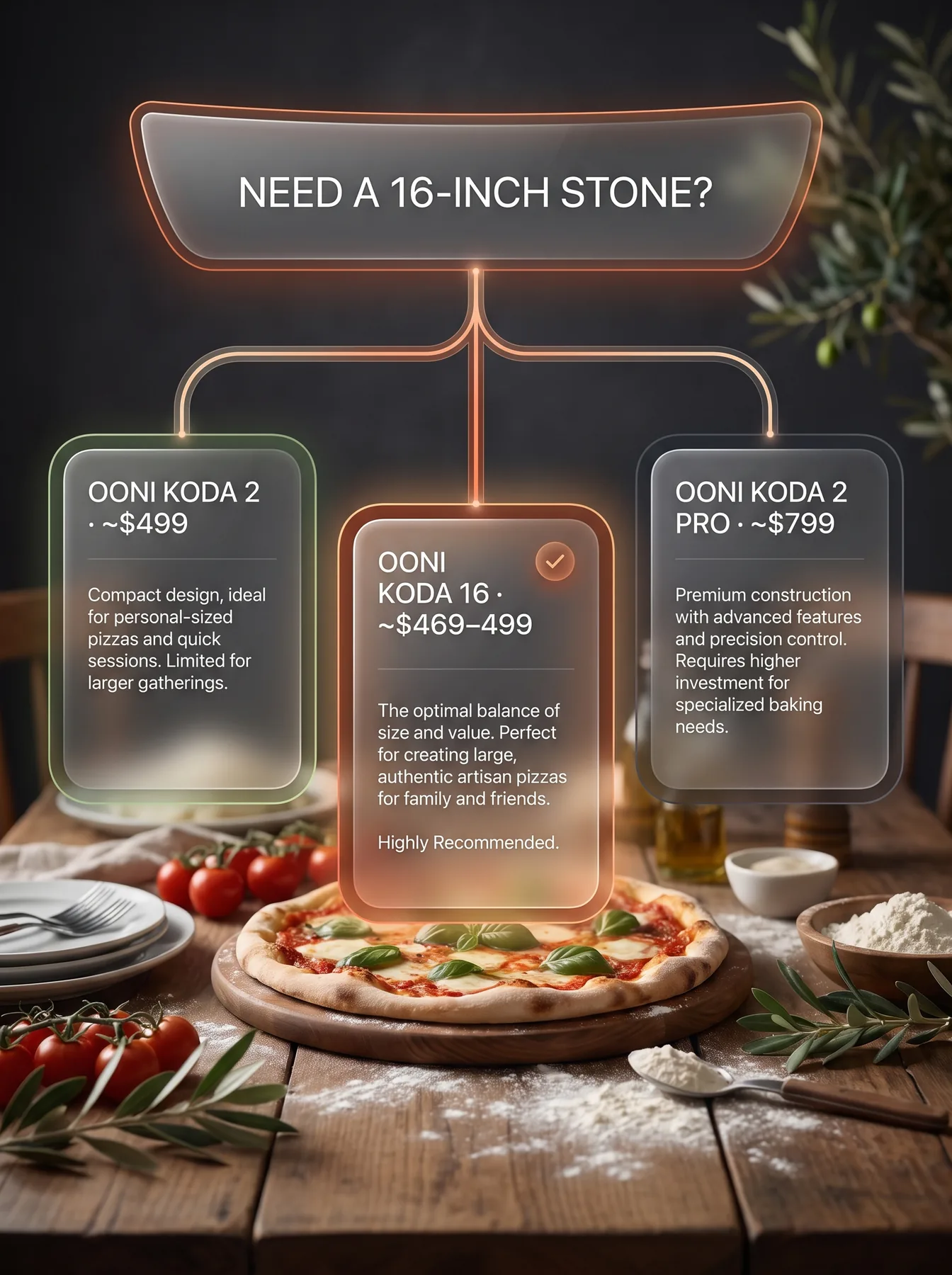
This is the question buyers actually care about. The Koda 16 now sits as 1st Generation in Ooni's lineup; the Koda 2 ($499, 35 lb, newer G2 burner) is the brand's current pick, and owner reports credit it with more even stone heating. At the same roughly $499 price point, the Koda 2's newer burner and lighter build make it the rational choice if 16 inches isn't a priority for you. If you catch the Koda 16 on sale nearer $469, its bigger stone and multi-year track record still make it the better buy.
The Koda 2 Pro ($799, 18-inch-plus stone, dual burner, Bluetooth Ooni Connect) genuinely closes the heat-evenness gap, per independent testing comparing it directly to the Koda 16. That's a real $300 upgrade for anyone hosting large pizza parties. For everyone else, the premium doesn't buy back $300 worth of performance. For a deeper breakdown of the full lineup, our [best Ooni pizza ovens roundup](/best-ooni-pizza-ovens/) walks through every current model side by side.
Koda 16 vs Gozney Roccbox - The Heat Retention Question
The trade-off here is simple: bigger stone versus better recovery. The Roccbox's thicker stone and premium stainless build deliver faster back-to-back baking and, based on multi-year owner reports, fewer reliability issues over five years. But its 13-inch stone can't touch the Koda 16's 16 inches - you simply can't fit a 16-inch pizza in it.
If you're cooking three to five pies at a relaxed pace, the Koda 16's larger stone wins the argument. If you're running eight or more pies for a party and that 2-3 minute recovery pause would genuinely frustrate you, the Roccbox's throughput advantage is worth its similar price tag.
Maintenance, Reliability, and the Real Cost Per Pizza
Never wash the stone with water - trapped moisture can crack cordierite under heat. Instead, run the oven at max for 20-30 minutes and residue burns off on its own. Flip the stone when one side chars heavily to double its usable life. The gas hose and regulator deserve a seasonal check for cracks or corrosion, and the FSD is known to trip repeatedly in windy conditions, so a wind shelter is worth the effort.
On the broader reliability question: owner experience across Ooni's full product line includes some component failures, particularly in the gas burner systems on other Ooni models, and owners who've run both brands often note fewer issues from Gozney. The Koda 16 specifically has a solid three-year track record of cosmetic-only wear, which is the evidence that matters most for this exact oven.
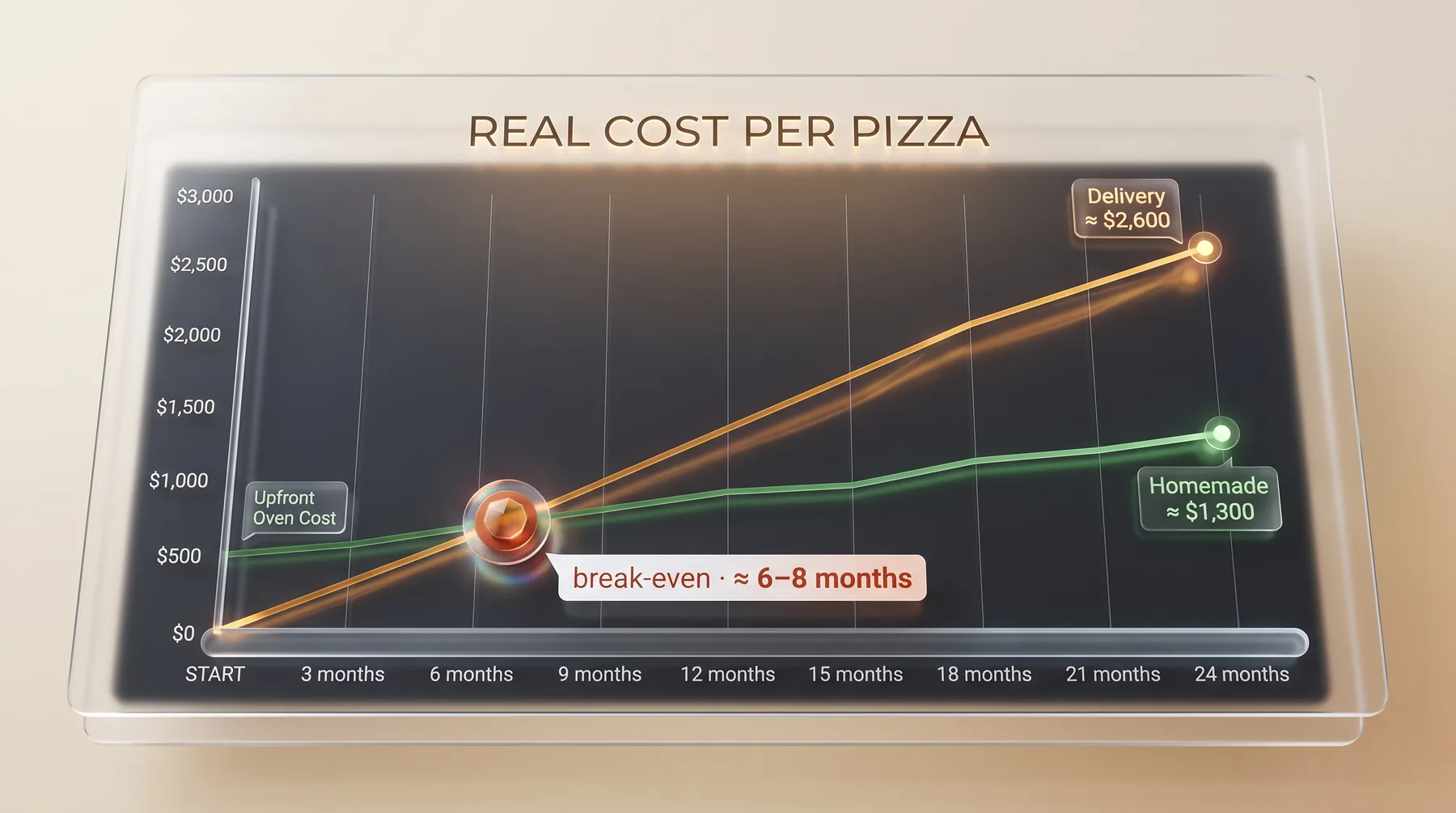
On cost: at two pizza nights a month with four pies a session, propane runs about $1.50-2.00 a session, and the oven pays for itself against $25-30 delivery pizzas within roughly 9-12 months. After that, each homemade pie costs about $3.50-6 in ingredients and fuel. Budget an extra $50-60 up front for a turning peel and an IR thermometer - neither is optional if you want repeatable results.
Where to Buy and Who This Oven Is For
Buy direct from ooni.com, or from an authorized retailer like Costco or Williams-Sonoma, where the Koda 16 has been spotted around $469.99. Third-party Amazon marketplace listings carry real counterfeit and used-unit risk; if you buy there, filter for listings sold and shipped by Ooni directly, since warranty claims on unauthorized units can be denied. Confirm the current warranty term on ooni.com before you buy - Ooni's standard has historically been one year with a registration extension, but verify the live figure yourself.
This oven earns its keep for households that entertain, cook for three or more people regularly, and want a proven design at a discounted price. Skip it if you cook pizza less than twice a month, live on a small balcony with gas restrictions, or aren't willing to add an IR thermometer and turning peel to the toolkit - without those two accessories, this oven is much harder to get consistent results from.
How it compares
| Ooni Koda 16 | Ooni Koda 2 | Gozney Roccbox | |
|---|---|---|---|
| Stone size | 16 inches | 14+ inches | 13 inches |
| Max temp | 950°F | 950°F | 950°F+ |
| Real-world preheat | 30-45 min | ~30 min | ~25-30 min |
| Weight | 40.1 lb | 35 lb | 21.6 lb |
| Burner design | L-shaped pipe | G2 burner | Rear burner |
| Back-to-back throughput | ~15-20 pies/hr | ~15-20 pies/hr | ~25-30 pies/hr |
| Build material | Carbon steel | Carbon steel | Stainless / silicone |
| Price | ~$469-499 | ~$499 | ~$499 |
| Fuel options | Propane / NG | Propane / NG | Gas / wood (select models) |
Also worth considering
Gozney Roccbox
The Roccbox's thicker stone delivers meaningfully better heat retention for back-to-back baking, and its stainless build and silicone insulation feel more premium out of the box. Its 13-inch stone is a real constraint next to the Koda 16's 16 inches, though, and you'll pay a similar price for the smaller cooking surface. Choose it for throughput and long-term build reputation; choose the Koda 16 for stone size and current sale pricing.
Ooni Koda 2
The current-generation Ooni with a newer G2 burner, 5 fewer pounds, and improved stone temperature evenness per owner reports. At around $499 it directly challenges the Koda 16's value case. It's the rational pick for anyone who doesn't need the extra 2 inches of stone and wants Ooni's newest burner tech.
Solo Stove Pi Prime
A budget option worth naming for price-sensitive buyers, typically found around $300. It sacrifices ceiling temperature and build refinement compared to the Koda 16, and I wouldn't call it a true Neapolitan machine at that price, but it's a reasonable entry point for someone who just wants to try wood-fired-style pizza without the full spend.
Certifications & safety
- Flame Safety Device
- Warranty term unconfirmed
- ETL/UL listing status
Who it's for
Households that cook for three or more people regularly, entertain on the patio, and want a proven gas pizza oven at a discounted price rather than the newest release. It also suits anyone who wants one oven capable of Neapolitan, NY-style, steak, and flatbread.
Who should skip it
Solo cooks or couples who rarely stretch dough past 12 inches, and anyone unwilling to add an IR thermometer and turning peel to their setup, should look elsewhere or start with the Koda 2.
Frequently asked questions
Is the Ooni Koda 16 worth the price in 2026?
At its current sale price of roughly $469-499, yes for households cooking two pizza nights a month - it pays for itself within about a year against delivery pizza costs, after which each homemade pie runs about $3.50-6.
How long does the Ooni Koda 16 really take to preheat?
Plan for 30 to 45 minutes for a properly heat-saturated stone, not the 20-minute figure on the box - use an infrared thermometer to confirm the stone center before you launch.
Can you cook a real 16-inch pizza in the Koda 16?
Yes, the stone and opening physically accommodate a 16-inch pizza, though most home cooks in practice stretch dough to 12-14 inches.
Does the Koda 16 have cold spots?
The front-left quadrant of the stone runs cooler than the rear because of the L-shaped burner's geometry, but a 180-degree turn at 30 seconds and a 90-degree turn at 60 seconds compensates for it every time.
Should I buy the Koda 16 or the Ooni Koda 2?
If both are priced around $499, I'd pick the Koda 16 for its larger 16-inch stone and proven durability, and the Koda 2 for its newer burner and lighter 35-lb build if you don't need the extra size.
Can the Ooni Koda 16 run on natural gas?
Yes, through Ooni's separate natural gas conversion kit, though the conversion is permanent and trades away the oven's portability for eliminating propane tank swaps.
How many pizzas can the Koda 16 cook back to back?
With a 60-90 second stone-recovery blast between pies, you can realistically manage 15-20 Neapolitan pizzas an hour, somewhat below the Gozney Roccbox's reported 25-30 an hour.
What stone temperature should I target for Neapolitan pizza?
Preheat past 900°F, then cut the flame and wait for the stone center to drop to about 760°F before you launch - that's the temperature that actually cooks an even crust, not the ceiling reading.
How does the Ooni Koda 16 compare to the Gozney Roccbox?
They target different buyers. The Koda 16 gives you a much larger 16-inch stone and a fast, even gas flame for the money, so it wins if you want big pies or to cook two smaller ones in sequence. The Roccbox counters with noticeably thicker stone and better heat retention between bakes, plus a reputation for long-haul durability, but its opening is smaller and it costs more. If back-to-back stone recovery and build longevity matter most, look hard at the Roccbox; if cooking surface and price-to-performance lead your list, the Koda 16 is the stronger value.
Can you cook anything other than pizza in the Ooni Koda 16?
Yes, and owners lean on it more than you would expect. Because you can run the burner well below the marked minimum, there is a usable lower zone for flatbreads, naan and pita, and plenty of people use it for seared steak, blackened or spatchcock chicken, roasted vegetables and fish in a cast-iron pan. It is still a high-heat live-flame oven, not a low-and-slow smoker, so anything delicate needs attention - but as a general backyard flame cooker it is far more versatile than its pizza billing suggests.
Ooni Koda 16
★ 3.8/5 · ~$469-499
Reader comments
Tried this oven, tool, or recipe? Share how it went — real experiences help other home pizza makers.