
Gozney Roccbox vs Ooni Koda 16: Thicker Stone Retention vs a Bigger 16-Inch Surface
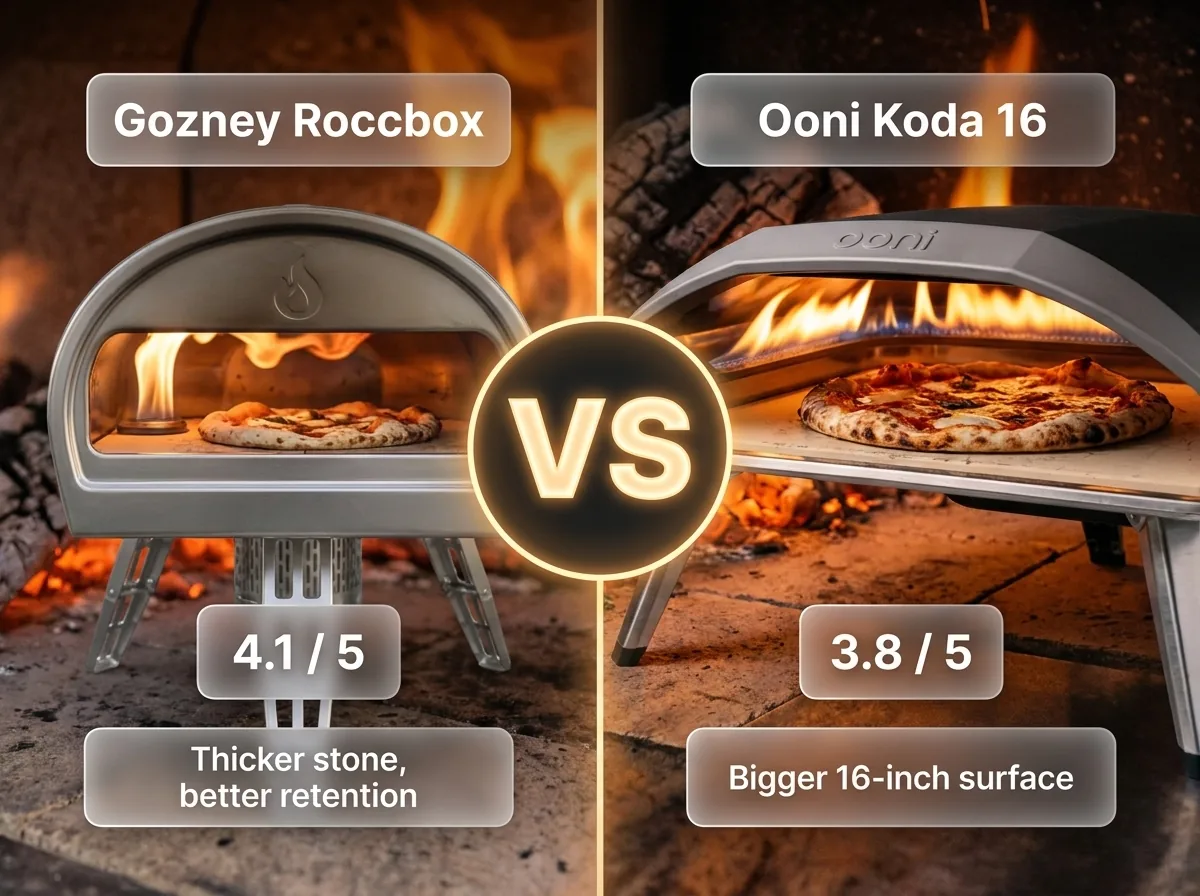
Both of these propane ovens bake a real Neapolitan pizza in about 60 to 90 seconds. That is the honest starting point. The Gozney Roccbox reaches roughly 1000F and the Ooni Koda 16 reaches a genuine 950F, so neither is short on raw heat.
Both also need a longer preheat than the box promises. Plan on 31 to 41 minutes for the Roccbox, depending on the outside temperature, and 30 to 45 minutes for the Koda 16 before the stone is truly launch-ready. Rush this step on either oven and your first pie sticks and tears.
The split is simple. The Roccbox trades cooking surface for thick-stone heat retention and a tougher shell. The Koda 16 trades that retention for a bigger 16-inch stone and, at times, a lower price. I ranked both on their published specs, build materials, and the pattern of genuine long-term owner experience. Whether that price makes sense depends on how often you cook, and our pizza oven savings calculator lets you put your own grocery and electricity prices through it.
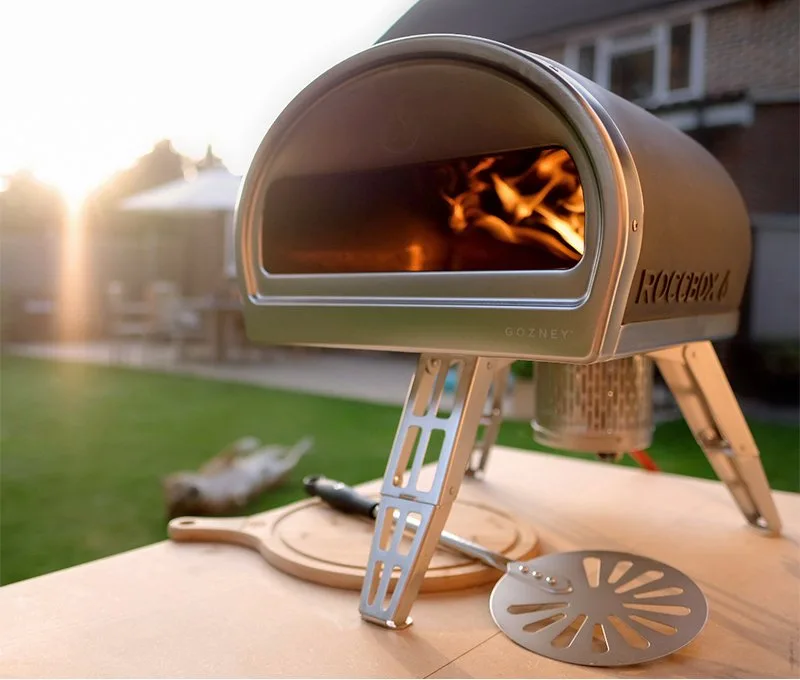
The Roccbox is the better-built, higher-retention 12-inch oven for one serious cook who wants leoparded crust every time.
Best for: The solo or couple baker who values a tough stainless shell, a thick stone, and consistent single-pie results over feeding a crowd.
- 19mm cordierite stone holds heat far longer than thinner competitor stones, so pie two bakes like pie one
- Rear rolling flame produces genuine Neapolitan leoparding on the crust edge
- Stainless steel shell resists rust and warping over years of outdoor use
- Tool-free wood burner swaps in for propane in about 10 seconds
- 12-inch ceiling makes throughput painful for groups of four or more
- A proper stone heat-soak took us 31 to 41 minutes depending on the outside temperature, well past the under-20 Gozney promises
- At 44 pounds it moves from storage to patio, not patio to campsite
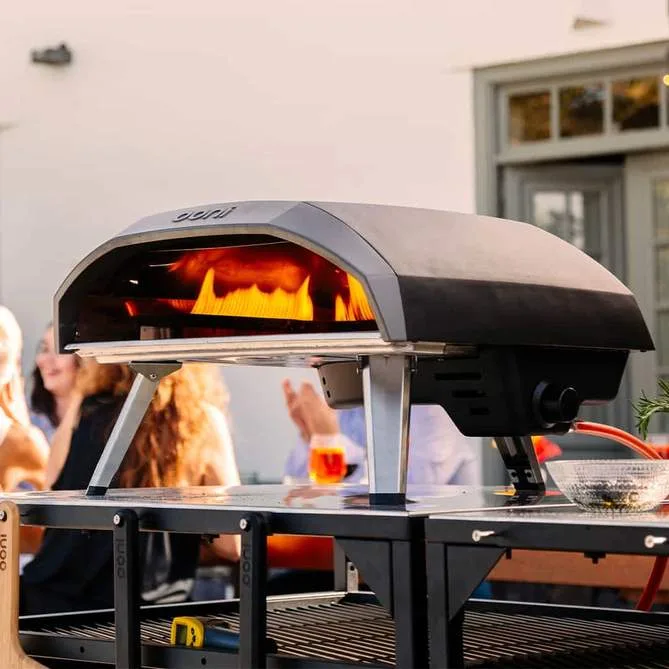
The Koda 16 gives you the largest stone at this price and true 950F heat, as long as you accept a recovery pause and a cover.
Best for: The host who wants a bigger 16-inch pie, more room to launch and turn, and a low-flame zone for flatbreads.
- 16-inch cordierite stone is the largest at this price point
- Reaches a genuine 950F for real Neapolitan results
- L-shaped burner covers roughly two-thirds of the stone arc, cutting down on turning
- Usable ultra-low flame zone unlocks naan, flatbread, and low-heat cooking
- Thinner stone forces a 2 to 3 minute recovery pause between pies at party volume
- Carbon steel shell rusts cosmetically without a cover
- Front-left stone zone runs cooler, so rotation technique is not optional
Affiliate links
1/5Affiliate link/not tested by us

TAKIBI Nano-Emboss Iron Wok
A 1.2 mm iron wok made in Tsubame Sanjo, Japan, with a nano-embossed surface the maker says holds oil and resists sticking with no coating at all and no PFAS.
Lock in the early-bird price: if it funds, it's yours; if not, you pay nothing.
Check It OutTiers and figures read from the campaign’s own page on October 15, 2026. They can change while a campaign runs, so check the Kickstarter campaign before pledging. We earn a commission if you pledge through this link.
Affiliate link/not tested by us

FIREUP Everyday Braiser
A 10-inch enamelled cast-iron braiser whose fins FIREUP says heat it 44% faster and cook more evenly - a design it patents in the UK (GB2517626B) and the US (US9516967B2), backed by Oxford University Innovation.
Late pledges are still open - back it now and get yours.
Check It OutTiers and figures read from the campaign’s own page on November 7, 2026. Late pledges can be switched off at any time, so check the Kickstarter campaign before pledging. We earn a commission if you pledge through this link.
Affiliate link/not tested by us

iGulu F2 Home Brewing System
A countertop machine from iGulu in Los Angeles that brews and then pours from the same unit: beer, cider, kombucha, mead, white wine and more.
Late pledges are still open - back it now and get yours.
Check It OutTiers and figures read from the campaign’s own page on November 7, 2026. Late pledges can be switched off at any time, so check the Kickstarter campaign before pledging. We earn a commission if you pledge through this link.
Affiliate link/not tested by us

Maruichi Knife: Sharper, Stronger, Reforged
Four one-piece stainless-steel kitchen knives from Maruichi Works in Tokyo, a maker led by former restaurant chefs: a santoku, a long chef's knife shaped after a Japanese sword, a double-bevelled sashimi knife and a petty knife.
Lock in the early-bird price: if it funds, it's yours; if not, you pay nothing.
Check It OutTiers and figures read from the campaign’s own page on November 7, 2026. They can change while a campaign runs, so check the Kickstarter campaign before pledging. We earn a commission if you pledge through this link.
Affiliate link/not tested by us

Titaner Vesta: One Titanium Pot for Every Way You Cook
A titanium-lined everyday pot that sears, sautes, braises and simmers in one, and locks its lid for gentle pressure cooking.
Lock in the early-bird price: if it funds, it's yours; if not, you pay nothing.
Check It OutTiers and figures read from the campaign’s own page on November 8, 2026. They can change while a campaign runs, so check the Kickstarter campaign before pledging. We earn a commission if you pledge through this link.
Head-to-head specs
| Feature | Gozney Roccbox | Ooni Koda 16 |
|---|---|---|
| Max temperature Both hit true Neapolitan range | ~1000F | ~950F |
| Cooking surface Koda fits a bigger pie | 12-inch stone | 16-inch stone |
| Stone thickness / retention | 19mm cordierite, holds heat long | Thinner stone, needs recovery pause |
| Recovery between pies | Strong heat-soak | 2-3 min pause at volume |
| Burner design Less turning on the Koda | Rear rolling flame | L-shaped, covers two-thirds of arc |
| Shell material | Stainless steel, resists rust | Carbon steel, rusts cosmetically |
| Fuel flexibility | Propane plus tool-free wood burner | Propane, converts to natural gas |
| Low-heat versatility Koda does naan and flatbread | Runs very hot | Usable ultra-low flame zone |
| Warranty | 1-year, 5-year registered | Standard cover |
| Price | ~$499 (often near $399) | ~$499-499 |
| Our rating | 4.1 | 3.8 |
What both ovens get right
Both bake a real Neapolitan pizza. The Roccbox pushes to roughly 1000F and the Koda 16 to a genuine 950F, so both scorch a leopard-spotted crust in 60 to 90 seconds. Neither is a compromise on heat.
Both also run on propane out of the box and offer a second fuel path. The Roccbox takes a tool-free wood burner; the Koda 16 converts to natural gas. And both reward patience - a full stone heat-soak is non-negotiable on either. Skip it and your dough sticks.
Where the real gap sits
The gap is stone thickness versus stone size. The Roccbox uses a thick 19mm cordierite stone that holds its heat, so your second and third pies bake almost as well as the first. The Koda 16 uses a thinner, wider stone; it gives you a bigger 16-inch pie but needs a short recovery pause between bakes at party volume.
Build follows the same pattern. The Roccbox's stainless steel shell resists rust and shrugs off years outside. The Koda 16's carbon steel shell holds up structurally but will rust cosmetically without a cover. For a full breakdown of the smaller oven, see my hands-on Gozney Roccbox review.
Which one for your situation
Cooking for one or two and want the most consistent crust with the least fuss? The Roccbox wins. The thick stone and stainless build make it the quality pick, and it holds our higher rating for a reason.
Feeding a group and want more real estate per pie plus a low-flame zone for flatbreads? The Koda 16 makes more sense, so long as you accept the recovery pause and buy the cover on day one. The bigger surface is a genuine advantage when several people are hungry.
The findings above are also one chart on our infographics page, which is the version worth saving if you are still comparing ovens - and citable if you are writing about them.
Frequently asked questions
How much downtime is there between pizzas on the Koda 16?
Around two to four minutes for the stone to recover between bakes, longer if you launched the second pizza onto the spot the first one just left. This is the real difference between these two ovens and it is not the temperature: the Roccbox carries far more insulation, so it sags less across a run, while the Koda 16 gives you a bigger stone and asks you to pace yourself. Cooking for four, that recovery time is what you actually feel.
Are home pizza ovens really that different from each other?
Above about 900F, less than the marketing suggests - most of them will bake a good Neapolitan. What separates them is everything around the bake: how long they take to get hot, how well they hold temperature through a run, how big a pizza fits, and whether you are tending a fire. Our measured preheats vary from 15 minutes to 52 across the ovens we have tested, and that gap matters far more day to day than a hundred degrees at the top end.
Which oven bakes a Neapolitan pizza faster?
Both bake a genuine Neapolitan pizza in about 60 to 90 seconds. The Roccbox reaches roughly 1000F and the Koda 16 reaches a genuine 950F, so real-world bake times are effectively the same once each stone is fully heat-soaked.
How long do I really need to preheat each one?
Plan on 31 to 41 minutes for the Roccbox, depending on the outside temperature, and 30 to 45 minutes for the Koda 16, not the shorter times marketed. A truly launch-ready stone takes patience; you can see my full propane oven buying guide for why heat-soak time matters so much.
Can I cook two pizzas back to back on either oven?
The Roccbox handles it better because its thick 19mm stone holds heat. The Koda 16's thinner stone needs a 2 to 3 minute recovery pause between pies at party volume, so back-to-back baking is slower on the larger oven.
How much bigger is the Koda 16 cooking surface?
The Koda 16 uses a 16-inch cordierite stone versus the Roccbox's 12-inch stone. That is the biggest surface at this price point and the main reason to choose it if you want larger pies or more room to turn.
Which oven holds up better outdoors over time?
The Roccbox's stainless steel shell resists rust and warping, so it wears better outside. The Koda 16's carbon steel shell holds up structurally over several years but will rust cosmetically without a cover, which I consider mandatory.
Do either of these run on wood?
The Roccbox does, with a tool-free wood burner that swaps in for propane in about 10 seconds. The Koda 16 runs on propane and converts to natural gas, but it does not offer a wood option.
Which is the better value right now?
Prices are close - the Roccbox sits around $499 and often near $399, while the Koda 16 runs about $499 to $499. Value comes down to whether you want the thicker stone and stainless build or the bigger surface for a similar spend.
Can I bake anything besides pizza in these?
The Koda 16 has a usable ultra-low flame zone that unlocks naan, flatbread, and low-heat cooking. The Roccbox runs hotter and is tuned for high-heat pizza, so it is less flexible for gentle bakes.
Reader comments
Tried this oven, tool, or recipe? Share how it went - real experiences help other home pizza makers.