
How Does a Wood Fired Pizza Oven Work?
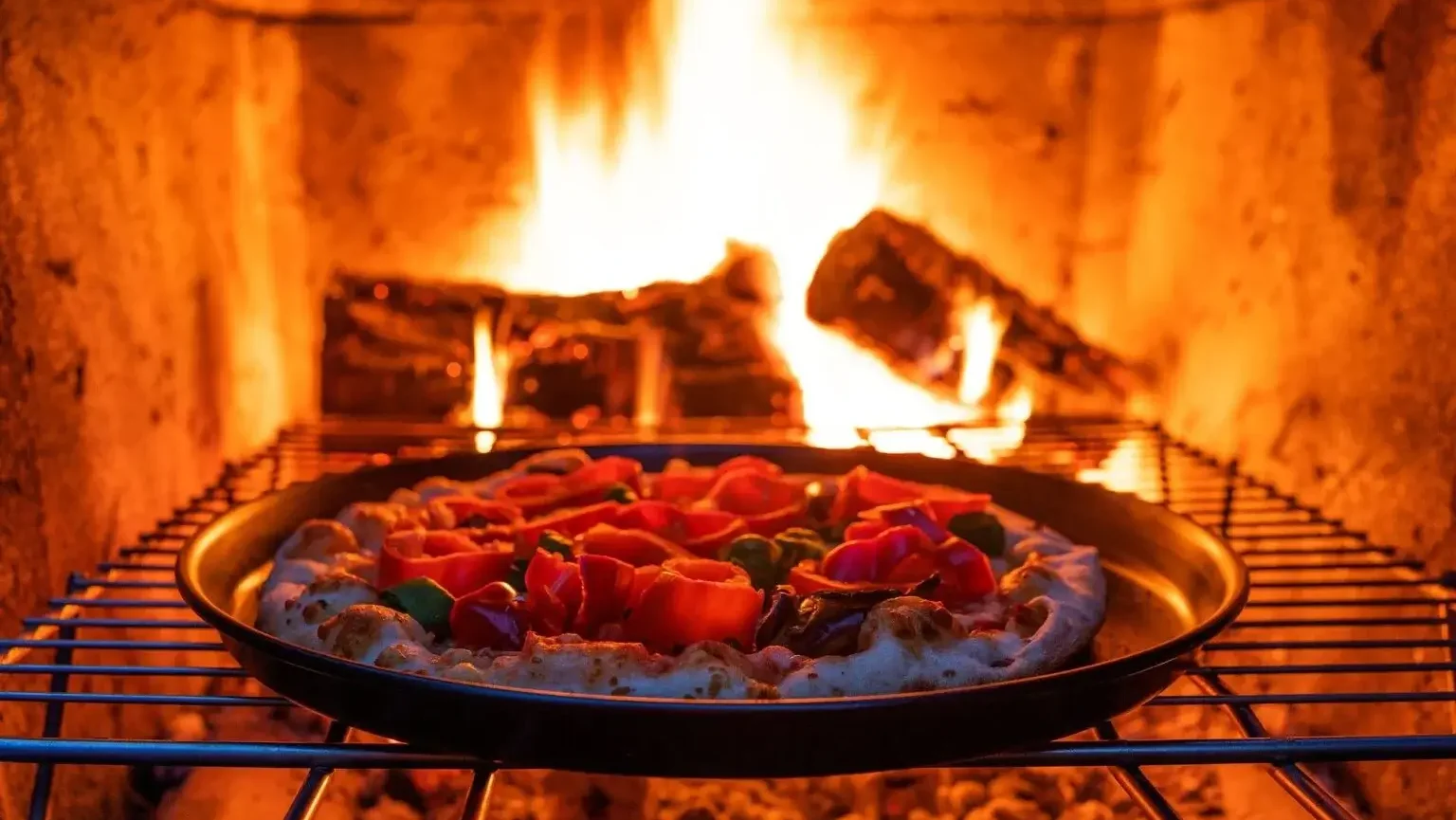
A wood-fired pizza oven has a history of engineering, artistry, and unbeatable flavor. Unlike your kitchen oven, this uses natural wood combustion to reach temperatures, often going past 800°F. What does that mean for your pizza?
Crispy crusts and smoky undertones. The real thing lies in how the oven evenly distributes and holds that heat, giving every pizza its perfectly baked charm. What is the secret behind this efficiency? It is all in the design. The domed interior works with radiant heat, convection, and conductive heat from the oven floor.
The result? Pizzas cooked to perfection in under two minutes. But let’s not stop there—how does this trio of fire, air, and materials give you such a perfect performance? Stick around, and we will break it down.
How a Wood-Fired Pizza Oven Works
This is how wood-fired pizza ovens work:
1. Enhanced Flavor Profile
When cooked in a wood-fired oven, each bite of pizza is a fun and unique experience. I still remember the first time I used a wood-fired oven at a family gathering it was a game changer for our pizza nights.

In addition to cooking the pizza fast and properly, the wood-fired pizza oven gives the dough and fillings a smokey, toasted taste that improves the pizza’s overall flavour quality.
For instance, I recently made a Margherita pizza, and the way the wood smoke infused the crust reminded me of authentic Italian pizzerias. In addition to providing the pizza with a delightful smokey scent, it adds an uncommon crunchy crust that improves the entire flavour.
2. Efficient Cooking Process
The wood fire’s intense heat (between 850° and 1000° Fahrenheit) provides a crunchy outer layer and perfectly cooked toppings in just a few minutes.
This method is ideal for creating pizzas with loaded toppings, like a supreme pizza. The pizza oven heat radiated from the fires cooks the pizza from every angle.
Convection and Conductive Heat in Wood-Fired Pizza Ovens
A wood-fired pizza oven works on radiation, convection, and conduction principles. Heat exchange in a wood-fired pizza oven occurs through electromagnetic frequencies released by the flames and received by the oven’s walls, surface, and ceiling. This is known as the radiation principle.
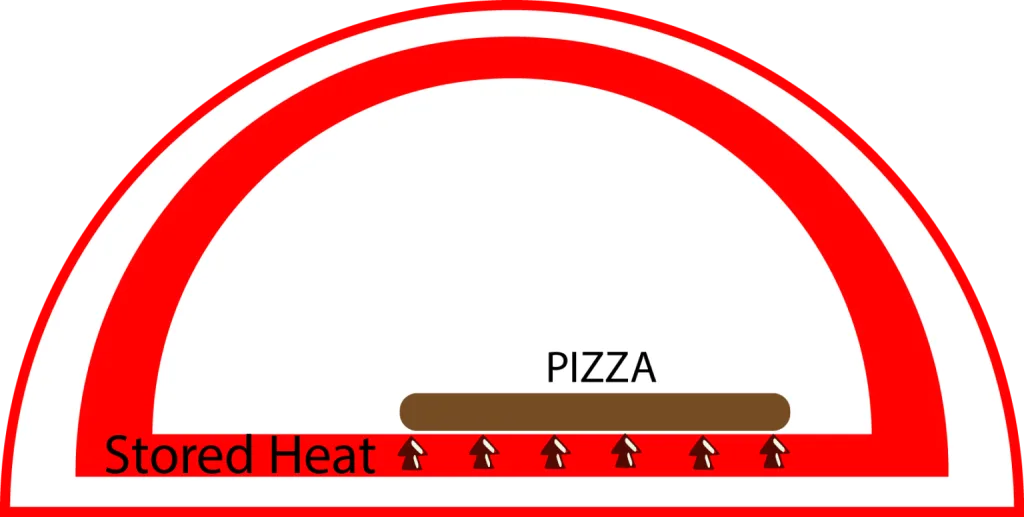
The pizza then absorbs and reflects this radiant energy, cooking it rapidly. Like radiation, convection is the process by which heat is transferred through hot air movement in a wood-fired pizza oven.
The intense heat produced by the burning wood rises to the top of the oven and produces a convection wave. Due to the flowing hot air, the pizza is cooked better on all sides. According to the conductivity principle, heat is transferred in a wood fired pizza oven by directly interacting with the pizza crust and the oven’s heated surface.

The wood heats the oven’s walls and base as it burns, then cooks the cheese, toppings, and pizza dough a process that ensures even the crust would be tempting enough to make a dog eat pizza if left unattended.
Anatomy of a Wood-Fired Pizza Oven
The anatomy of a wood-fired pizza oven includes various essential parts, including the dome, cooking surface, firebox, chimney, entryway, and insulation. Let’s explore each one.
The entrance allows pizzas to be loaded and unloaded, and smoke and steam can exit through the chimney. Insulating material, typically composed of glass fiber or vermiculite, aids in heat retention and maintains a constant cooking degree.
1. Dome – the curved roof
In a wood-fired pizza oven’s structure, the term “dome” refers to the bending, curving format usually composed of fire-resistant substances that can tolerate high temperatures, like stone, brick, or clay.
I have noticed that when using a dome-shaped oven, the even distribution of heat ensures that pizzas cook consistently without burning. For instance, the crust crisps up beautifully while the toppings remain perfectly cooked.
The dome shape can hold heat in the oven and effectively transmit it all over the surface, which is essential to providing the ideal cooking condition for pizzas, which cook fast and smoothly.
2. Cooking surface
Usually constructed of firebrick or mud tiles, the fireplace or cooking surface retains and distributes heat throughout the chamber. The pizza cooks rapidly because these materials can tolerate a burning wood fire’s high heat.
Usually, the wood fire also heats the cooking surface from beneath, producing intense heat that cooks the pizza from the bottom, guaranteeing the cooking of both the toppings and the inside.
3. The firebox
The firebox is an essential part of constructing a wood-fired pizza oven. It is usually made of heat-resistant substances and is found at the side or rear of the stove.
When I first built a small wood-fired oven in my backyard, I learned how critical proper insulation in the firebox was to maintaining steady heat it prevented the crust from charring too quickly.
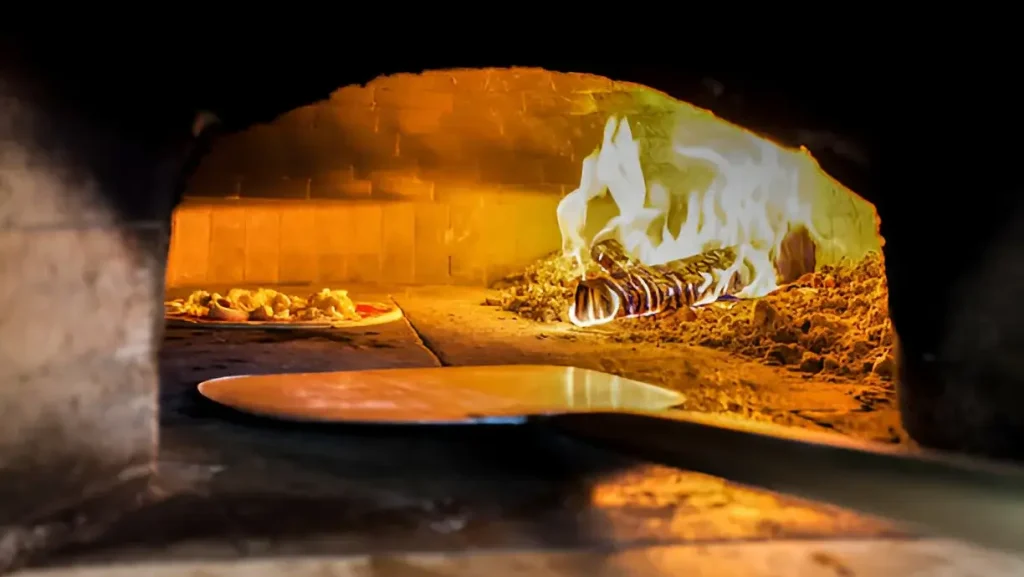
Maintaining a constant temperature during cooking requires enough insulation and ventilation in the firebox. I also recall experimenting with different firebox layouts; for example, a rear-positioned firebox provided more even heating compared to one positioned at the side.
The dimensions and layout of the firebox can change depending on the kind and size of the oven, but its basic purpose is always the same: to produce the intense heat required for real wood-fired pizza.
4. Chimney
The chimney of a wood-fired pizza oven ensures adequate ventilation and heat dispersion throughout the oven. It also helps remove gases and smoke from the oven so they do not compromise the pizza’s aroma.
The chimney, much like the design in the Ooni Fyra 12, helps control the oven’s internal temperature by letting extra heat escape. It also creates an airflow that draws in cool air, fueling the fire and maintaining a constant cooking temperature
5. Entryway
It is typically constructed of solid substances like brick or metal. The doorway may have a door or cover to help control the heat and maintain the oven’s temperature.
A wood-fired pizza oven’s doorway usually has a large opening that makes placing and removing pizzas from the oven’s interior simple.
6.Insulation
Insulation is an essential component for a wood-fired pizza oven to withstand high temperatures. I once consulted with a professional oven builder who emphasised that using high-grade clay fibre insulation not only improved heat retention but also extended the oven’s lifespan. Substances that help retain heat and keep it from exiting the oven, like gypsum or clay fibre, are commonly used to make this insulation.

For example, during a project, I observed how an oven with subpar insulation required almost double the fuel to maintain the same temperature, which significantly increased operating costs.
The insulation guarantees that the pizzas cook effectively and uniformly by trapping the heat within the oven. Good insulation can lower fuel use and improve the oven’s energy usage.
4. Steps to Operating a Wood-Fired Pizza Oven
Here are steps to operate wood fired pizza oven:
I. Preparing the Fire
Setting up the fire is the initial step in using a wood-fired pizza oven. This includes assembling the required fire starters, wooden materials, and fuel.
After everything is put together, the fire can be started and left to burn until it hits the cooking temperature (850° and 1000° Fahrenheit or 400–485°C).
II. Preheating the Oven
Preheating the oven is the second stage of using a wood-fired pizza oven. After making sure the oven gets the ideal temperature. Let the fire burn for at least one to two hours, adding more wood to keep the temperature constant.
Then, push the fire to the side of the oven once it has reached the desired temperature. Before putting the pizza inside, let the oven heat up for another half hour to ensure the cooking surface is heated.
III. Managing the Fire and Temperature Control
To maintain the correct temperature, managing the fire in a wood-fired pizza oven requires keeping a close eye on the fires. This phase also involves modifying the airflow.
Maintaining the oven at the ideal cooking temperature requires regular temperature checks and any required modifications because temperature management is essential to getting the perfect crispy crust pizza.
5. Common Mistakes and How to Avoid Them
A wood-fired pizza oven demands expertise and care for every detail to guarantee the ideal pizza. The following are some typical errors that operators of wood-fired pizza ovens make:
1. Using the Wrong Type of Wood
Using the wrong wood in a wood-fired pizza oven has many downsides. For instance, choosing a softwood may cause creosote to accumulate in the oven, affecting the pizza’s flavour and possibly posing a health risk.
Furthermore, it might be challenging to keep the right oven temperature when using wood that burns too quickly or slowly. Hardwoods like oak trees, maple wood, cherries, or walnuts work well in a wood-fired pizza oven.
Pizzas can be cooked constantly because these wood varieties burn hot and uniformly. Avoid using softwoods like pine or cedar, as they can emit a lot of smoke and give the pizza a bitter taste.
2. Inadequate Preheating Time
One of the most common mistakes when using a wood-fired pizza oven is not giving it enough time to preheat. When I first started using a wood-fired oven, I underestimated how long preheating took and ended up with pizzas that were unevenly cooked.

Learning to let the oven reach around 800°F before cooking made a significant difference in achieving that perfectly crispy crust and melted toppings. Properly preheating the oven is essential to guarantee that the pizza reaches the ideal temperature.
For instance, professional chefs recommend using an infrared thermometer to check the oven floor’s temperature to ensure it’s ready for cooking. If the pizza is not preheated long enough, it might not cook completely, producing a less-than-ideal finished product.
3. Poor Temperature Management
Poor temperature management is also common when using a wood-fired pizza oven. This may lead to uncooked fillings, burning coatings, or uneven cooking.
You must accurately heat the oven to the ideal temperature while keeping it at this level during cooking. If this is done, the outcome may be satisfactory, and the pizza may not be flawless.
4. Overloading the Oven with Food
One of the most frequent mistakes people make when using a wood-fired pizza oven is filling the oven too full.
This results in increased cooking times, inconsistent cooking, and possibly uncooked or burned food.
Conclusion
Heat reaches the pizza from the fire in three ways: convection, conduction and radiation. Convection is the transfer of heat directly from the fire to the pizza.
Conduction is the transfer of heat from the fire to the pizza via the surface, and it’s usually done by reflecting off of the walls. Radiation is the transfer of heat from the fire to the pizza via electromagnetic radiation.
Frequently asked questions
Do wood-fired pizza ovens require a lot of maintenance?
Wood-fired pizza ovens require some maintenance, although only a little. The oven chamber and vent must be cleaned regularly, and ash and dirt must be removed.
How long does it take to heat a wood-fired pizza oven?
The oven's size, kind, and wood type can affect how long it takes to be fully heated. A wood-fired pizza oven generally takes 30 minutes to an hour to attain the ideal cooking temperature of 700 to 900 degrees Fahrenheit.
Why High Heat Is Essential for Perfect Pizza & What Is the Optimal Cooking Temperature for Pizza?
Pizza? High heat is necessary for the ideal pizza, as it guarantees a crunchy crust and precisely fried fillings. The optimal cooking temperature for pizza is 260°C to 315°C (500 to 600 degrees Fahrenheit).
Reader comments
Tried this oven, tool, or recipe? Share how it went — real experiences help other home pizza makers.